Borbonius Anthias Care Guide: Tank Size, Diet, Reef Safety & Tankmates
Borbonius Anthias care made simple: the right tank size, how often to feed this deep-water anthias, whether it is reef safe, and which tankmates keep it calm.
The Borbonius Anthias (Odontanthias borbonius) is a pink fish covered in golden-brown blotches with bright yellow fins. It is peaceful and reef safe, but it needs frequent feeding and a calm tank, so it suits keepers with some experience.
Quick facts
- Tank size: 100 gallons or more (125+ for a pair or small group)
- Adult size: about 6 inches
- Diet: carnivore; mysis, enriched brine, and copepods 3+ times a day
- Reef safe: yes with corals; watch very small shrimp
- Difficulty: hard
- Temperament: peaceful and a bit shy
What makes it special
You may also see it sold as the Blotched Anthias, Checked Swallowtail, or Bourbon Anthias. It lives in the Indo-Pacific, from South Africa to Japan and Indonesia.
Unlike most anthias, it lives on deeper reefs. That is why it likes shaded spots and does not dart around as much as a lyretail.

Is it right for your tank?
This fish is a great pick if you want a calm, colorful centerpiece and can feed often. It is not ideal for a first saltwater tank.
- Good fit: mature reefs, peaceful fish, and keepers who are home to feed
- Poor fit: new tanks, nano tanks, or busy schedules with one meal a day
- Cost: it is often pricier than common anthias, so plan before you buy
Tank setup
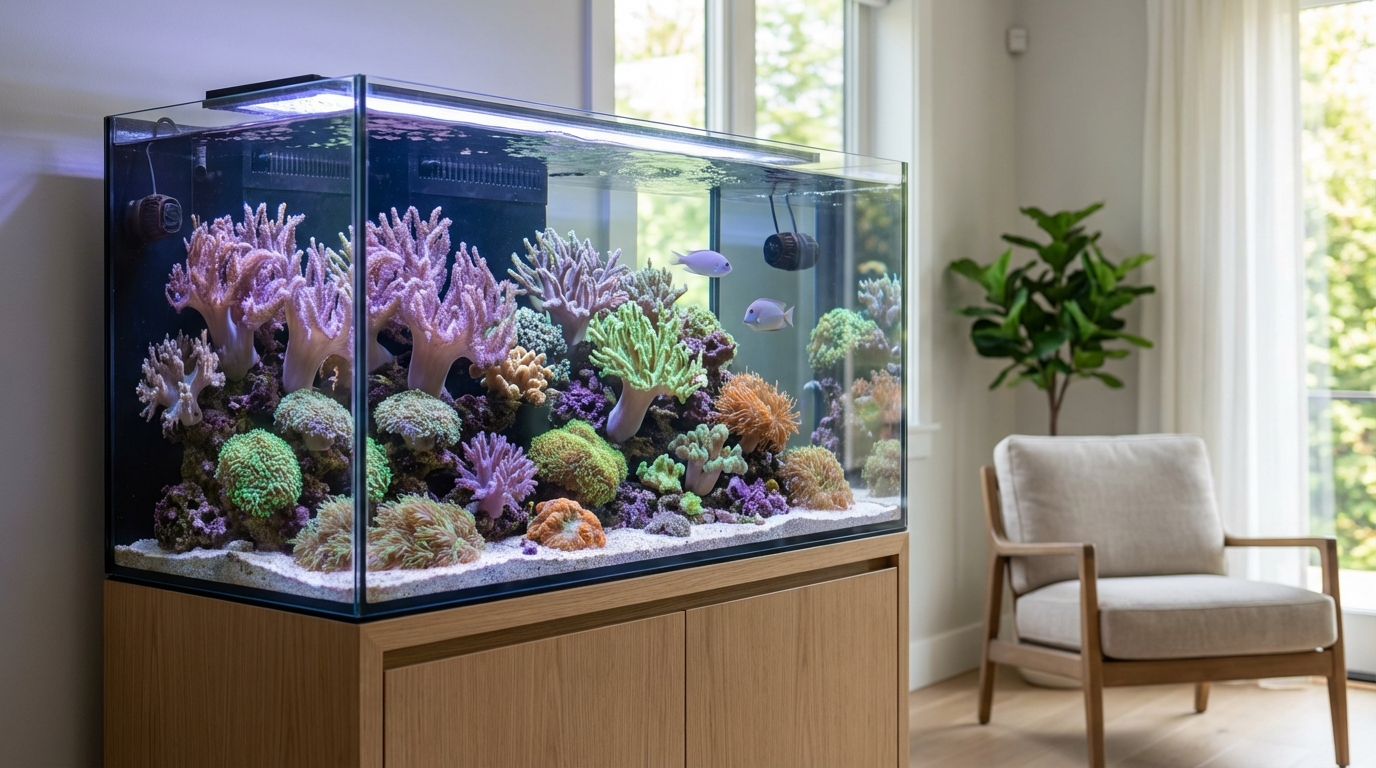
- Space: 100+ gallons with open swimming room
- Shade: caves and overhangs where it can get out of bright light
- Water: 74–78°F, salinity near 1.025, very stable
- Lid: yes; anthias are known jumpers
A mature, peaceful tank with lots of rockwork helps a new fish settle in. Moderate flow and some dimmer areas make it feel at home.
Behavior
Borbonius Anthias are calm and often hang near rock rather than in open water. New fish can hide for a few days. Keep the lights low and offer food near its cave to help it come out.
A single fish or a male-female pair is the easiest setup. Two males in a small tank may fight.
Feeding
This is the hardest part. Anthias burn energy fast and need small meals often.
- Frozen mysis and enriched brine shrimp
- Live or frozen copepods
- Finely chopped seafood and quality small pellets once it learns
Feed at least three times a day, or use an auto feeder. A thin belly is an early warning sign.

Photo: Vassil, Wikimedia Commons, CC0 — Borbonius Anthias
Reef safety
It is reef safe. It will not bother corals, clams, snails, or crabs.
- Safe: SPS, LPS, soft corals, and most cleanup crew
- Watch: tiny shrimp may be seen as food
Tankmates
- Good: gobies, small wrasses, cardinalfish, chromis, and calm clownfish
- Risky: busy, pushy fish that eat all the food first
- Avoid: large triggers, groupers, and aggressive dottybacks
Want an easier anthias first? Read our Lyretail Anthias care guide.
Health and buying tips
- Quarantine: follow our 30-day fish quarantine protocol
- Look for: a full belly, clear eyes, and clean fins
- Ask: to see it eat frozen food before you buy
- Watch for: white spots, fast breathing, or hiding all day
FAQs
Is the Borbonius Anthias reef safe?
Yes. It ignores corals and most inverts, though very small shrimp may get eaten.
Can I keep a group?
One fish or a pair is easiest. A small group needs 125+ gallons and only one male.
Why is it hard to keep?
It needs several small meals every day and a calm tank. Skipped feedings make it lose weight fast.
Ready to add one?
Looking for a Borbonius Anthias or peaceful tankmates? Browse fish from trusted sellers on the ReefBay shop.