Chalk Bass Care Guide: Tank Size, Diet, Reef Safety & Tankmates
Chalk Bass care made simple: the right tank size, what to feed it, whether it is reef safe, which tankmates work, and how to keep a healthy beginner basslet.
The Chalk Bass (Serranus tortugarum) is a small Caribbean seabass with lavender-blue bars and soft orange highlights. It stays busy above the rockwork and is a solid beginner pick for many nano and mid-size reefs.
Quick facts
- Tank size: 30 gallons or more
- Adult size: about 3 inches
- Diet: carnivore; mysis, brine, chopped seafood, and quality pellets
- Reef safe: yes with corals; watch tiny shrimp and pods
- Difficulty: easy
- Temperament: semi-aggressive with its own kind; usually peaceful with other species
What makes it special
Hobbyists also call it the Chalk Basslet, Chalk Seabass, or Tortuga Bass. The pale “chalky” bars on a blue body make it easy to spot in a reef tank.
It rarely tops 3 inches, so it fits smaller systems that still have caves and open swimming room. In the wild it lives on Western Atlantic and Caribbean reefs.
This basslet is hardy, bold, and active all day. It ignores corals, which is why so many reef keepers like it.

Tank setup
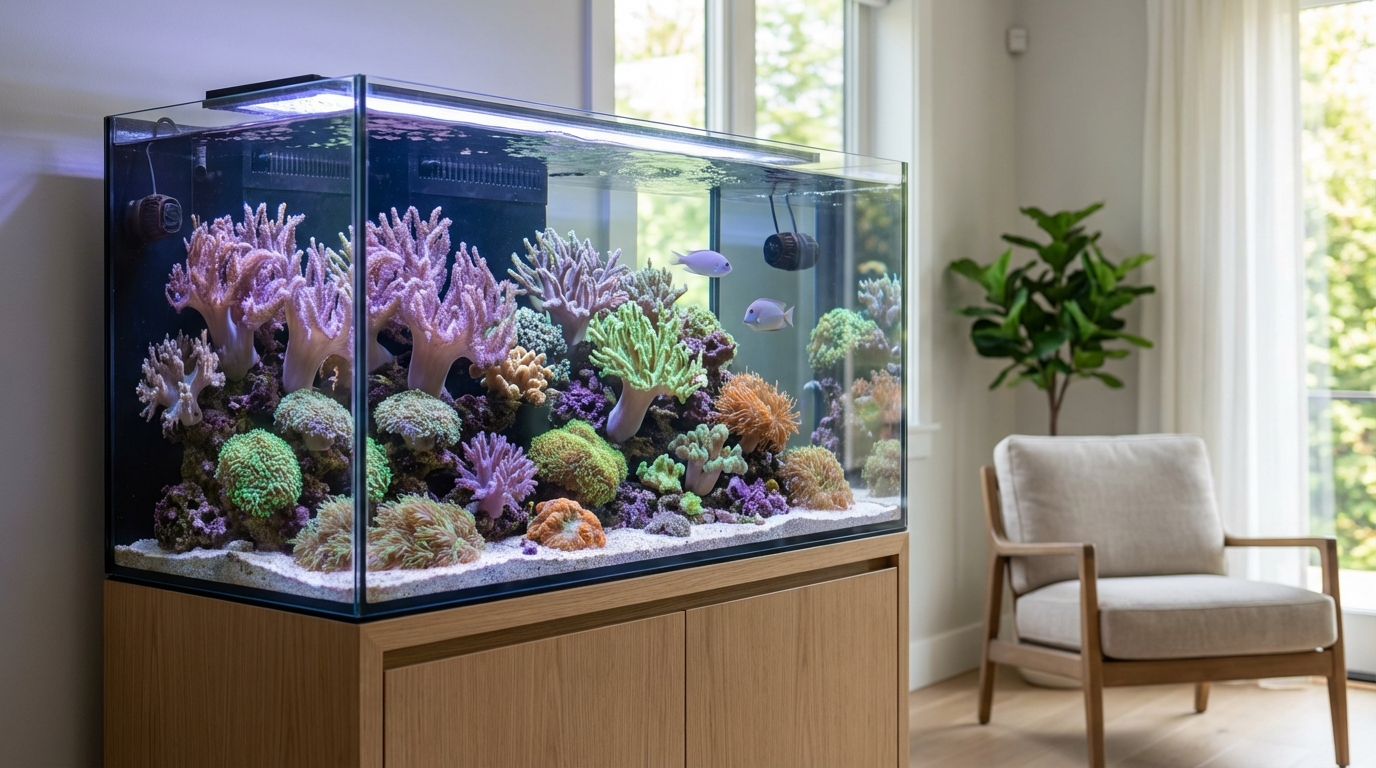
- Space: 30+ gallons with rock caves, ledges, and a little open water
- Shelter: plenty of crevices and shells — this fish dives in when startled
- Lid: a tight lid or mesh cover; jump risk is real
- Water: 75–80°F, salinity near 1.025, and stable parameters
Add Chalk Bass to a mature tank. Live rock with pods helps between meals, but do not count on pods alone.
Behavior
Chalk Bass hover just above the rock and dart into holes when spooked. They look best in a small group added at the same time.
Fish added later can get picked on. In a small tank, a single Chalk Bass is safer than stacking rivals.
With other species they are usually peaceful. Stress shows as constant hiding, faded color, or skipped meals.
Feeding
This is a meaty eater with a healthy appetite once settled.
- Frozen mysis and enriched brine shrimp
- Chopped seafood and other small frozen mixes
- Quality marine pellets once they learn the routine
Feed once or twice a day. Target feed shy fish so bigger tankmates do not steal every bite.
Reef safety
Chalk Bass leave corals alone. They are a good fit for soft coral, LPS, and many mixed reefs.
- Usually safe: corals, clams, snails, and larger shrimp
- At risk: tiny ornamental shrimp and heavy pod populations that look like snacks

Photo: Williams, J. T.; Carpenter, K. E.; Van Tassell, J. L.; Hoetjes, P.; Toller, W.; Etnoyer, P.; Smith, M., Wikimedia Commons, CC BY 2.5 — Chalk Bass
Tankmates
Pick tankmates that will not bully this small basslet at feeding time.
- Good: clownfish, gobies, peaceful wrasses, chromis, and other calm community fish
- Risky: large aggressive dottybacks, triggers, and fish that claim the whole rock pile
- Avoid: adding extra Chalk Bass later into a tiny tank with an established boss fish
If you want a group, add them together in 40+ gallons with lots of caves.
Health and lifespan
- Lifespan: several years with steady food and clean water
- Watch for: weight loss, white spots, rapid breathing, or all-day hiding
- Quarantine: follow our 30-day fish quarantine protocol
New fish may stay shy for a few days. Bright bars and a round belly are good signs.
Buying tips
- Choose fish with clear eyes and full bellies
- Ask to see them eat before you buy
- Buy a small group at once if you want more than one
- Skip thin fish, torn fins, or fish that hang in a corner
FAQs
How many Chalk Bass should I keep?
A single fish works in 30 gallons. For a small group, use more space, add them together, and give them plenty of caves.
Is the Chalk Bass reef safe?
Yes with corals. It may hunt tiny shrimp and pods, so keep delicate ornamental shrimp with caution.
Do Chalk Bass need a lid?
Yes. They can jump when startled, so use a tight lid or mesh cover.
Ready to add one?
Looking for Chalk Bass or peaceful tankmates? Browse fish from trusted sellers on the ReefBay shop.