Firefish Goby Care Guide: Tank Size, Diet, Jump Risk & Pair Tips
Learn Firefish Goby (Fire Dartfish) care: 20+ gallon setups, mandatory lids for jump risk, meaty diet, one-or-pair stocking, peaceful reef-safe neighbors, and what to check before you buy on ReefBay.
Quick answer
A Firefish Goby needs a mature 20-gallon-or-larger reef with plenty of live rock, a tight-fitting lid, and peaceful tankmates. Feed small meaty foods like mysis, brine shrimp, copepods, and fine frozen or prepared foods 1 to 2 times daily. Keep one fish or a known bonded pair only.
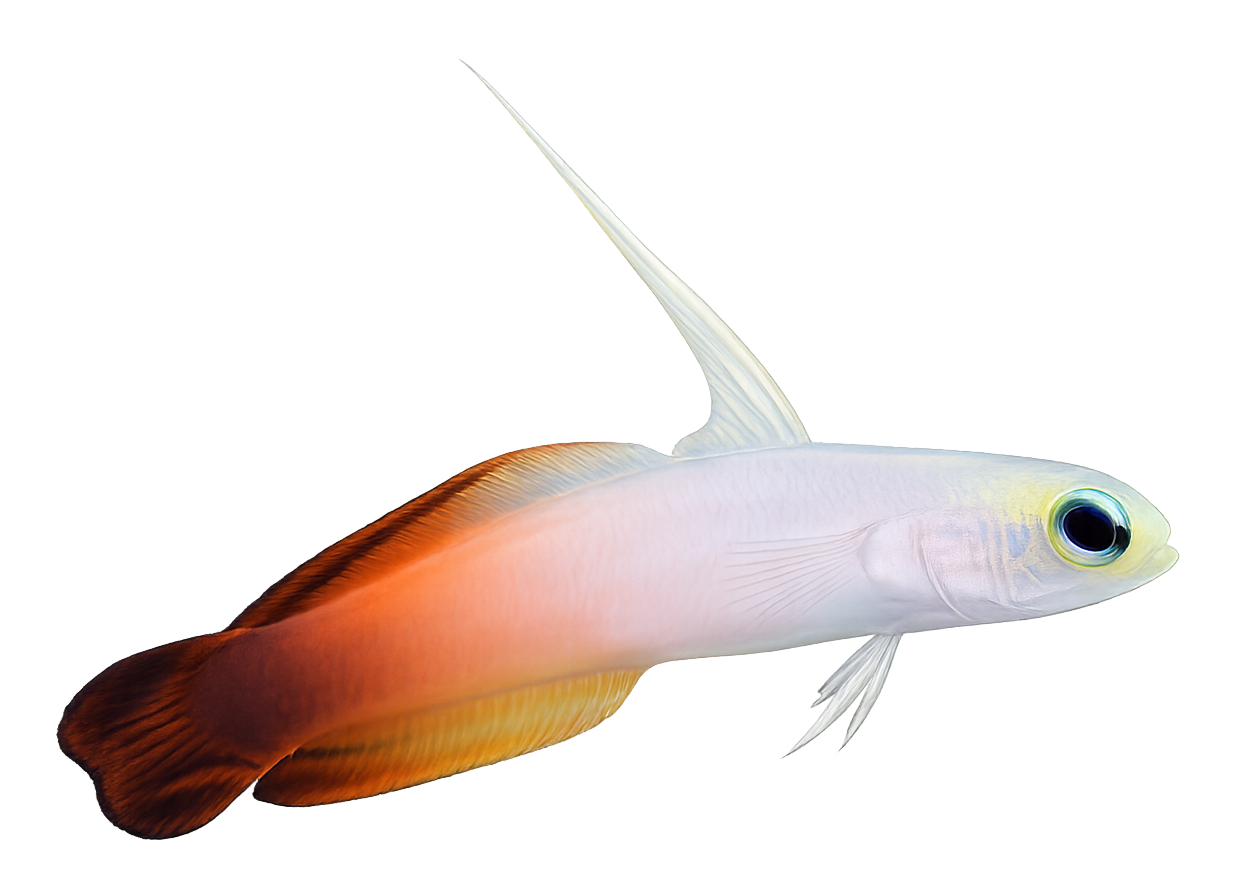
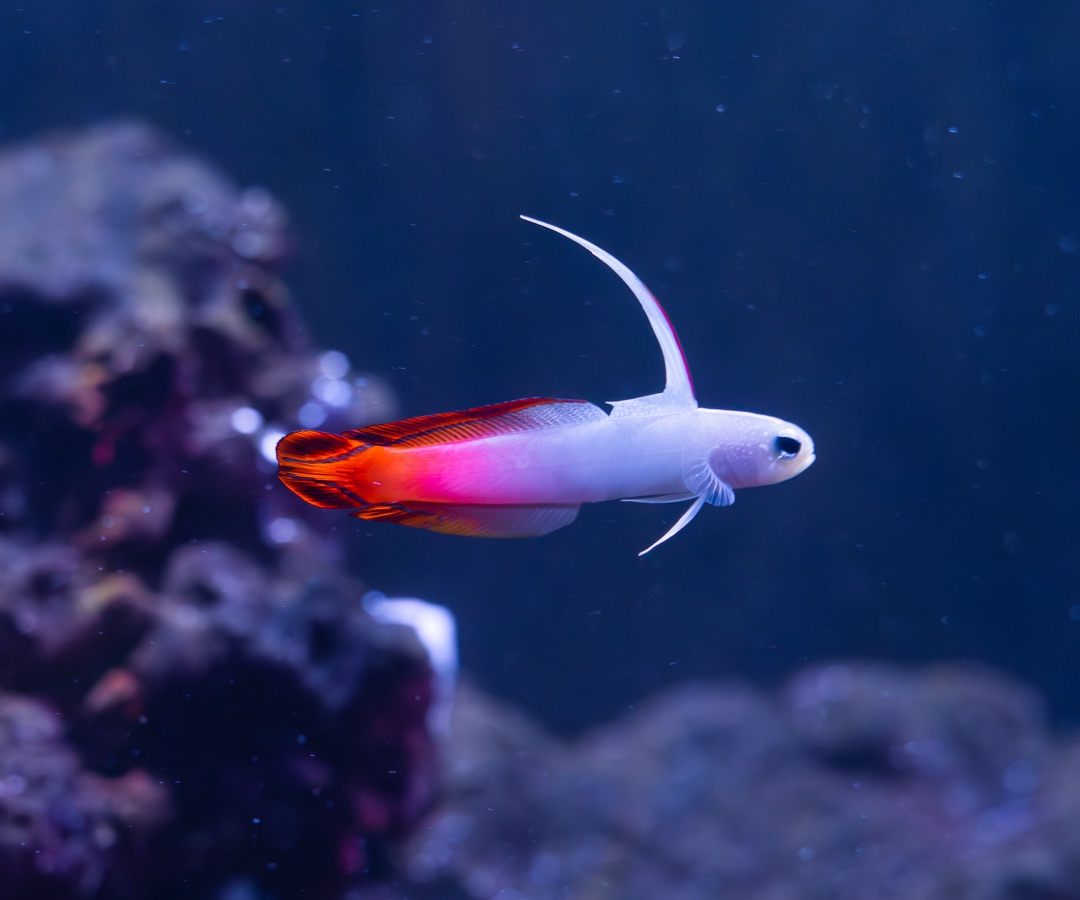
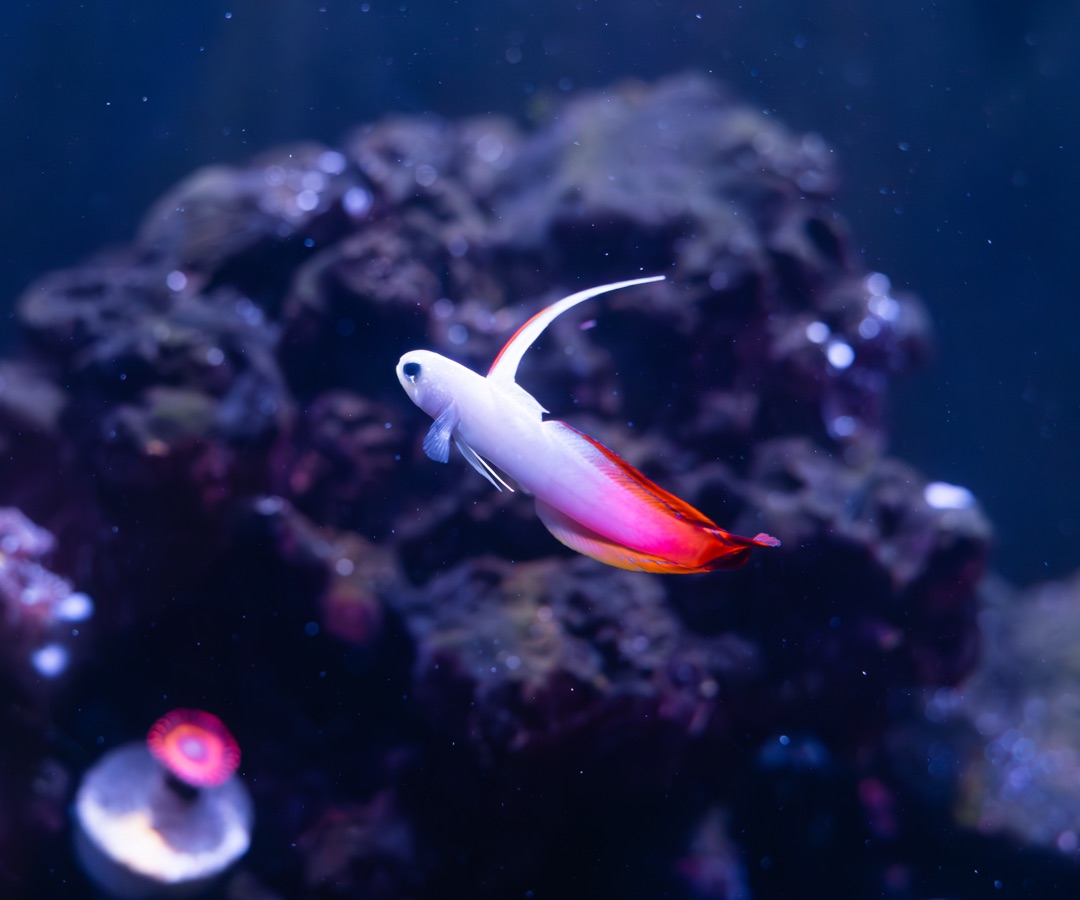
The Firefish Goby (Nemateleotris magnifica) is a slender dartfish with a pearly white-to-yellow head that grades into orange and a deep red-to-black tail, topped by a tall first dorsal spine it flicks like a signal flag. Also sold as the Fire Dartfish or Magnificent Firefish, it stays around 3–3.5 inches, ignores corals and ornamental inverts, and is one of the easiest reef-safe midwater fish to keep—if you run a tight lid.
This guide covers tank size, jump risk, diet, pair behavior, and stocking so you can keep one (or a bonded pair) healthy long-term. When you are ready to buy, compare seller photos and QT notes in the ReefBay marketplace against the care targets below.
Quick care snapshot
- Scientific name: Nemateleotris magnifica
- Also called: Firefish, Fire Goby, Magnificent Dartfish, Magnificent Firefish, Red Firefish, Fire Dartfish
- Category: Goby / Dartfish
- Origin: Indo-Pacific
- Care level: easy
- Temperament: peaceful toward other species; unpaired conspecifics often fight
- Reef-safe: yes (corals and invertebrates)
- Suggested tank: 20+ gallons
- Max size: about 3.5 inches
- Social: solitary or bonded pair
- Diet: carnivore — zooplankton, mysis, brine shrimp, frozen and small prepared foods
- Jump risk: yes — tight-fitting lid is mandatory
Tank size, rockwork, and the lid rule
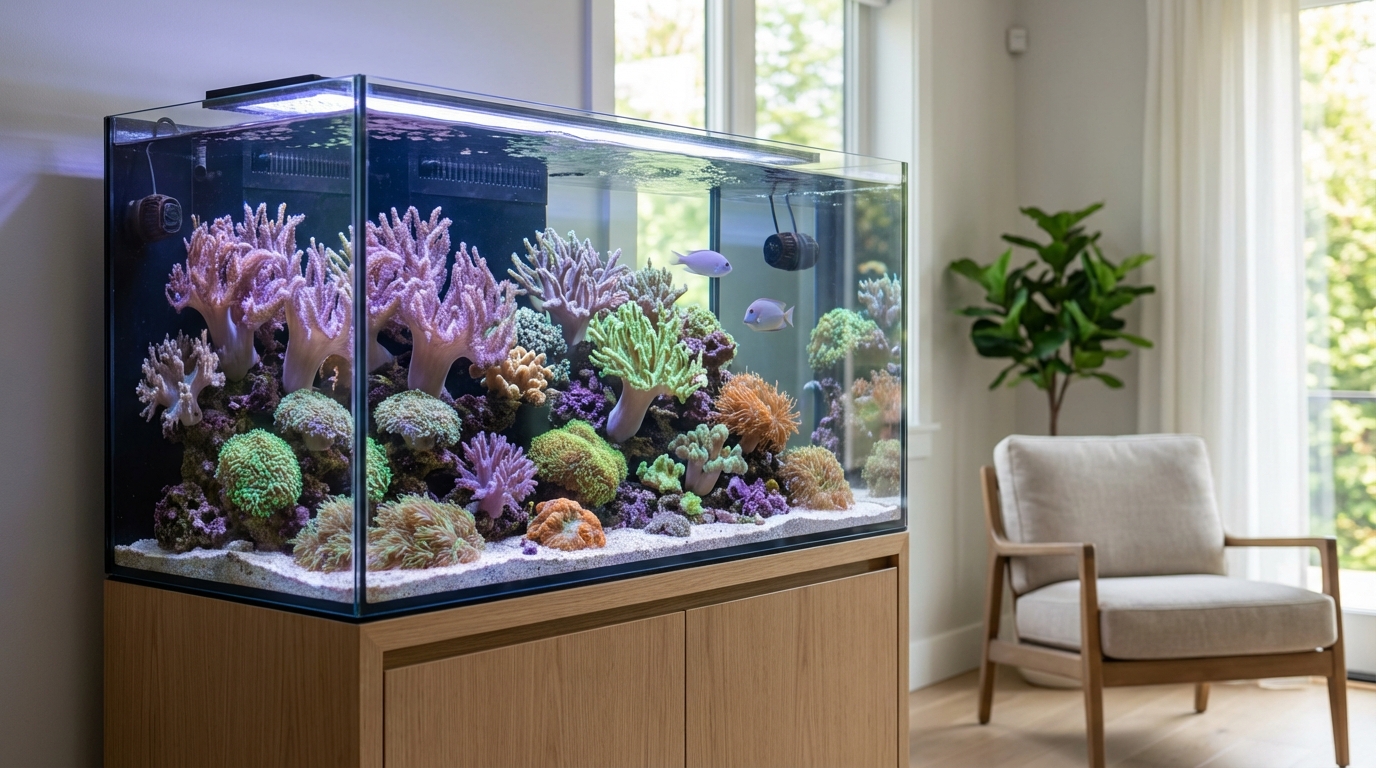
Plan for a mature 20-gallon or larger system with plenty of live rock. Firefish are shy hoverers that claim a burrow or rock crevice and dart back into it when startled. They are not open-water cruisers like tangs.
- Provide caves, holes, and overhangs so the fish can retreat without panic
- Keep flow moderate near their hangout; a firehose into the burrow keeps them locked in hiding
- Always use a tight-fitting lid or mesh top. Startled firefish jump through the smallest gaps—owners routinely find them on the floor overnight
- Add them after the tank is cycled and parameters are stable
In peaceful nanos, one fish can thrive. In larger communities, still prioritize calm tankmates and escape holes over raw gallon count.

Diet and feeding
Firefish are carnivore plankton-pickers. Stick to mysis, brine shrimp, copepods, and small frozen or prepared foods they can grab mid-water.
- Offer small portions 12 times daily (or more micro-feeds if the fish is shy)
- Target food near their burrow if faster tankmates steal mid-water meals
- Rotate foods so color and condition stay high
- A sunken belly usually means competition or insufficient feed frequency—not “mystery disease” first
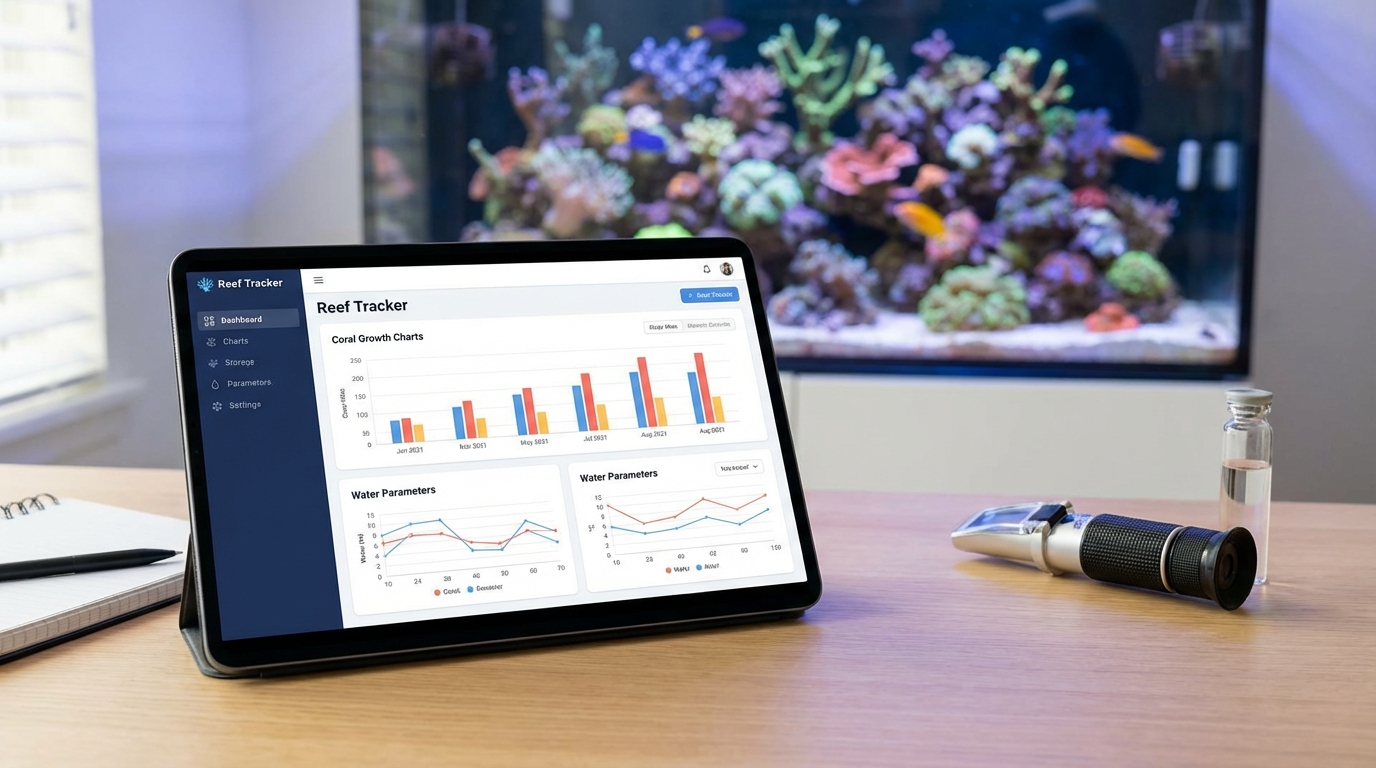
Once settled, many firefish become bold at feeding time. Track appetite in the ReefBay app so a skip day is obvious.
One fish or a pair?
Keep one specimen or a known bonded pair. Unpaired conspecifics usually fight, and sexing is hard by eye, so dumping two random adults into a small tank is a common mistake.
- Good neighbors: clownfish, Banggai or other peaceful cardinals, watchman gobies, chromis, peaceful wrasses, soft/LPS coral tanks
- Risky: another unpaired firefish; aggressive dottybacks, large wrasses, or bullies that force all-day hiding
- Stocking tip: add the firefish when the tank is already peaceful, and give it rockwork before flashier diggers claim every hole
- Quarantine: still QT — easy care does not mean disease-proof
Behavior quirks worth knowing
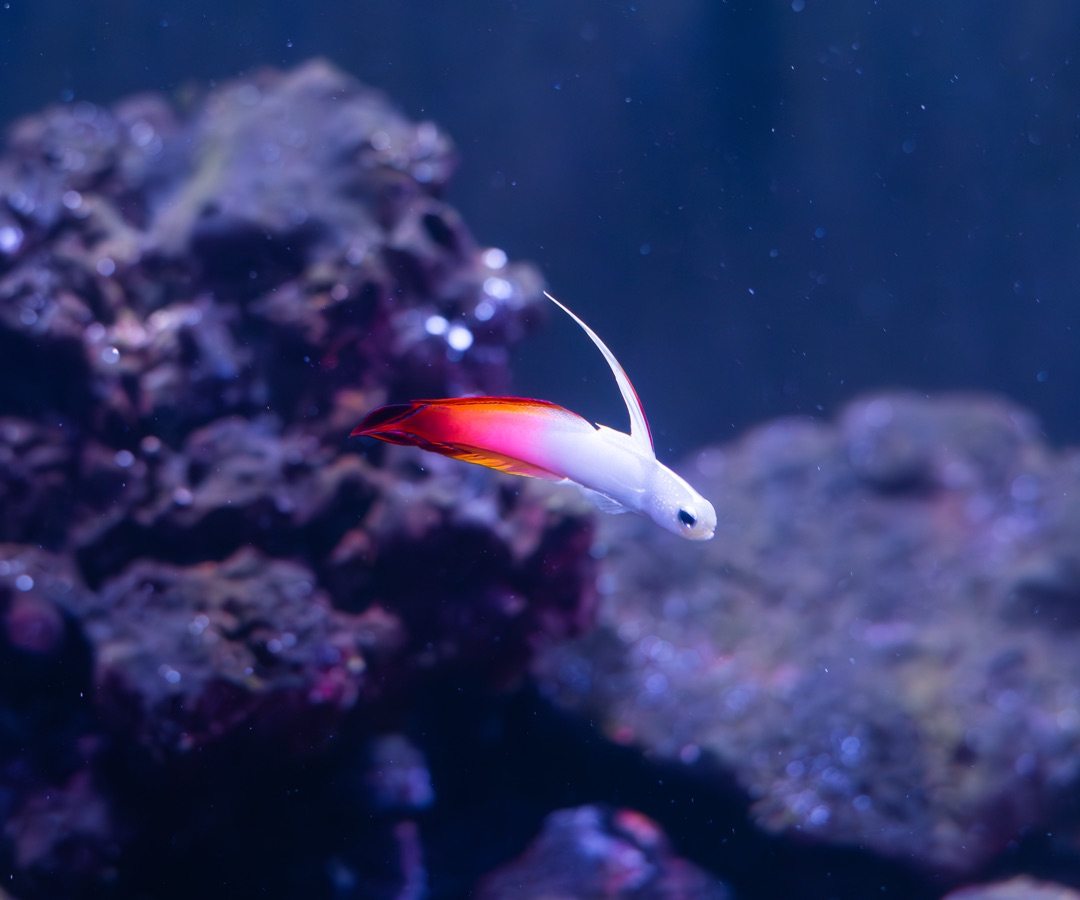
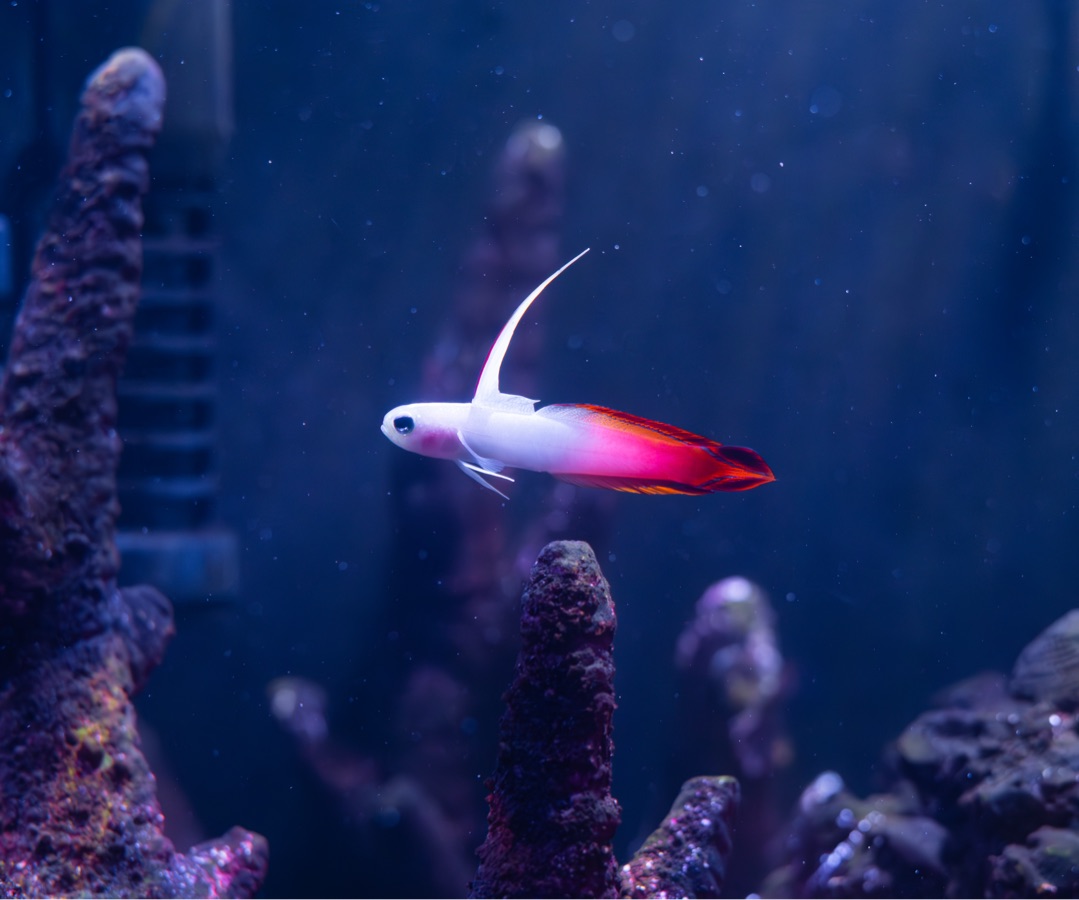
Expect a fish that “lives in the rock.” Many owners see a white-and-red body hovering near a hole more than a constant open-water swimmer. Instant darts into cover are normal—that is how dartfish survive.
- Raising and lowering the first dorsal spine is normal display, not distress by itself
- All-day hiding plus refusal to eat is the red flag (bullying, poor acclimation, or disease)
- Night hiding is normal; check lids after lights-out during the first weeks
Common problems and quick fixes
- Found on the floor: improve lid/mesh coverage; reduce night startle (shadows, sudden lights)
- Hiding all day: remove bullies, add more caves, feed near shelter
- Weight loss: increase feed frequency; reduce competition; confirm QT parasites if wasting continues
- Conspecific fighting: keep only one, or a known bonded pair in enough space
Buying checklist before you click purchase
- Confirm a tight lid or mesh top is already on the display tank
- Match tank size (20+ gallons) and peaceful tankmates
- Plan small meaty feeds (mysis, brine, fine frozen/prepared)
- Buy one fish or a known pair—not two random adults “to see”
- Have a quarantine plan ready
- Compare active listings and seller reputation in ReefBay before you commit
Ready to shop? Open the Firefish Goby taxon page in ReefBay, compare community photos next to care notes, and browse the marketplace for healthy stock.