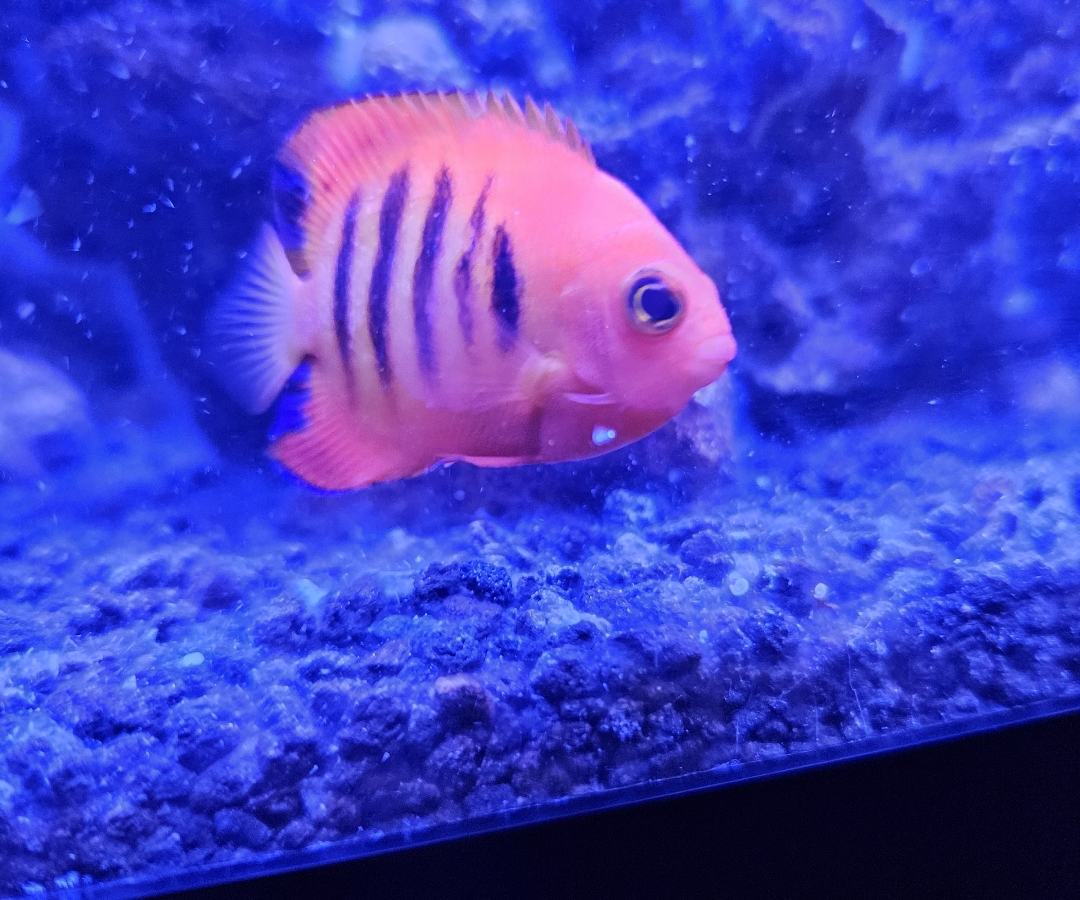
Flame Angelfish Care Guide: Tank Size, Diet, Reef-Safe Caution & Aggression
Learn Flame Angelfish (Centropyge loricula) care: 55+ gallon tanks, nori plus meaty foods, reef-safe-with-caution coral risk, semi-aggressive stocking, and what to check before you buy on ReefBay.
Quick answer
A Flame Angelfish (Centropyge loricula) does best in a mature 55+ gallon tank with caves and broken rock lines, daily nori plus mysis or enriched brine, and careful stocking because it is semi-aggressive and reef-safe with caution. Expect about 4 inches of adult size and some coral-nipping risk.
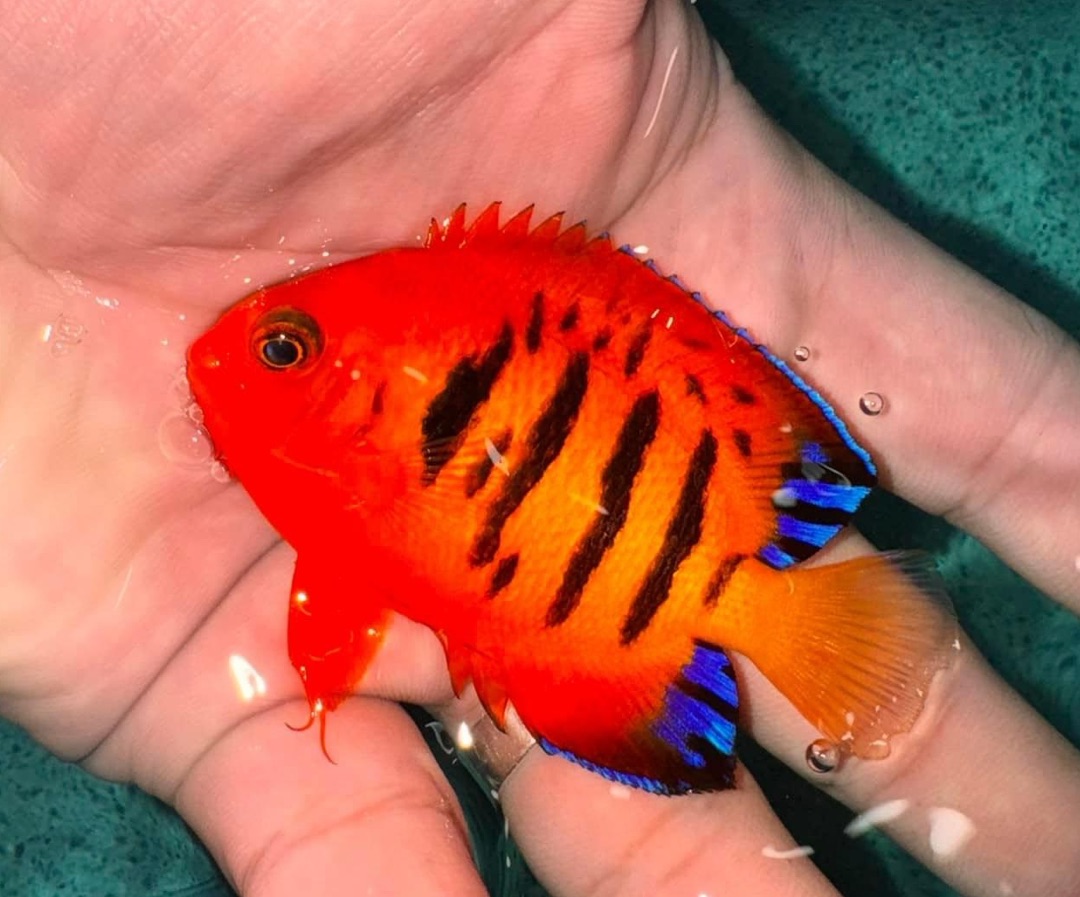
The Flame Angelfish (Centropyge loricula) is a compact dwarf angelfish famous for deep orange-to-red flanks, bold vertical black bars, and blue highlights on the dorsal and anal fins. It stays around 4 inches, stays busy on rockwork, and is a strong marketplace search fish—but it is not a “drop in and forget” beginner pick.
This guide covers tank size, diet, reef-safe-with-caution realities, aggression management, and a practical buying checklist. When you are ready to purchase, compare live listings in the ReefBay marketplace against the care targets below.
Quick care snapshot
- Scientific name: Centropyge loricula
- Also called: Flame Angel, Flaming Angelfish, Japanese Pygmy Angelfish, Flame Dwarf Angelfish
- Category: Dwarf angelfish
- Origin: Tropical Pacific (Central and Western Pacific reefs)
- Care level: moderate
- Temperament: semi-aggressive; can harass smaller or similar-shaped fish
- Reef-safe: with caution — may nip LPS, soft corals, clam mantles, and SPS polyps
- Suggested tank: mature 55+ gallons with caves and broken rock lines
- Max size: about 4.0 inches
- Social: usually one per tank unless you have a very large system and plan carefully
- Diet: omnivore — algae/nori plus meaty foods such as mysis and enriched brine
- Jump risk: low for this species, but a lid still helps during acclimation
Tank size, aquascape, and flow
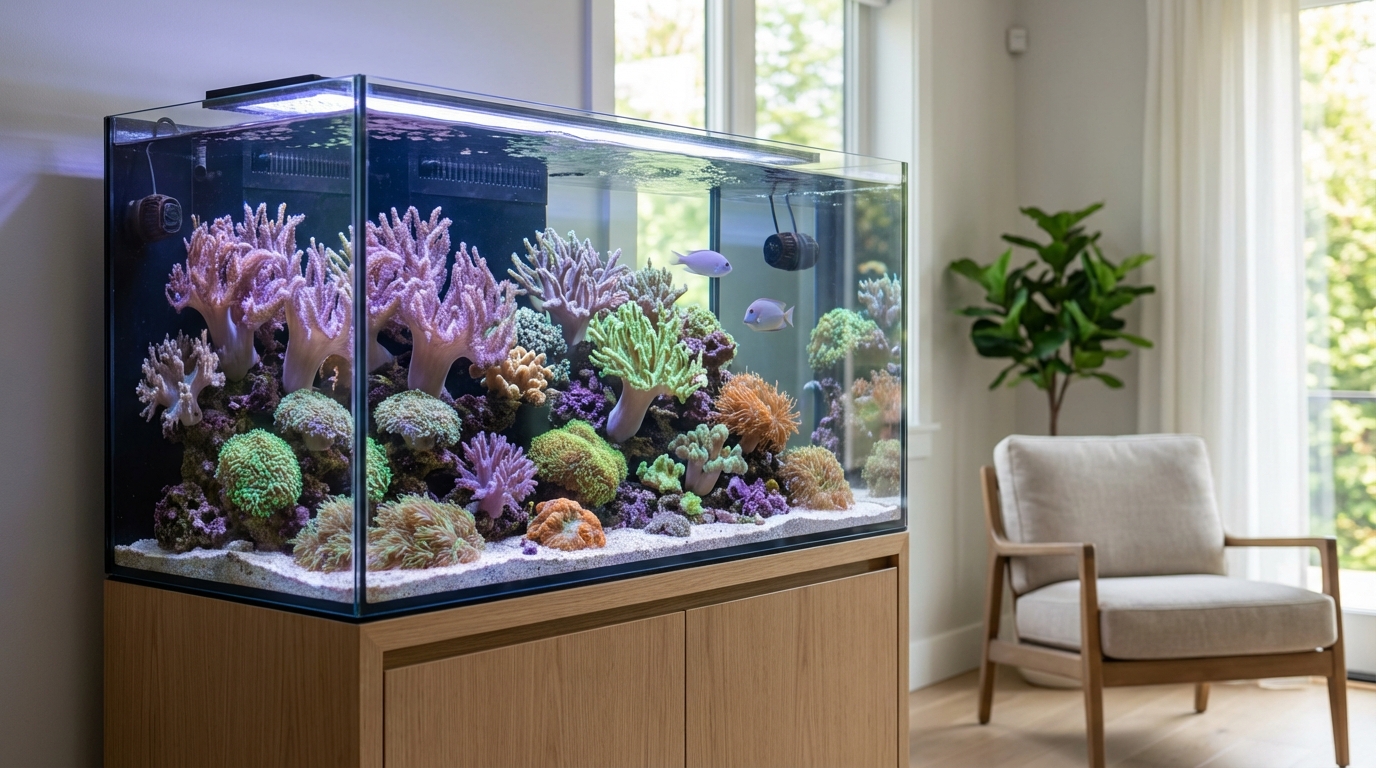
Plan for a mature system of about 55 gallons or larger. Flame Angelfish are active grazers that claim rock territory. They need caves, overhangs, and enough linear rock so they can establish a home range without constantly colliding with tankmates.
- Provide multiple caves and shaded ledges before introduction
- Keep open swimming lanes along the rockwork so it can patrol without cornering others
- Stable parameters matter more than flashy equipment—add them only after the tank is boringly settled
- In tanks under 55 gallons, aggression and coral nipping both get harder to manage
If your goal is a delicate SPS-only display with prized clams, reconsider. If you want a colorful dwarf angel in a mixed reef and can accept some coral risk, a Flame can be a standout centerpiece.
Diet and feeding schedule
Flame Angelfish do best as true omnivores: algae and nori every day, plus meaty frozen foods. Thin fish and faded color usually mean competition at feeding time or too little plant matter, not “mystery disease” first.
- Offer nori or seaweed clips daily so grazing is available between meals
- Feed meaty foods (mysis, enriched brine, quality angel/omnivore blends) 1–2 times daily in small portions
- Use a feeding station or stick if faster fish outcompete it mid-water
- Keep herbivore coverage high—hungry Flames are more likely to sample coral tissue
Captive-bred or long-term aquarium fish that already eat prepared foods are worth paying for. Ask sellers on ReefBay for recent feeding videos before you buy.
Reef-safe with caution (read this before stocking)
Treat “reef-safe with caution” as a real warning. Many Flames ignore corals for months, then suddenly nip LPS fleshy polyps, zoanthids, softies, or clam mantles. Individual temperament varies.
- Higher risk: clam mantles, large-polyp LPS, zoas, and some soft corals
- Lower risk: many SPS-heavy tanks with robust polyps and constant grazing food—still not a guarantee
- Mitigation: keep the fish well-fed, give ample rock to graze, and avoid adding a Flame to a tank full of irreplaceable coral colonies

Compatibility and temperament
Semi-aggressive means the Flame may chase similarly shaped or smaller fish, especially other dwarf angels. Introduce it late in the stocking order when possible, or add it with a clear plan for who owns which caves.
- Often works: larger clownfish, peaceful wrasses, chromis in bigger tanks, many gobies and blennies if caves are plentiful
- Risky: other Centropyge in small-to-medium tanks; very shy nano fish; prized ornamental shrimp in tiny systems
- One per tank: default to a single Flame unless you have a large reef and experience pairing dwarf angels
- Quarantine: still QT—new angels can carry parasites even when they look perfect on arrival
Buying checklist on ReefBay
Before you tap Buy on a Flame Angelfish listing, verify:
- Clear, recent photos or video showing body thickness and active swimming
- Seller notes on diet (nori + frozen) and quarantine history
- Your tank is 55+ gallons, mature, and you accept coral-nipping risk
- You are not already stocking another territorial dwarf angel in the same footprint
Browse current Flame Angelfish and dwarf angel listings in the ReefBay marketplace, then match the fish to the tank you actually run—not the tank you wish you had.
Common mistakes to avoid
- Adding a Flame to an immature or under-55-gallon reef
- Skipping daily algae/nori and wondering why coral nipping starts
- Stocking two dwarf angels “because they looked cute together” in a mid-size tank
- Buying wild fish with no feeding proof when captive-acclimated options exist
Done right, a Flame Angelfish is one of the most vivid mid-size reef fish you can keep. Stock patiently, feed like an omnivore, and use ReefBay listings to compare healthy, well-documented fish before you commit.