Gem Tang Care Guide: Tank Size, Diet, Tankmates & Buying Tips
Gem Tang care made simple: tank size, algae-based diet, reef safety, which tangs it fights with, ich prevention, and tips for buying a healthy fish.
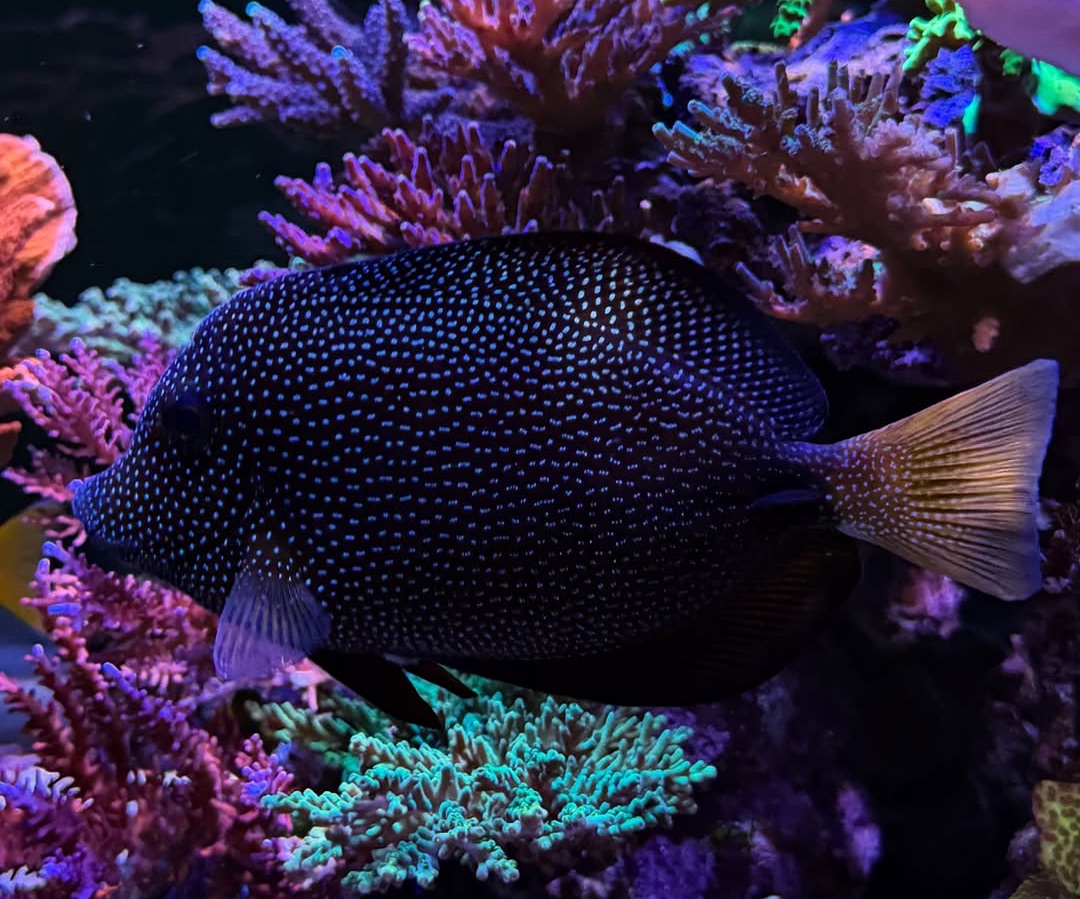
The Gem Tang (Zebrasoma gemmatum) is a dark tang covered in tiny white spots, with a bright yellow tail. It is rare, pricey, and one of the most wanted fish in the hobby.
Quick facts
- Tank size: 125 gallons or more, about 6 feet long
- Adult size: about 8 to 9 inches
- Diet: mostly algae; nori, seaweed pellets, and some mysis
- Reef safe: yes, it leaves corals and inverts alone
- Difficulty: moderate
- Temperament: semi-aggressive, mostly toward other tangs
Why it is so special
Gem Tangs come from a small area of the western Indian Ocean, around Mauritius, Madagascar, and southern Africa. Few are collected, so they often sell for well over $1,000.
They are close cousins of the Yellow Tang and Purple Tang, so their care is very similar.
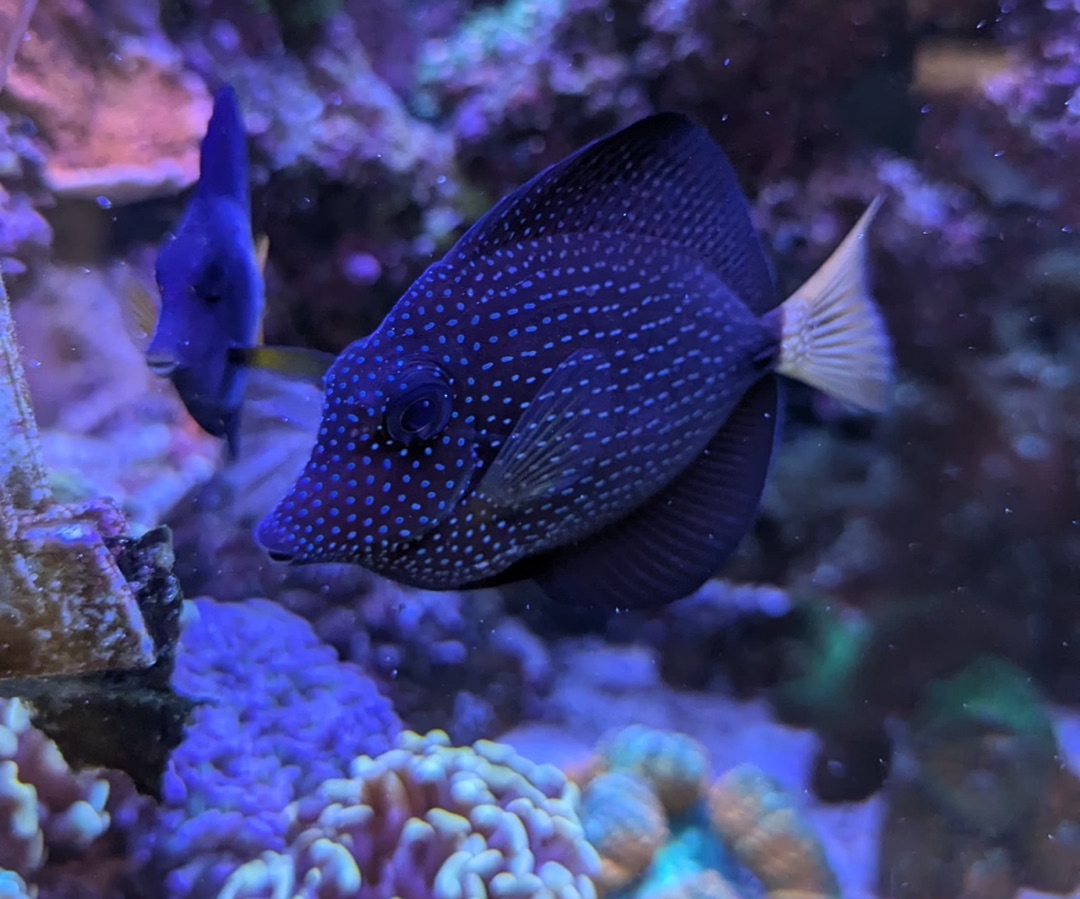
How to tell it apart
- Gem Tang: dark navy to black body, many small white dots, yellow tail
- Purple Tang: purple body with a yellow tail, but no white dots
- Black Tang: solid black body with no white dots and no bright yellow tail
Young Gem Tangs have the same spots as adults, so they are easy to spot even when small. Because it costs so much, always check the spots and tail before you pay.
Tank setup
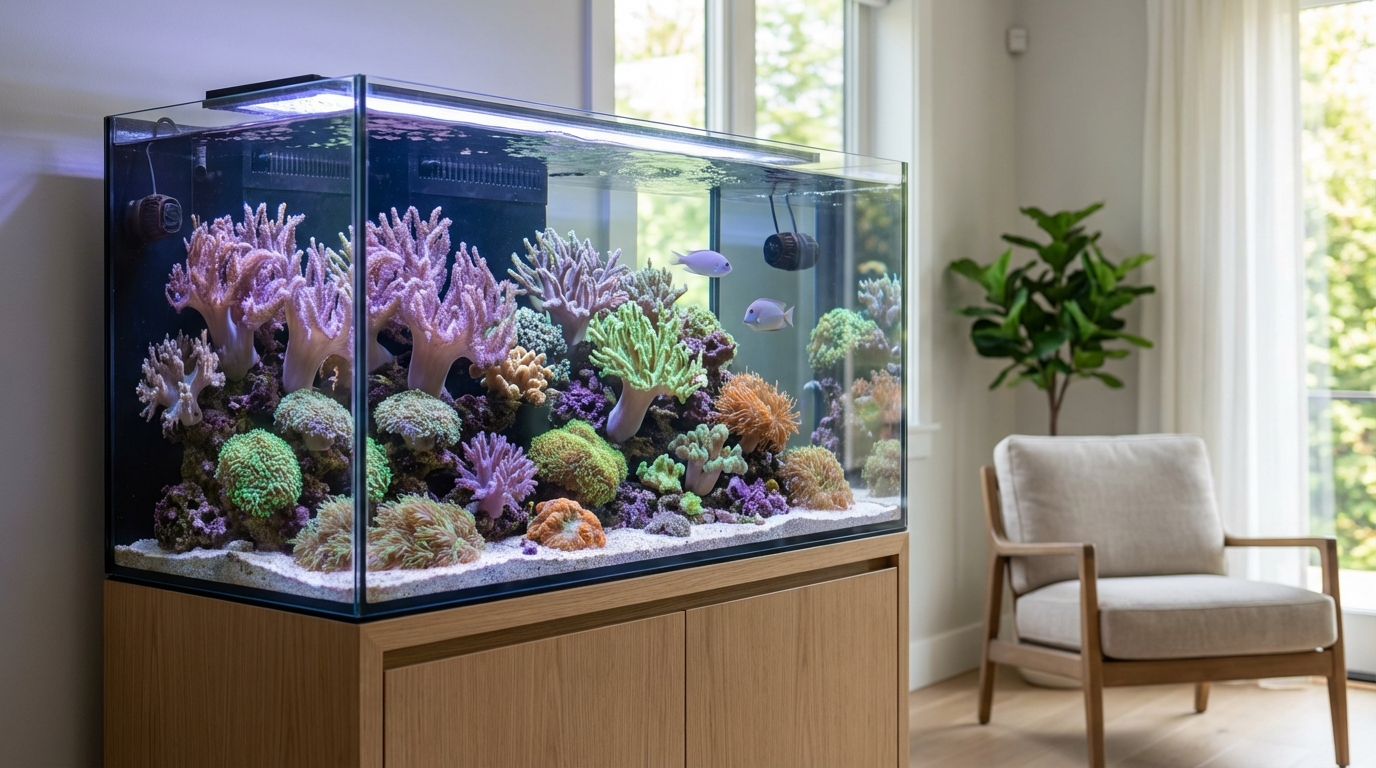
- Swimming room: a long tank with open water in front of the rocks
- Rockwork: caves and ledges so it can hide at night
- Water: 74–80°F, salinity 1.023–1.025, pH 8.1–8.4
- Flow and oxygen: strong flow and good surface movement
Only add it to a tank that has been running and stable for several months.
Diet and feeding
Tangs graze on algae all day. A hungry tang gets stressed and sick more easily.
- Clip a sheet of nori or dried seaweed to the glass every day
- Add a quality herbivore pellet or flake
- Offer frozen mysis or brine shrimp a few times a week
- Feed small amounts 2 to 3 times a day
Is it reef safe?
Yes. It does not eat corals, clams, shrimp, or snails. It may even help keep hair algae down.
Tankmates
- Good matches: clownfish, wrasses, gobies, chromis, and angelfish in a big tank
- Use caution: other tangs, especially Yellow, Purple, or Sailfin Tangs with the same body shape
- Tip: add the Gem Tang last, or add all tangs at the same time
Keep only one Gem Tang per tank.

Photo: Hausi (meerwasserwiki.de), Wikimedia Commons, CC BY-SA 3.0 — Gem Tang
Health and lifespan
- Watch for: white spots (ich), cloudy eyes, or fast breathing
- Quarantine: keep it in a separate tank for a few weeks before adding it
- Lifespan: 10 years or more with good care
Stable water, lots of greens, and a calm tank are the best ways to keep it healthy.
Buying tips
- Look for: a round belly, clear eyes, and a fish that is already eating
- Skip: fish with a pinched belly, torn fins, or red marks
- Ask: how long the seller has had it and what it eats
Not ready for a Gem Tang yet? Read our Yellow Tang guide for a hardier cousin.
FAQ
Why is the Gem Tang so expensive? It lives in a small area and few are collected, so supply is very low.
Can a Gem Tang live with a Yellow Tang? Sometimes, in a large tank. Add them together or add the Gem Tang last to cut down on fighting.
Is it good for beginners? Not as a first fish. It is fine for keepers who already have a large, stable tank.
Looking for one? Browse livestock in the ReefBay shop, then track feedings and water tests in the ReefBay app.