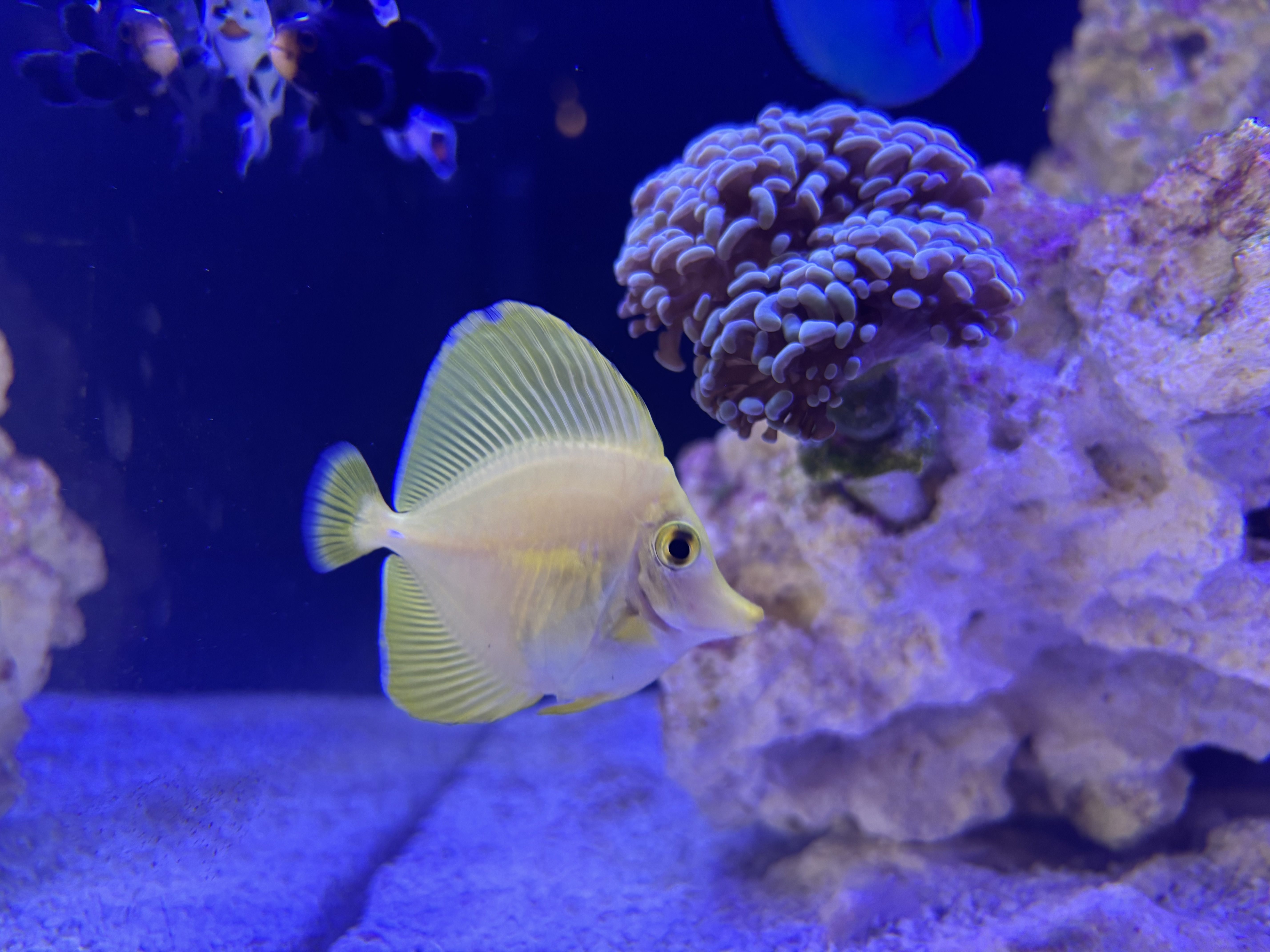
Yellow Tang Care Guide: Tank Size, Diet & Reef Behavior
Learn Yellow Tang (Zebrasoma flavescens) care: 75–125+ gallon tanks, nori/algae diet, tang temperament, jump-risk lids, and what to check before you buy on ReefBay.
The Yellow Tang (Zebrasoma flavescens) is the classic bright-yellow surgeonfish that defines many reef aquariums. Compact for a tang, endlessly active, and always grazing, it rewards mature systems with constant algae cleanup and nonstop personality — provided you give it swim room, a herbivore diet, and a lid that closes every gap.
This guide covers tank size, nori-first feeding, tang temperament, jump lids, and a practical ReefBay buying checklist. When you are ready to purchase, compare live listings in the ReefBay marketplace against the care targets below.
Quick care snapshot
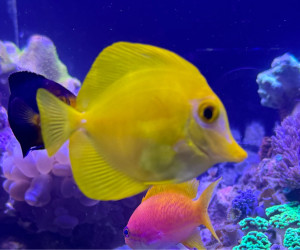
- Scientific name: Zebrasoma flavescens
- Also called: Yellow Tang, Hawaiian Yellow Tang, Yellow Sailfin Tang
- Category: Tang / Surgeonfish
- Origin: Central Pacific — Hawaii and nearby islands (captive-bred fish now widely available)
- Care level: moderate
- Temperament: semi-aggressive — especially toward other tangs and similarly shaped grazers
- Reef-safe: yes with corals; may nip small inverts or polyps if underfed
- Suggested tank: mature 75–125+ gallons with long swim lanes (larger is better for adults)
- Max size: about 8 inches
- Social: best as a single specimen in most home reefs; groups only in very large systems
- Diet: herbivore — marine algae, nori/seaweed, spirulina-based foods
- Jump risk: yes — use a tight-fitting lid
Tank size, aquascape, and flow
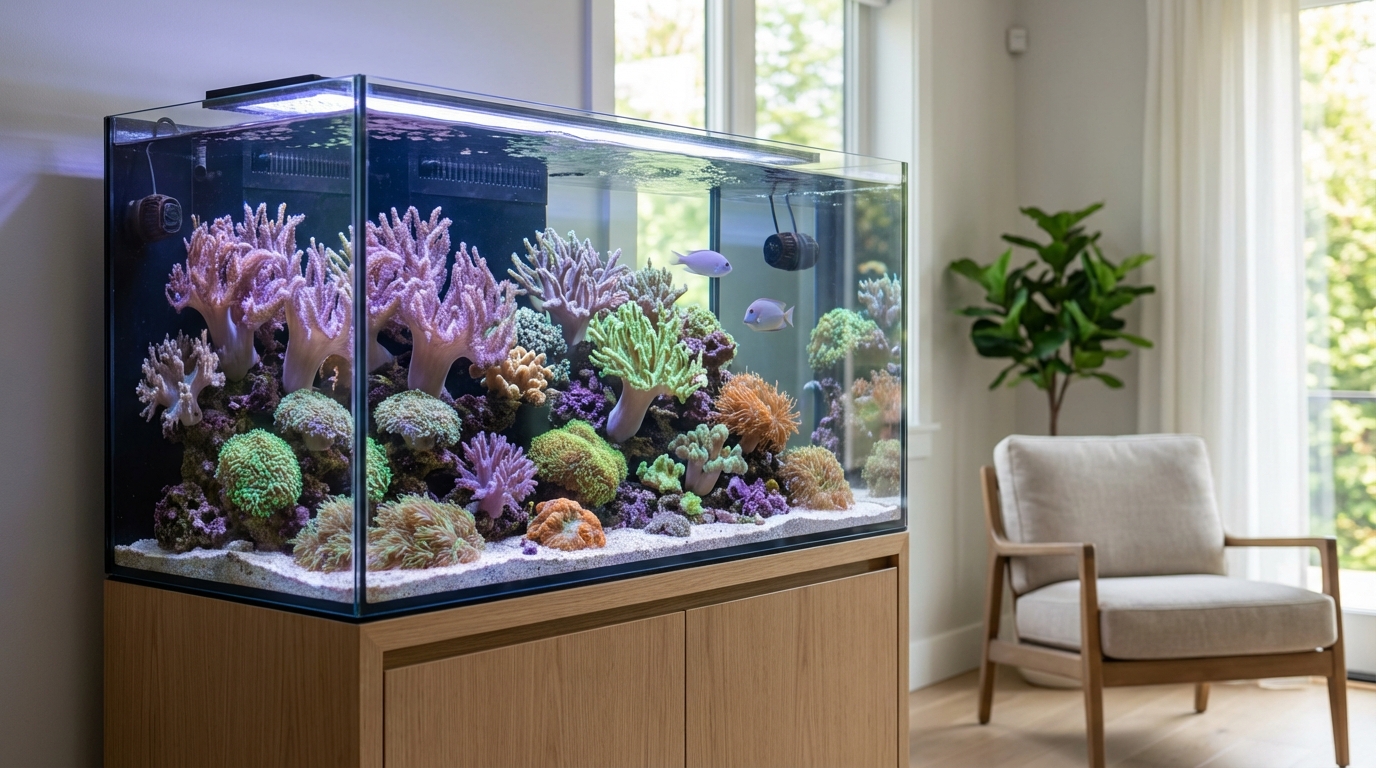
Plan for a mature system of about 75–125 gallons or larger. Yellow Tangs are perpetual mid-water cruisers that need length more than height, live rock for film-algae grazing, and stable reef parameters before you add a surgeonfish.
- Leave clear horizontal swim lanes along the front and top of the aquascape
- Provide live rock with natural film algae plus overnight resting spots
- Keep flow strong enough to oxygenate and move detritus without blasting every perch
- Add them only after the tank is cycled, algae is established, and parameters are stable
In anything under roughly 75 gallons, adults outgrow the footprint quickly and aggression rises. If you already keep other Zebrasoma or look-alike tangs, introduce carefully (or skip conspecifics) — yellows often claim grazing territory.
Diet and feeding schedule
Treat this species as a true herbivore: nori/seaweed sheets, marine algae, and spirulina-based pellets or frozen herbivore blends. Continuous grazing opportunity matters as much as scheduled feedings — idle, hungry tangs are more likely to bother inverts or pick at polyps.
- Clip nori daily (or multiple times in large systems) so grazing is available across the day
- Rotate spirulina pellets, herbivore gels, and blanched marine veggies
- Offer occasional meaty enrichment (mysis) without replacing greens as the staple
- Ask sellers for recent feeding video — fish already hitting nori settle faster
Thin bodies, pinched bellies, and faded yellow usually mean insufficient algae first. Captive-bred and captive-acclimated fish that already graze prepared nori on ReefBay listings are worth prioritizing.
Compatibility, tang aggression, and reef behavior
Yellow Tangs are generally reef-safe with corals when well fed, but they are semi-aggressive toward other tangs and similarly shaped grazers. Plan stocking around a single Yellow Tang in most home reefs, and add it with a clear territory plan if other surgeonfish are present.
- Best social setup: one Yellow Tang in 75–125+ gallons; add early if other tangs will share a very large system
- Often works: clownfish, peaceful wrasses, appropriately sized angelfish, chromis, mixed LPS/SPS reefs with ample greens
- Watch closely: other Zebrasoma, look-alike yellow morphs, and aggressive tangs in a tight footprint
- Inverts and corals: reef-safe when well fed; underfed fish may nip small inverts or polyps
- Quarantine: still QT — tangs are ich magnets compared with many nano fish
Jump risk — lid required
Surgeonfish are strong jumpers, and Yellow Tang is flagged as jump-risk. A tight-fitting lid or mesh cover is required, especially during acclimation, after lights-out startle events, and when chasing food near the surface.
- Cover every rim gap, overflow notch, and cable cutout
- Dim lights for the first evenings after introduction
- Avoid sudden shadows and aggressive surface netting
Buying checklist on ReefBay
Before you tap Buy on a Yellow Tang listing, verify:
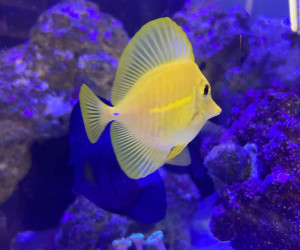
- Clear, recent photos or video showing body thickness, intact fins, alert swimming, and bright even yellow color
- Seller notes on diet (nori / herbivore pellets), captive-bred vs wild-caught, and quarantine history
- Your tank is 75–125+ gallons with open swim lanes, grazing rock, and a tight lid
- You have a stocking plan for other tangs — ideally one Yellow Tang unless the system is very large
- Compare active listings and seller reputation in the ReefBay marketplace before you commit
Ready to shop? Browse live Yellow Tang listings on ReefBay, save sellers you trust, and match each fish against the tank-size, diet, and lid checklist above.