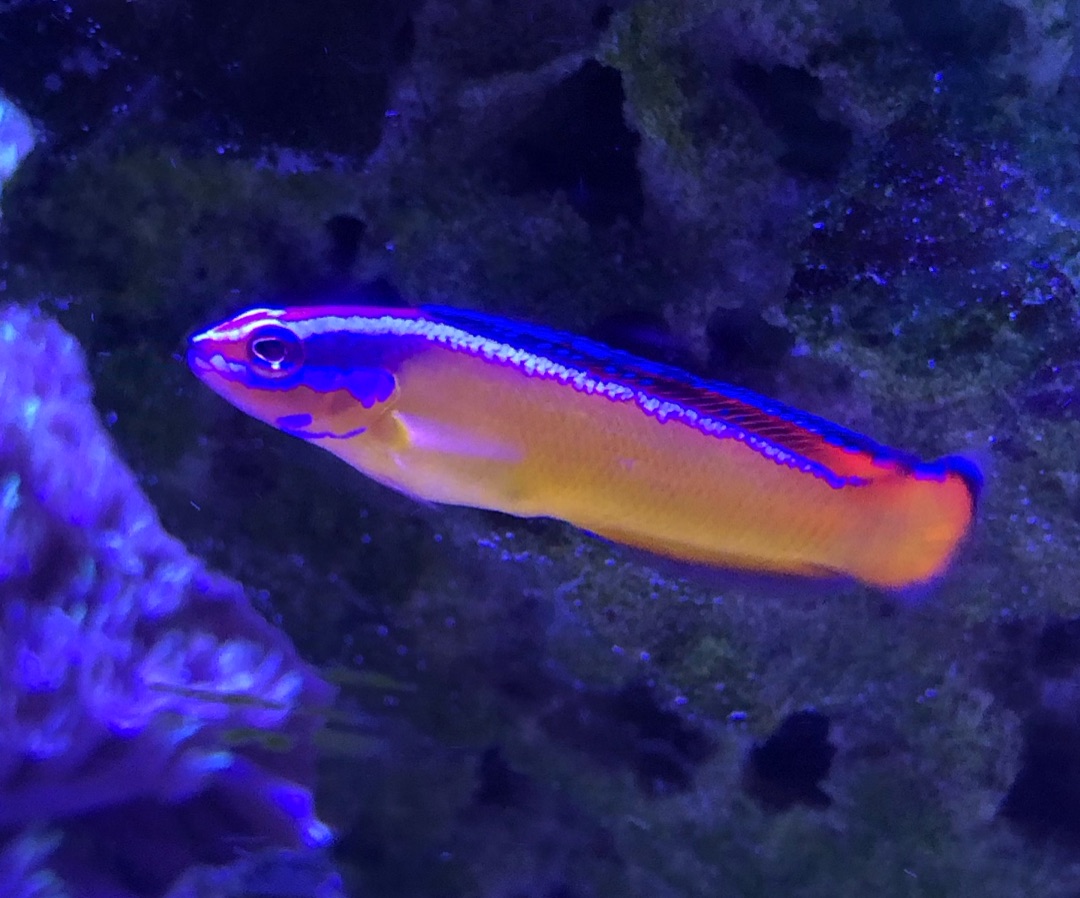
Neon Dottyback Care Guide: Tank Size, Diet, Reef Safety & Tankmates
Neon Dottyback care made simple: the right tank size, what to feed it, whether it is reef safe, which tankmates work, and how to pick a healthy fish.
The Neon Dottyback (Pseudochromis aldabraensis) is a small, hardy fish with a bright orange body and electric blue stripes. It is easy to feed and full of attitude.
Quick facts
- Tank size: 30 gallons or more
- Adult size: about 4 inches
- Diet: carnivore; frozen mysis, brine shrimp, and quality pellets
- Reef safe: yes with corals; may eat tiny shrimp
- Difficulty: easy
- Temperament: semi-aggressive and territorial
What makes it special
Few fish this small have colors this bold. A bright blue line runs from the nose along the back, glowing over an orange-red body.
It comes from the Indian Ocean, Red Sea, and Persian Gulf. Captive-bred fish are common, and they are often calmer and tougher than wild ones.

Tank setup
Dottybacks love caves. Give it plenty of rockwork so it can claim a home and feel safe.
- Size: 30 gallons minimum; bigger helps spread out aggression
- Rock: lots of caves, ledges, and holes
- Lid: use a mesh lid; dottybacks can jump
- Water: 74-80°F, salinity 1.023-1.025, pH 8.1-8.4
Add it last, after peaceful fish have settled in. This keeps it from bossing the whole tank.
Feeding
Neon Dottybacks eat almost anything meaty. Feed small portions once or twice a day.
- Frozen mysis shrimp and brine shrimp
- Marine pellets or flakes
- Chopped seafood soaked in vitamins now and then
They also hunt bristleworms and pests on the rock, which is a nice bonus.
Behavior
Expect a bold, curious fish. It darts in and out of the rocks all day and watches you at the glass.
It is also very territorial. Once it picks a cave, it will chase away any fish that comes too close, even fish much bigger than itself.
- Most active during the day; sleeps in its cave at night
- Rearranging rocks can reset territories and calm things down
- Females are often a bit calmer than males
A hiding fish in the first week is normal. Most dottybacks come out and start eating within a few days.
Water quality basics
Neon Dottybacks handle small swings better than many reef fish, but stable water keeps them bright and healthy.
- Test ammonia, nitrite, and nitrate weekly at first
- Change 10-20% of the water every 1-2 weeks
- Keep nitrate under 20 ppm for the best color
Good flow and a protein skimmer help remove waste from all that meaty food.
Tankmates
This fish is tough for its size. Pick tankmates that can hold their own, and avoid tiny, shy fish.
- Good: clownfish, tangs, larger wrasses, rabbitfish, and angelfish
- Risky: other dottybacks, firefish, small gobies, and basslets
- Inverts: safe with corals, snails, and crabs; may pick at small shrimp
Keep only one dottyback per tank unless the tank is very large.

Photo: Diego Delso, Wikimedia Commons, CC BY-SA 4.0 — Neon Dottyback in the wild
Health and lifespan
- Lifespan: 5+ years with good care
- Watch for: white spots, fast breathing, or hiding all day
- Quarantine: follow our 30-day fish quarantine protocol
Captive-bred dottybacks rarely get sick if water stays stable.
Buying tips
- Choose captive-bred when you can
- Look for bright color, clear eyes, and full fins
- Ask to see it eat before you buy
- Skip fish with torn fins or a pinched belly
FAQs
Is the Neon Dottyback reef safe?
Yes. It ignores corals and clams, but it may eat very small shrimp.
Can I keep two Neon Dottybacks?
Usually not. Two in one tank often fight unless they are a mated pair in a large tank.
Is it good for beginners?
Yes. It is hardy and easy to feed. Just plan tankmates around its feisty nature.
Ready to add one?
Looking for a captive-bred Neon Dottyback or a good tankmate? Browse fish from trusted sellers on the ReefBay shop.