Starry Blenny Care Guide: Tank Size, Diet, Algae Grazing & Jump Risk
Learn Starry Blenny (Salarias ramosus) care: 30+ gallon setups, herbivore algae/nori diet, jump-proof lids, reef-safe-with-caution stocking, and what to check before you buy on ReefBay.
Quick answer
Starry Blennies need a mature 30+ gallon reef with abundant live rock, a tight lid, and steady film or hair algae to graze. They are peaceful, about 5.5 inches, and should be fed nori plus spirulina or herbivore foods once natural algae thins. Keep one per typical tank and watch for soft coral or clam nipping if underfed.
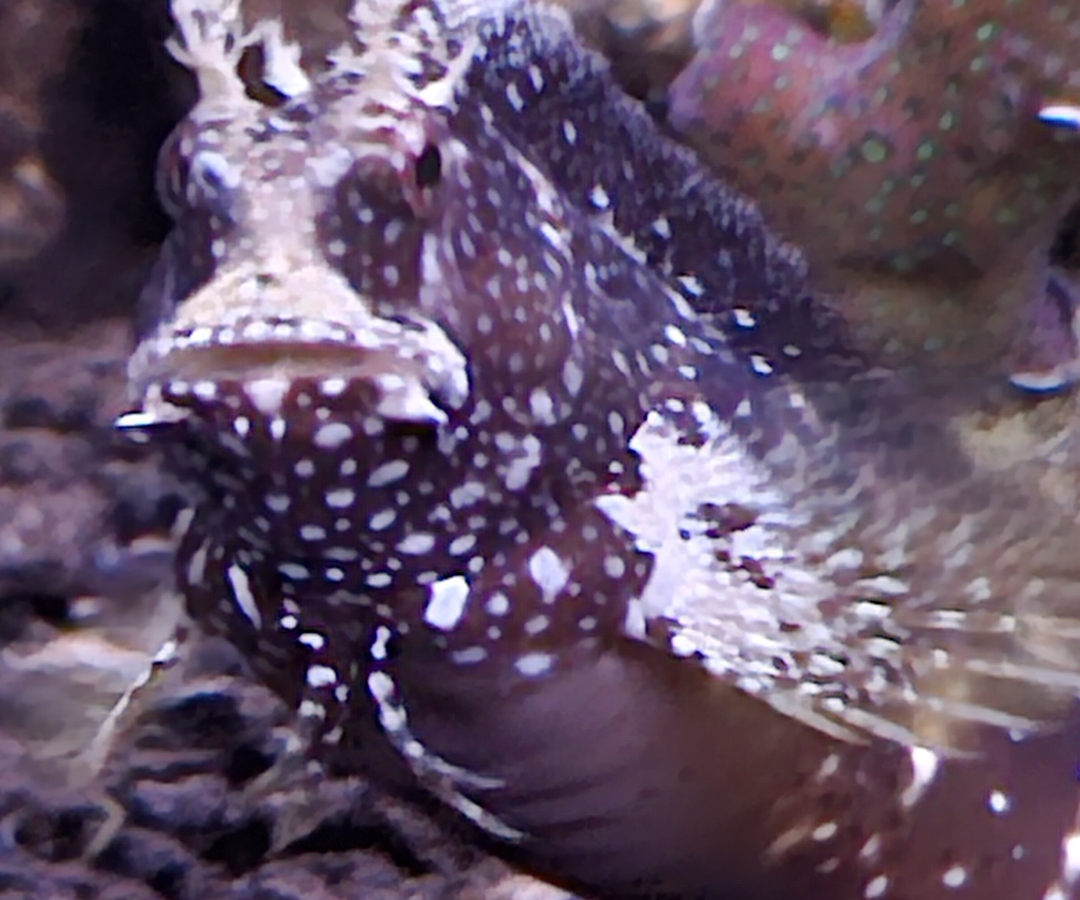
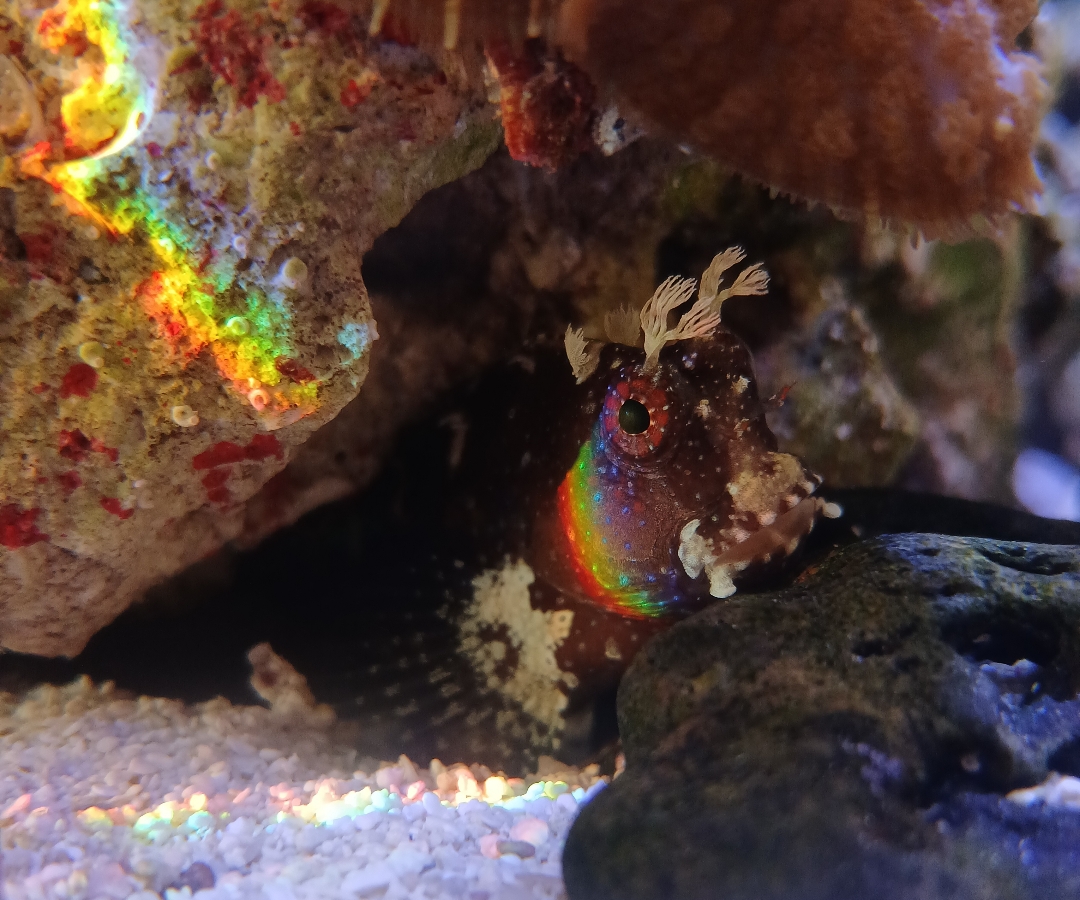
The Starry Blenny (Salarias ramosus) is a stocky, perching combtooth blenny with a mottled dark brown body covered in pearly white star-like speckles, frilly head cirri, and yellow-tinged pectoral and tail fins. Also sold as the Snowflake Blenny, Starry Algae Blenny, or Star Blenny, it spends its day hopping across rockwork grazing film and hair algae. It stays around 5.5 inches, is peaceful toward most tankmates, and is a popular algae-grazer for mature mixed reefs—with a few caveats around soft coral nipping and jump risk.
This guide covers tank size, diet, aquascape, reef-safe notes, stocking tips, and what to verify before you buy on ReefBay.
Quick care snapshot
- Scientific name: Salarias ramosus
- Also called: Snowflake Blenny, Starry Algae Blenny, Star Blenny
- Category: Blenny
- Origin: Western Central Pacific (Philippines to northwestern Australia)
- Care level: easy
- Temperament: peaceful toward most fish; territorial with other blennies, gobies, or similar bottom-dwelling body shapes
- Reef-safe: with caution (may nip soft corals or clam mantles when underfed)
- Suggested tank: mature 30+ gallons
- Max size: about 5.5 inches
- Social: solitary
- Diet: herbivore — algae, nori, spirulina
- Invert-safe: yes
- Jump risk: yes — use a tight lid
Tank size, aquascape, and jump risk
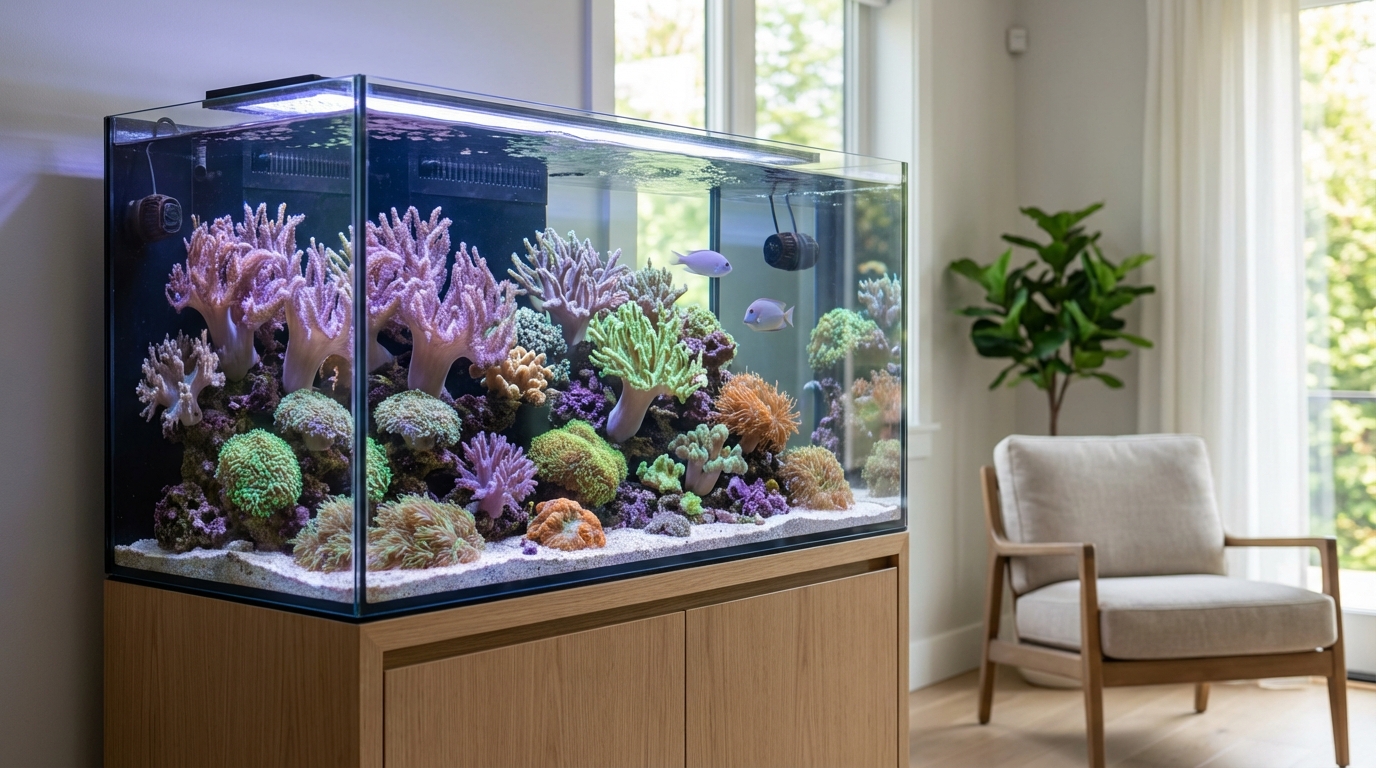
Plan for a mature 30-gallon or larger reef with abundant live rock for grazing and perching. Starry Blennies are not open-water cruisers; they hop, perch, and scrape film algae across rock faces all day.
- Provide caves, ledges, and rubble so the fish can claim a “home rock”
- Leave rock surfaces with some natural film algae; over-cleaned sterile setups starve grazers
- Jump risk is real — combtooth blennies launch through open tops and overflow gaps; use a full canopy or tight mesh lid
- Add them after the tank is cycled and microalgae is present, not into a brand-new sterile system
In nanos under 30 gallons, a single specimen can work if algae production stays high and tankmates are peaceful. Larger tanks give more grazing surface and reduce coral-nipping pressure when natural foods run short.
Diet and feeding schedule
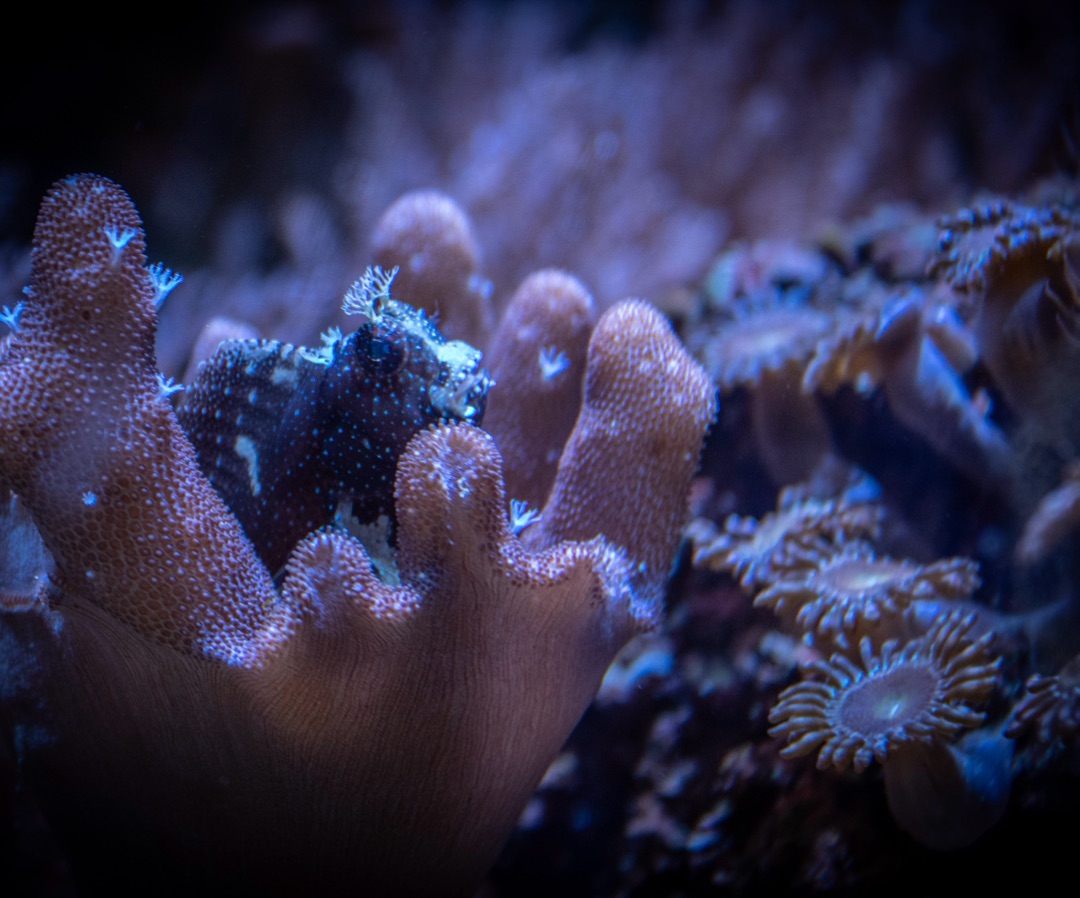
Starry Blennies are herbivores: algae, nori, and spirulina. Do not rely on “they’ll eat the algae” alone—especially once the tank is mature and grazed clean. Supplement with nori and herbivore preparations once natural algae is depleted.
- Offer dried nori or seaweed sheets on a clip several times a week
- Feed spirulina/herbivore pellets or flakes daily so the fish is not forced onto coral polyps or clam mantles
- Leave some rock surfaces ungroomed; over-cleaning removes their primary forage
- Watch body condition—a thin midsection or sudden soft-coral interest usually means not enough plant matter
Underfed individuals may nip at soft corals or clam mantles. Well-fed Starry Blennies with steady algae and nori access are far less likely to cause trouble.
Compatibility and stocking tips
Starry Blennies are peaceful toward most tankmates and invert-safe, but they are territorial with other blennies, gobies, or similarly shaped bottom dwellers. Stock one per typical home tank.
- Good neighbors: clownfish, firefish, chromis, peaceful wrasses, most LPS/soft coral tanks with steady algae and supplemental nori
- Watch closely: other Salarias or combtooth blennies in small tanks; look-alike rock-perching gobies; hungry fish in algae-poor systems
- Reef-safe with caution: keep them well fed so soft corals and clam mantles stay off the menu
- Quarantine: still QT new fish—peaceful does not mean disease-proof
Buying checklist on ReefBay
When you are ready to buy, cross-check marketplace listings against the care targets above and ask sellers for recent grazing and feeding video.
- Confirm the fish is eating nori or herbivore preparations, not only “picking at rock”
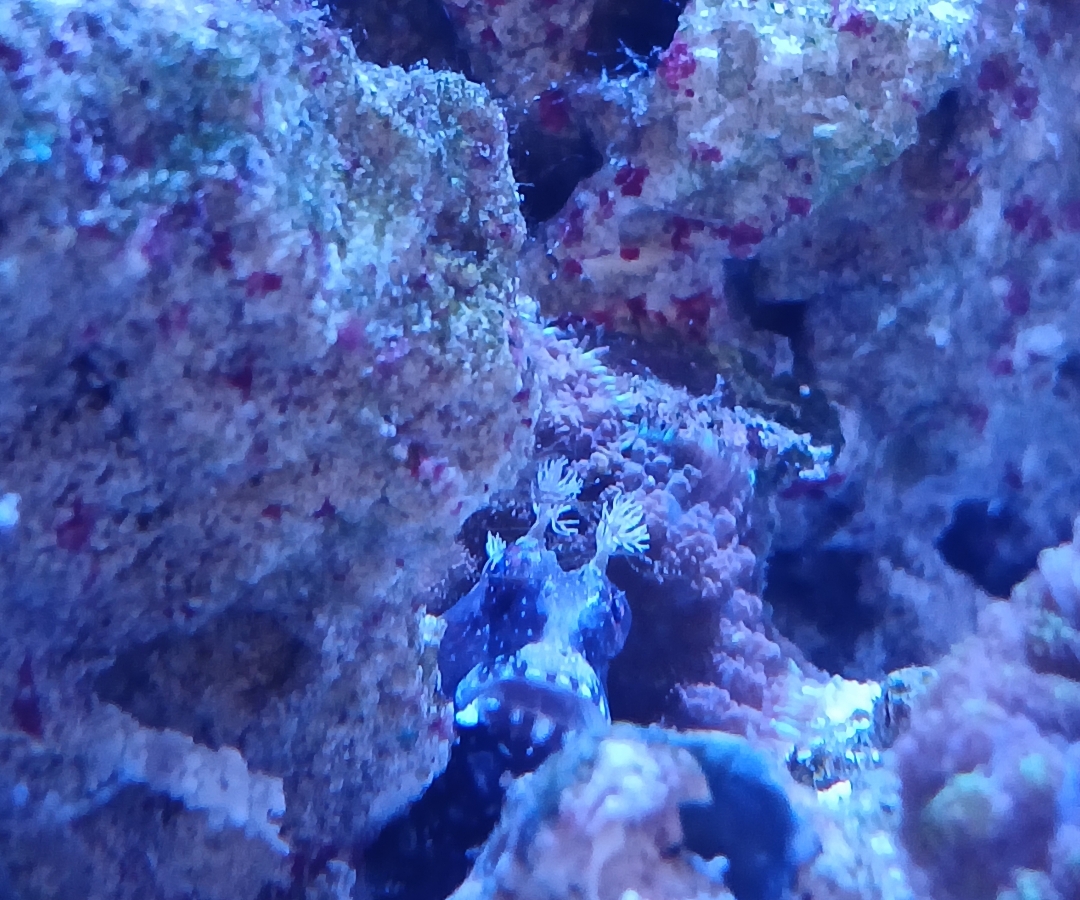
- Look for a full midsection, clear eyes, intact cirri, and active perching—no clamped fins or rapid breathing
- Ask about quarantine history and whether the specimen has been housed with other blennies
- Prefer tank-raised labels when available; still QT either way
Key takeaways
- Mature 30+ gallons with abundant live rock and a tight lid
- Herbivore diet: keep algae available and supplement with nori and spirulina once natural films thin out
- Keep one per typical home tank; watch other blennies and look-alike bottom dwellers
- Reef-safe with caution—well-fed fish are far less likely to nip soft corals or clam mantles
- Shop ReefBay listings with feeding video, QT notes, and body condition in mind