Yellow Assessor Care Guide: Tank Size, Diet, Reef Safety & Tankmates
Yellow Assessor care made simple: the tank size it needs, what to feed it, why it swims upside down, reef safety, and the best and worst tankmates.
The Yellow Assessor is a small, bright yellow fish that loves to hang upside down under rock ledges. It is peaceful, reef safe, and a great pick for a beginner reef tank.
Quick facts
- Tank size: 30 gallons or larger
- Adult size: about 2.5 inches
- Diet: carnivore; mysis, enriched brine shrimp, and small pellets
- Reef safe: yes; leaves corals and cleanup crew alone
- Difficulty: easy
- Temperament: peaceful, but may chase other assessors
What it looks like
This fish is solid golden yellow from nose to tail. Its fins have thin orange-red edges, and it has a soft blue ring around the eye.
- Other names: Yellow Assessor Basslet, Golden Assessor, Yellow Devilfish
- Scientific name: Assessor flavissimus
- Origin: Great Barrier Reef and Coral Sea, Australia
- Males vs. females: they look the same

Yellow Assessors under a rocky ledge on the Great Barrier Reef. Photo: jpdandretta, Wikimedia Commons, CC BY 4.0
Is it reef safe?
Yes. It does not pick at corals, clams, snails, or crabs.
It is also safe with most shrimp. It may eat tiny pods, but that will not hurt your tank.
Tank setup
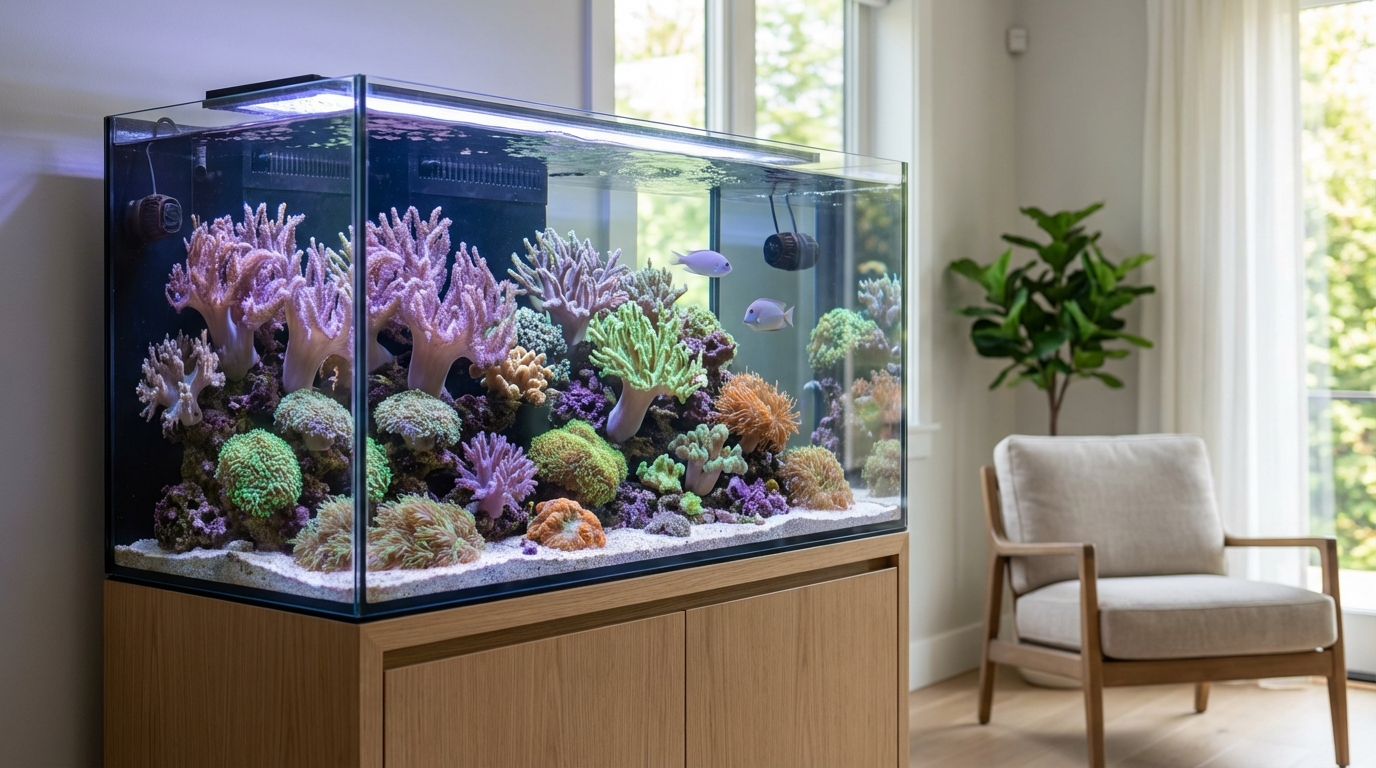
- Space: 30+ gallons with lots of live rock
- Caves: add ledges, overhangs, and dark holes to hide in
- Lid: use a tight lid or mesh top; it jumps when scared
- Water: 74–80°F, salinity near 1.025, stable pH
In the wild it lives in caves and under ledges. It often swims upside down along the "ceiling" of a cave, which is normal.
Feeding
Feeding is easy. Most Yellow Assessors take frozen food right away.
- Offer frozen mysis and enriched brine shrimp
- Add small pellets or flakes once it settles in
- Feed small amounts once or twice a day
It may be shy at first. Target-feed near its cave so faster fish do not steal the food.
Behavior
- Daytime: hovers at cave openings and darts out to grab food
- Personality: shy at first, then bolder once it claims a cave
- Groups: best kept alone or as a pair; a small group needs a large tank with many caves
Tankmates
This is a gentle fish, so pick calm tankmates.
- Good: clownfish, gobies, firefish, cardinalfish, and small wrasses
- Risky: dottybacks and other basslets that want the same caves
- Avoid: big predators like lionfish, groupers, and large triggers
Like cave fish? Read our Royal Gramma care guide to compare the two.
Common problems
- Hiding all day: normal for the first week or two; keep the lights dim and feed near its cave
- Jumping out: the most common way people lose this fish, so cover every gap in the lid
- Fading color: often a sign of poor diet; feed a mix of enriched frozen foods
- Fighting: two assessors in a small tank will chase each other until one hides for good
Good water quality and a steady routine solve most issues. Test your water weekly and do small, regular water changes.
Buying tips
- Look for: bright color, clear eyes, and clean fins
- Ask first: make sure it eats frozen food at the store
- Quarantine: follow our 30-day fish quarantine protocol before adding it to your display
FAQs
Is the Yellow Assessor good for beginners?
Yes. It is hardy, eats well, and stays small.
Why does my Yellow Assessor swim upside down?
That is normal. It swims along the underside of ledges and cave roofs, just like it does in the wild.
Can I keep it with a Royal Gramma?
Sometimes, in a tank of 55 gallons or more with lots of caves. In smaller tanks they often fight over hiding spots.
Ready to add one?
Looking for a Yellow Assessor or peaceful tankmates? Browse fish from trusted sellers on the ReefBay shop.