Bimaculatus Anthias Care Guide: Tank Size, Diet, Reef Safety & Tankmates
Bimaculatus Anthias care made simple: the right tank size, how often to feed, how to build a group with one male, reef safety, and the best tankmates.
The Bimaculatus Anthias (Pseudanthias bimaculatus) is a bright pink and yellow fish that swims in the open water of a reef tank. It is peaceful and reef safe, but it needs a big tank and several meals a day.
Quick facts
- Tank size: 125 gallons or more
- Adult size: about 5.5 inches
- Diet: carnivore; mysis, enriched brine, and small frozen foods 2–3 times a day
- Reef safe: yes, with corals and cleanup crew
- Difficulty: moderate
- Temperament: peaceful; males argue with other males
What makes it special
You may see it sold as the Two-spot Anthias, Twinspot Anthias, or Bimac Anthias. It comes from the Indo-West Pacific, from East Africa and the Maldives to Indonesia.
Males and females look different. Females are pink with yellow fins. Males turn a deeper red-pink with jagged pink bars and one or two dark spots on the top fin.

Is it right for your tank?
This fish is a good pick if you want lots of color and movement in a large reef. It is not a great first fish for a new tank.
- Good fit: big, mature reefs with calm fish and room to swim
- Poor fit: nano tanks, new tanks, or one meal a day
- Plan ahead: it does best in a small group, so budget for more than one fish
Tank setup
- Space: 125+ gallons with open water in the middle
- Cover: caves and overhangs for hiding at night or when stressed
- Light: some shaded spots; this is a deeper-water fish
- Water: 72–78°F, salinity near 1.025, stable and clean
- Lid: yes; anthias are strong jumpers
Moderate flow is fine. Add it to a tank that has been running for several months.
Groups and behavior
Bimaculatus Anthias feel safest in a small group. The best mix is one male with several females.
- Two males in one tank often chase and nip each other
- If the male dies, the top female can slowly change into a new male
- Add the whole group at once, or add females before the male
New fish may hide for a few days. Low lights and quiet tankmates help them settle.
Feeding
Feeding is the key to keeping anthias healthy. In the wild they pick tiny food from the water all day.
- Frozen mysis shrimp and enriched brine shrimp
- Copepods and other small frozen plankton foods
- Small pellets or flakes once they learn to eat them
Feed small amounts two to three times a day. An auto feeder can help on busy days. Watch for thin bellies, which mean they need more food.
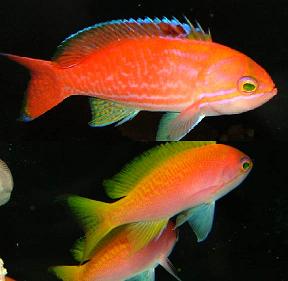
Photo: Jediknight95758 at English Wikipedia, Wikimedia Commons, CC BY 3.0
Reef safety
It is fully reef safe. It will not pick at corals, clams, snails, crabs, or shrimp.
- Safe: SPS, LPS, soft corals, and cleanup crews
- Tip: extra feedings can raise nutrients, so keep up with water changes
Tankmates
- Good: gobies, cardinalfish, chromis, small wrasses, and calm tangs
- Risky: fast, pushy eaters that grab all the food first
- Avoid: groupers, lionfish, large triggers, and aggressive dottybacks
Want a similar fish? Read our Lyretail Anthias care guide or Borbonius Anthias care guide.
Health and buying tips
- Quarantine: follow our 30-day fish quarantine protocol
- Look for: a round belly, clear eyes, and clean fins
- Ask: to see it eat frozen food before you buy
- Watch for: white spots, fast breathing, or hiding all day
FAQs
Is the Bimaculatus Anthias reef safe?
Yes. It ignores corals and invertebrates, including shrimp.
How many should I keep?
One male with two to four females works best in 125+ gallons. Never keep two males in the same tank.
How can I tell males from females?
Males are redder, with jagged pink bars and dark spots on the top fin. Females are pink with yellow fins.
Ready to add some?
Looking for Bimaculatus Anthias or peaceful tankmates? Browse fish from trusted sellers on the ReefBay shop.