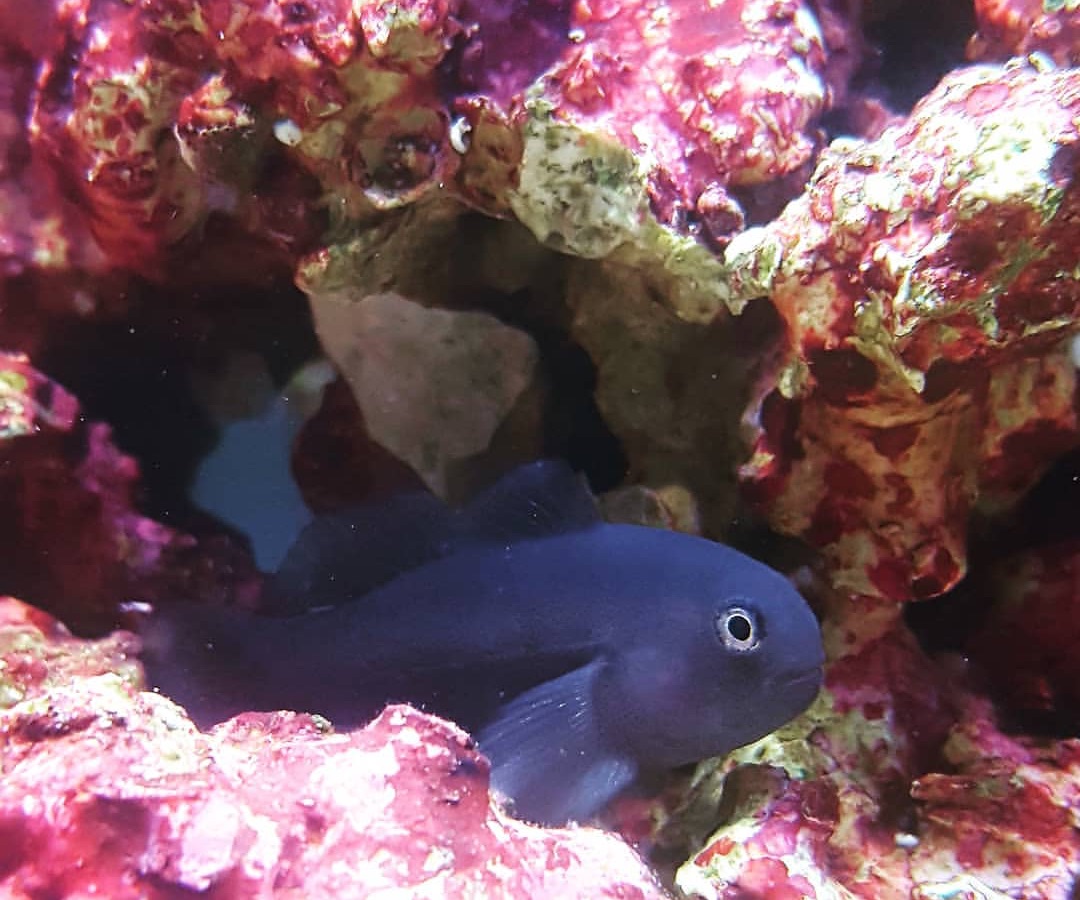
Black Clown Goby Care Guide: Tank Size, Diet, SPS Safety & Pairing
Black Clown Goby care made simple: the small tank size it needs, what to feed, whether it is safe with SPS corals, how to pair two, and the best tankmates.
The Black Clown Goby is a tiny, sooty-black goby that perches on rocks and corals like a little bird. It is hardy, peaceful, and a great fit for nano reef tanks.
Quick facts
- Tank size: 10 gallons or larger
- Adult size: under 2 inches
- Diet: carnivore; mysis, brine shrimp, cyclops, and tiny pellets
- Reef safe: with caution; may perch on and irritate SPS corals
- Difficulty: easy; hardy once eating
- Temperament: peaceful; may squabble with other clown gobies
What it looks like
This goby is short and chunky with a round, blunt head. Its body and fins are a solid dark black or charcoal.
- Other names: Ebony Goby, Black Coral Goby
- Scientific name: often sold as Gobiodon strangulatus
- Fins: the belly fins form a small suction cup for gripping coral
Is it reef safe?
Mostly yes. It ignores shrimp, snails, and crabs, and it will not eat your fish.
The catch is coral. Clown gobies like to sit on branching corals like Acropora, and some will nip or rub the tissue. A healthy, large colony usually handles it fine, but small frags can suffer.

A green clown goby, a close cousin, perching in coral. Photo: Dr. Oliver Schneider, Wikimedia Commons, CC BY-SA 3.0
Is it right for your tank?
This fish is a smart pick for beginners who want a small, calm fish with lots of personality.
- Good fit: nano reefs, soft coral and LPS tanks, peaceful community tanks
- Poor fit: tanks with big, pushy fish or a reef full of tiny SPS frags
Tank setup
- Space: 10+ gallons is enough for one fish or a pair
- Perches: rockwork, branching corals, or ledges to sit on
- Lid: a tight lid or mesh top, since it can jump
- Flow: low to medium
- Water: 74–80°F, salinity near 1.025, stable pH
Feeding
Black Clown Gobies have tiny mouths, so pick small foods.
- Frozen mysis and baby brine shrimp
- Cyclops and other tiny frozen foods
- Micro pellets for small reef fish
Feed small amounts once or twice a day. Make sure faster fish do not steal all the food.
Behavior and pairing
This goby spends most of the day perched in one spot, hopping a short distance to grab food.
- Pairs: two added at the same time often pair up
- Other clown gobies: may fight in small tanks
- Slime coat: its skin makes a bitter, toxic slime that keeps predators away
Buying tips
- Pick an eater: ask to see it take frozen food
- Look for: a full belly, clear eyes, and alert perching
- Quarantine: follow our 30-day fish quarantine protocol
Health tips
Clown gobies are tough, but new fish can arrive thin or stressed. Watch closely for the first two weeks.
- Watch for: white spots, fast breathing, or a pinched belly
- Thin fish: feed small meals two or three times a day until it fills out
- Lifespan: often 3–5 years with good care
Tankmates
- Good: clownfish, firefish, small cardinals, and peaceful wrasses
- Risky: other clown gobies in tanks under 30 gallons
- Avoid: large hawkfish, dottybacks, groupers, and lionfish
Want a brighter cousin? Read our Yellow Clown Goby care guide.
FAQs
Is the Black Clown Goby poisonous?
Its skin slime tastes bad and is mildly toxic to fish that try to eat it. It is safe to keep and handle with normal care.
Will a Black Clown Goby eat my corals?
It does not eat corals, but it may nip or rub SPS tissue where it perches. Larger colonies usually recover fine.
Can I keep two in one tank?
Yes, a pair added together usually gets along. Two random clown gobies in a small tank may fight.
Ready to add one?
Looking for a Black Clown Goby or peaceful tankmates? Browse fish from trusted sellers on the ReefBay shop.