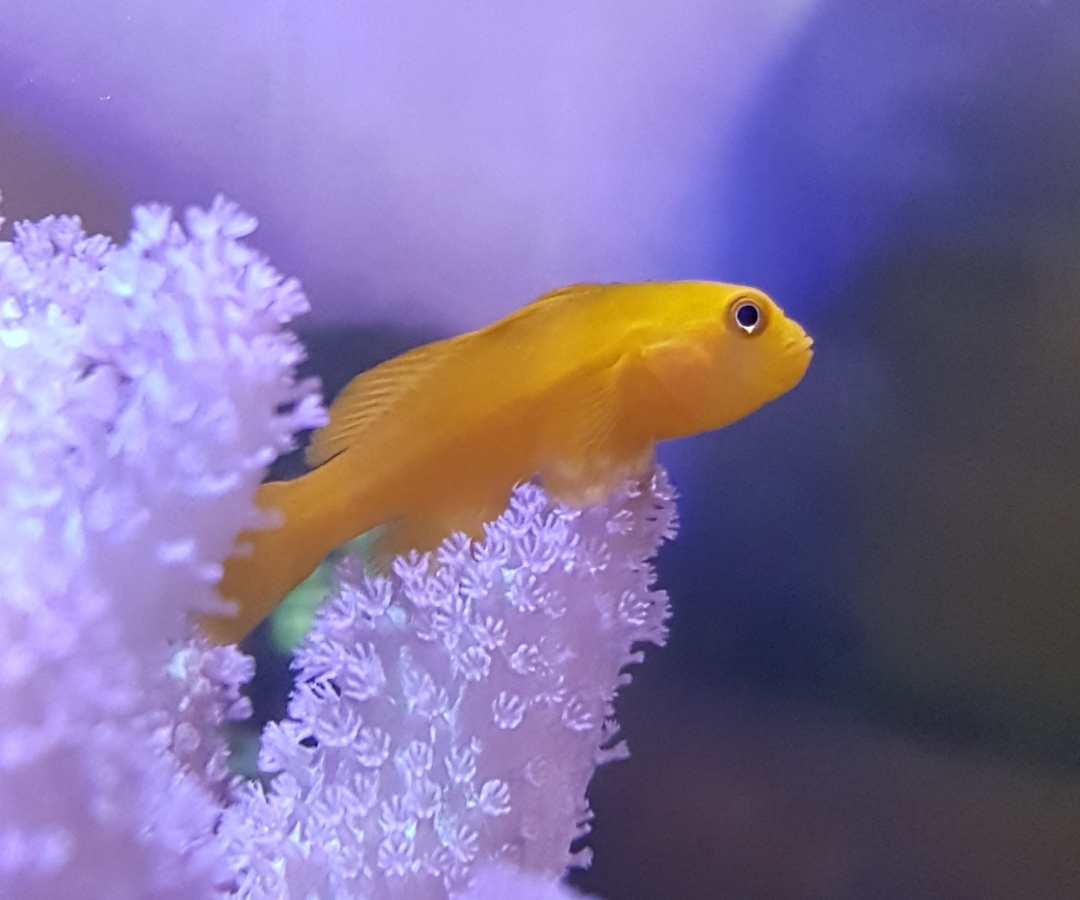
Yellow Clown Goby Care Guide: Tank Size, Diet & SPS Coral Safety
Learn Yellow Clown Goby (Gobiodon okinawae) care: 10+ gallon nano tank setup, stable water parameters, small frozen foods, SPS coral caution, peaceful tankmates, pairing tips, and what to check before you buy a clown goby on ReefBay.
The Yellow Clown Goby (Gobiodon okinawae) is one of the smallest and most charming fish you can add to a reef tank. It is a canary-yellow, big-eyed perching goby that spends its day sitting in coral branches like a tiny lemon drop, watching the tank and darting out for food. It tops out around 1.5 inches, stays peaceful toward almost everything, and fits comfortably in a nano reef, which is why it shows up on so many first-stocking lists.
It is not a completely hands-off fish, though. Clown gobies are coral dwellers, and their relationship with small-polyp stony (SPS) corals is the number one thing to understand before you buy. This guide covers tank size, water parameters, feeding, coral safety, tankmates, the common problems keepers run into, and a buying checklist you can use before you check out on the ReefBay marketplace.
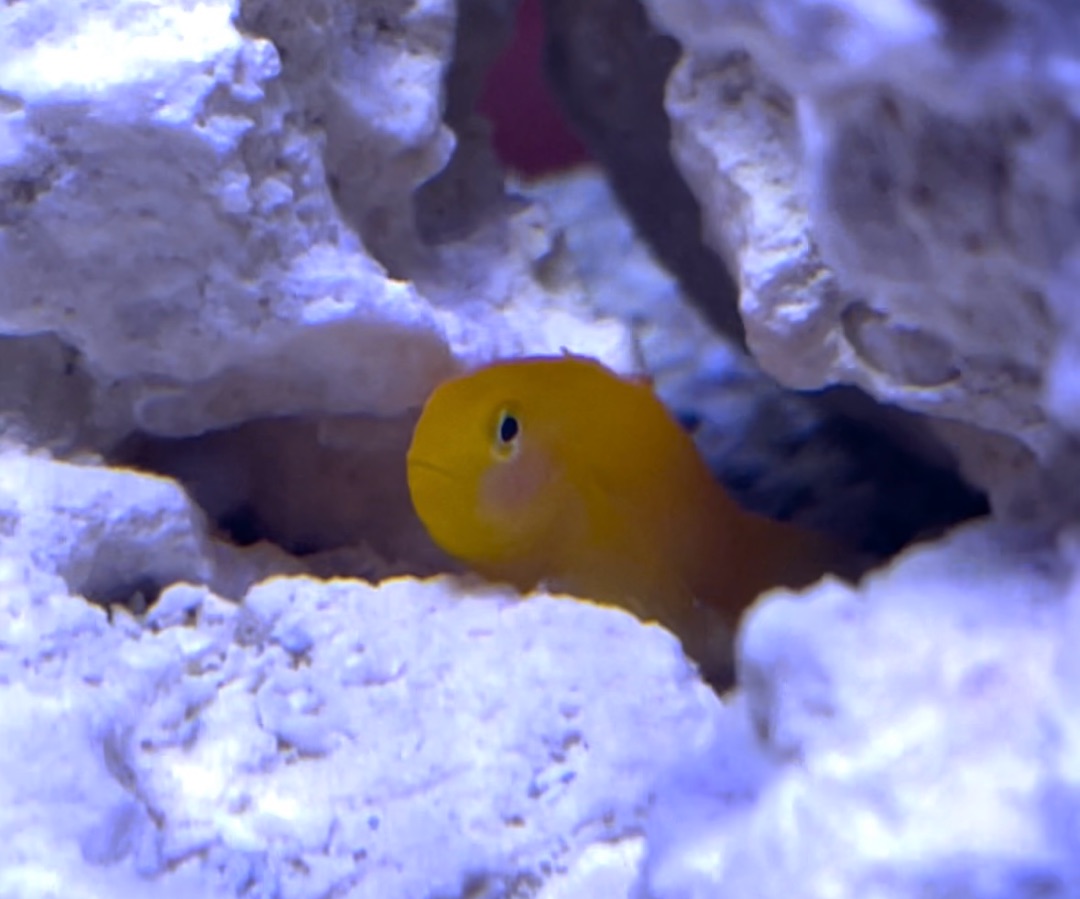
Quick care snapshot
- Scientific name: Gobiodon okinawae
- Also called: Clown Goby, Yellow Coral Goby, Okinawa Goby
- Family: Gobiidae (coral gobies)
- Origin: Western Pacific, from southern Japan through Indonesia to the Great Barrier Reef
- Max size: about 1.5 inches (3.5–4 cm)
- Care level: easy, once it is eating
- Temperament: peaceful; territorial toward other clown gobies unless they are a pair
- Reef-safe: yes with caution. It is fine with soft corals, LPS, and invertebrates, but it may pick at or stress SPS like Acropora
- Minimum tank: 10 gallons for one fish; 20+ gallons for a pair or a busier community
- Diet: carnivore. Feed mysis, enriched brine shrimp, copepods, and small frozen and pellet foods
- Social: single or bonded pair
- Jump risk: moderate, so a lid or mesh screen is recommended
Tank size and aquascape
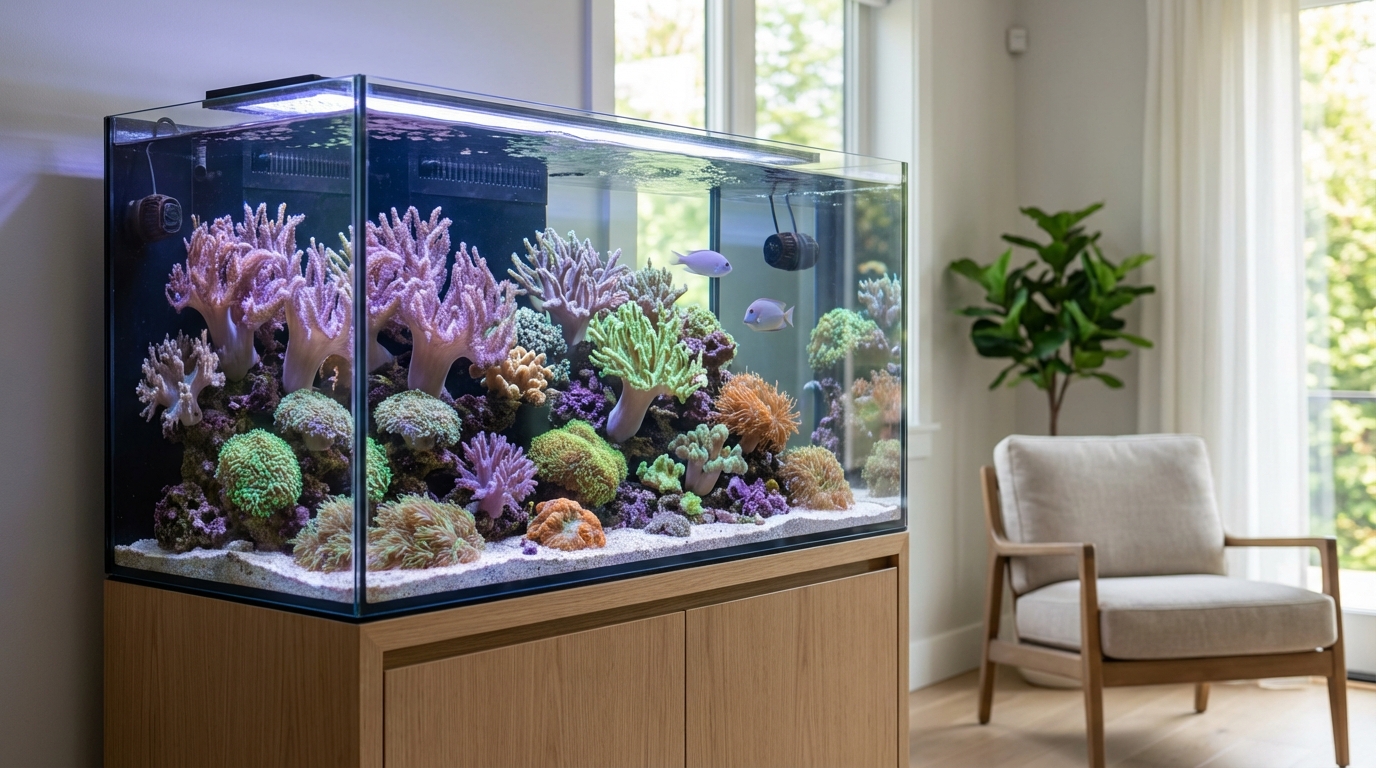
A single Yellow Clown Goby can live in a well-established 10-gallon reef, and that is the minimum ReefBay lists for this species. In practice, a 20-gallon or larger tank is easier, because water chemistry swings more slowly and you have room for corals and a few other peaceful fish. If you want a pair, go 20 gallons or more so the two fish can claim a coral without crowding other residents.
What matters more than gallons is perches. In the wild, clown gobies live inside the branches of stony corals, and in aquariums they look for the same thing: a coral head, a branching rock, or a leather coral they can wedge into. Without a good perch, they tend to hide and are less likely to settle in.
- Offer at least one sturdy perching spot near the front glass. Branching rock, a leather coral, a large frogspawn or hammer colony, or a tough SPS colony all work
- Keep flow moderate around their perch. They are weak swimmers and get pushed around by blasting powerheads
- Cover overflow teeth and powerhead intakes with foam or mesh. Tiny gobies are easily pulled in
- Use a lid or mesh screen. Clown gobies can jump when they are startled or chased
- Add them only to a cycled, stable tank, ideally one that has been running at least a couple of months

Water parameters
Clown gobies are hardy for their size, but they are tiny fish, so they handle sudden swings poorly. Aim for normal, stable reef parameters:
- Temperature: 75–80°F (24–27°C)
- Salinity: 1.024–1.026 specific gravity (about 35 ppt)
- pH: 8.0–8.4
- Alkalinity: 7–11 dKH, kept steady
- Ammonia and nitrite: 0 ppm
- Nitrate: low but detectable (roughly 2–15 ppm) is fine for this fish and the corals it lives in
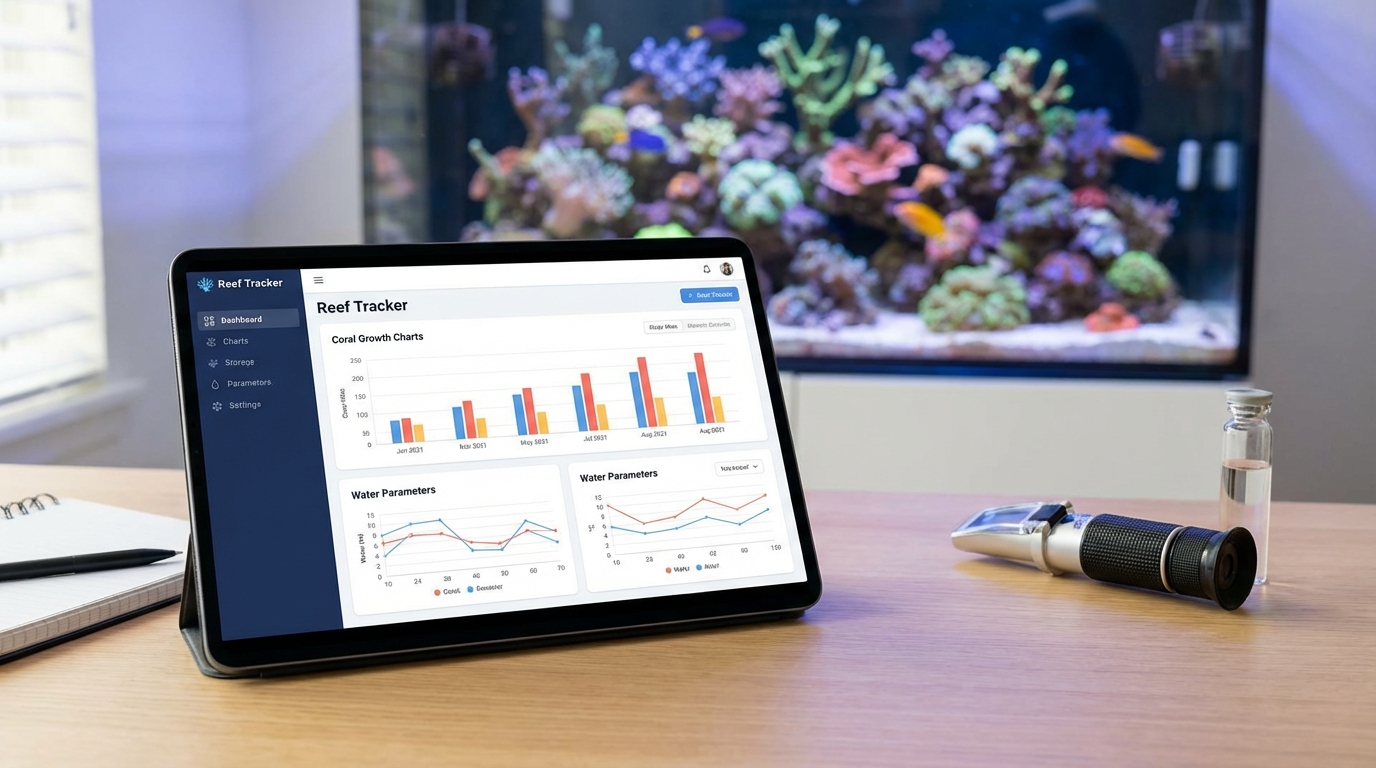
If you are still dialing in a new system, our reef tank water parameters guide for beginners explains what to test and how often. Logging those results in the ReefBay app makes it easy to spot slow drift before it stresses your livestock.
Diet and feeding
Yellow Clown Gobies are small carnivores that pick zooplankton and tiny crustaceans out of the water column as it drifts past their perch. In the aquarium, most adjust quickly to frozen and prepared foods:
- Feed small portions 1–2 times daily. Their stomachs are tiny, so offer small amounts more than once rather than one big feeding
- Use small foods: mysis shrimp (chopped for small fish), enriched brine shrimp, cyclops, copepods, and micro pellets
- Release food into the current near their perch so it drifts past them. They rarely chase food across the tank
- A healthy copepod population in the tank gives them extra grazing between feedings
- If faster fish are eating everything, target-feed with a pipette or feeding tube right at the goby's coral
A well-fed clown goby looks plump with a rounded belly. A pinched stomach or a fish that stops coming forward at feeding time is the first thing to fix, before you start worrying about disease.
SPS coral safety: the "with caution" part
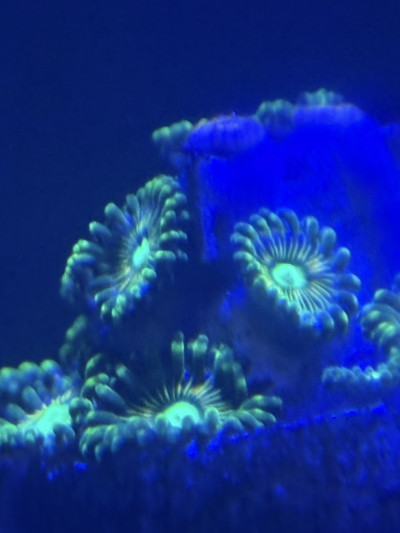
Clown gobies are listed as reef-safe with caution, and SPS corals are the reason. Wild Gobiodon species live inside branching corals such as Acropora, and that close relationship can show up in your tank as:
- Constant perching in one spot on an SPS colony, which can irritate the tissue and cause local polyp retraction or bare patches
- Occasional nipping of small polyps, which ReefBay owners have reported in their reviews
- Spawning damage. Bonded pairs may clear a small patch of coral tissue to lay eggs on the exposed skeleton
In practice, most mixed reefs with soft corals and LPS see no problems, and plenty of keepers report their goby happily perching on a leather coral or rock. If your tank is SPS-dominant, keep an eye on the colony the goby chooses. Give it a sturdy, fast-growing coral or a rock perch so that one prized colony doesn't take all the wear.
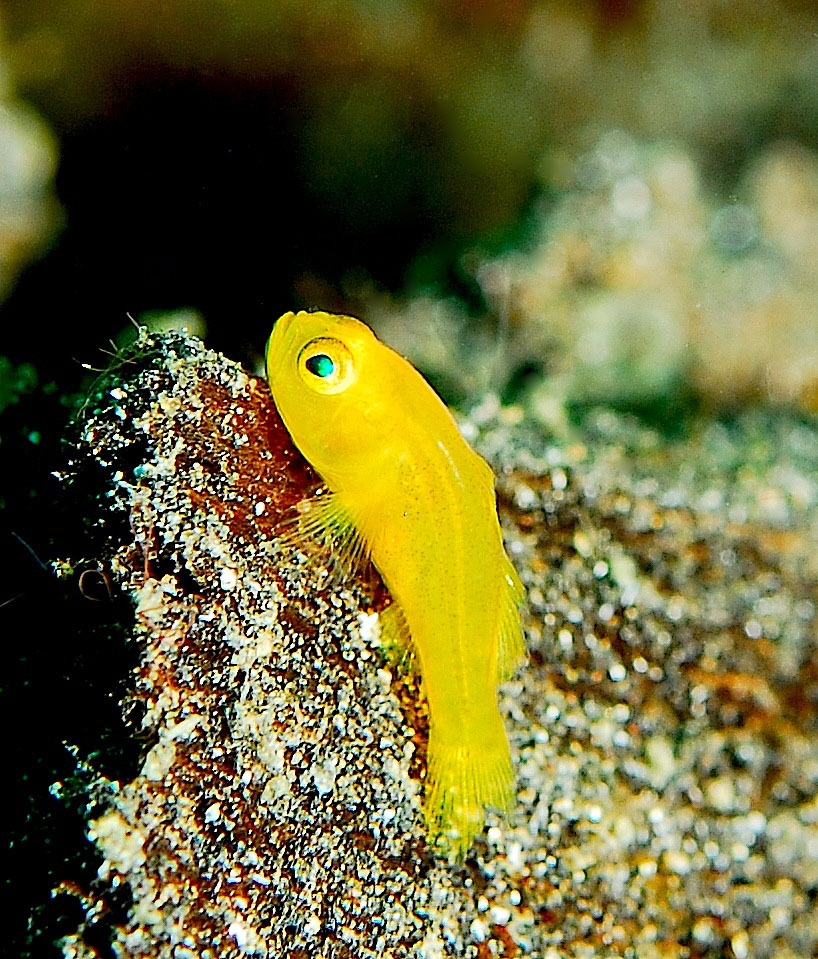
Photo: Jenny, CC BY 2.0, via Wikimedia Commons
Tankmates and compatibility
Clown gobies get along with almost any peaceful reef fish. Because they produce a bitter, mildly toxic skin mucus, many predators that taste them will spit them out. You should still not rely on that to keep a 1.5-inch fish safe with large, aggressive tankmates.
- Good tankmates: clownfish, firefish, royal grammas, cardinalfish, small peaceful wrasses, blennies, chromis, and gobies from other genera, such as a yellow watchman goby on the sand bed
- Use caution: dottybacks, larger hawkfish, and pushy damsels, which can bully or hunt very small fish
- Avoid: lionfish, groupers, triggers, large eels, and frogfish. Anything that can swallow a small goby eventually will
- Anemones: large anemones such as bubble tips can catch and eat small perching fish. ReefBay owners have reported losing clown gobies this way
- Other Gobiodon: keep one, or one bonded pair, per tank. Two unrelated clown gobies will usually fight over the best coral
- Invertebrates: safe with shrimp, crabs, snails, and clean-up crews
Pairing is easiest when you buy two small fish together or a pair a seller has already seen bonded. Clown gobies are able to change sex, so two young fish added at the same time often sort themselves into a pair.
Common problems and quick fixes
- "It disappeared." Check overflows, powerhead intakes, and the anemone first. Then check behind rock for a fish that is simply hiding while it settles in
- Not eating after arrival: offer live or frozen copepods, cyclops, or baby brine near its perch with the lights dimmed. Most start eating within a few days
- Thin or pinched belly: feed more often, use smaller foods, and target-feed if faster fish are winning at mealtime
- Fighting between clown gobies: separate the weaker fish. Unrelated adults rarely make peace in a small tank
- SPS colony losing tissue where the goby sits: offer an alternative perch, and if it continues, move the goby or the coral
- Jumping: close any gaps in the lid and avoid adding aggressive fish that chase it out of its perch
- Spots or rapid breathing: quarantine new fish before they join the display. Our 30-day saltwater fish quarantine protocol walks through the steps
Buying checklist before you click purchase
- Confirm the species. Yellow clown gobies are bright canary yellow, while related Gobiodon species such as the citron goby and green clown goby differ in color and markings
- Look for clear eyes, intact fins, a rounded belly, and a fish that perches and watches rather than lying on the bottom
- Ask the seller what it is eating. Frozen mysis or pellets are a great sign
- Choose captive-bred when it is available. Captive-bred fish are usually hardier and already eat prepared foods
- Plan your perch, cover your intakes, and check the lid before the fish arrives
- Decide on one fish or a pair up front. Adding a second clown goby later is much harder
- Have a quarantine plan ready
Ready to add one? Open the Clown Goby fish page on ReefBay to see more photos from real home reefs and read owner reviews. You can also browse the ReefBay marketplace for healthy, eating clown gobies from trusted sellers. Once yours is home, track feedings, water tests, and coral health in the ReefBay app, and share your own photos so the next reefer can see how yours is doing.