Blue Spotted Jawfish Care Guide: Tank Size, Diet, Sand Bed & Tankmates
Blue Spotted Jawfish care made simple: how big a tank it needs, how deep the sand should be, what to feed, which tankmates work, and why it needs a lid.
The Blue Spotted Jawfish (Opistognathus rosenblatti) is a small, big-eyed fish covered in bright blue dots. It digs its own burrow in the sand and hovers above it all day, which makes it one of the most fun fish to watch.
Quick facts
- Tank size: 30 gallons or more, with a deep sand bed
- Diet: meaty foods like frozen mysis, enriched brine shrimp, and small pellets
- Reef safe: yes; safe with corals, use caution with tiny shrimp
- Difficulty: moderate
- Temperament: peaceful; keep one per tank
- Adult size: about 4 inches
How to spot one
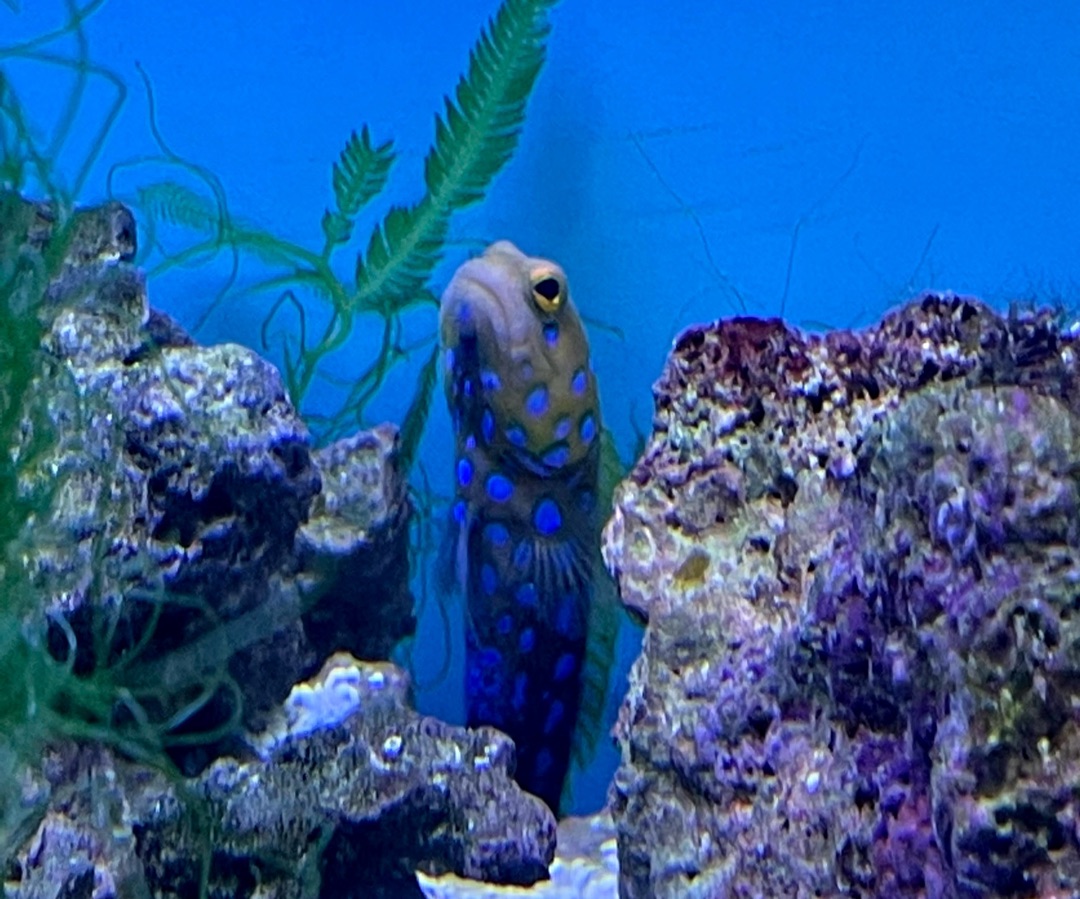
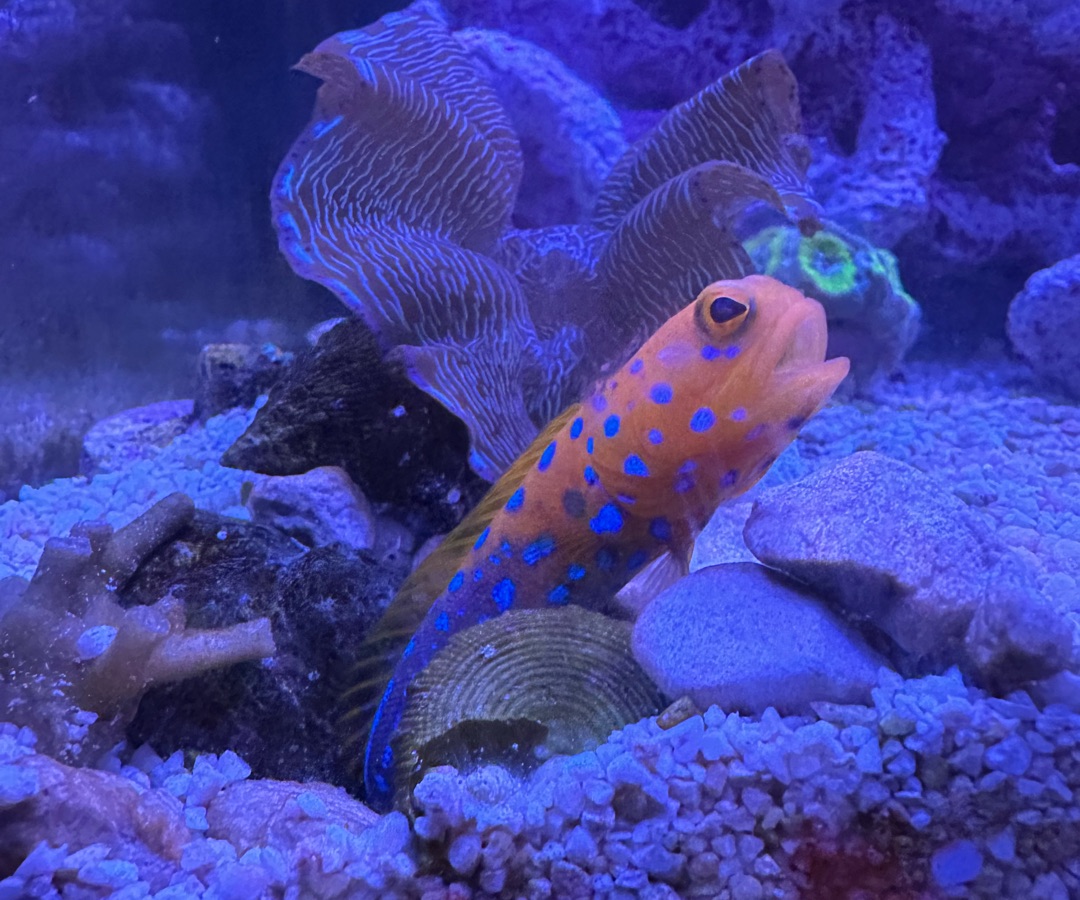
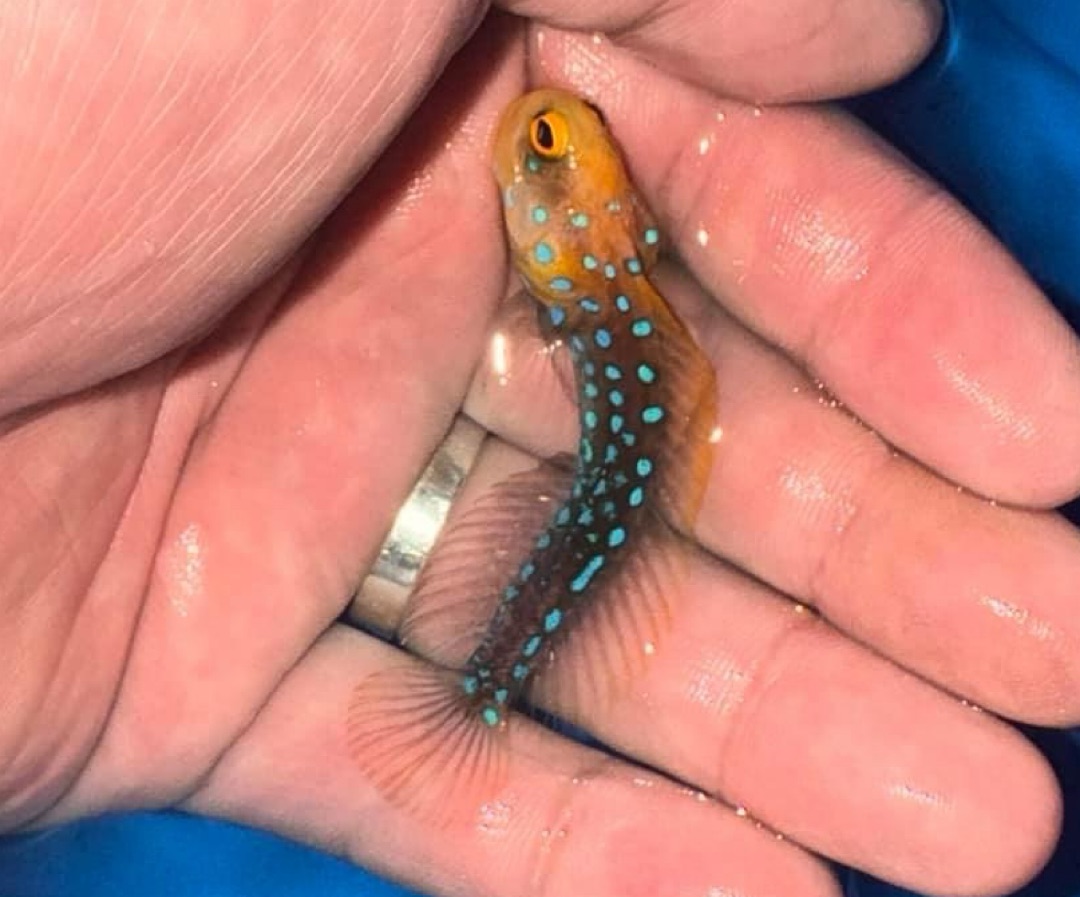
Look for a yellow-orange head, a darker body, and lots of electric-blue spots. The dorsal fin along the back is often yellow.
It comes from the Gulf of California (the Sea of Cortez). When it gets scared, it backs into its burrow tail-first and peeks out with its big eyes.
Tank setup
The sand bed matters more than anything else for this fish. No good sand, no happy jawfish.
- Sand depth: at least 4 inches, deeper is better
- Sand mix: a blend of sand, crushed shell, and small rubble so the burrow does not cave in
- Lid: a tight lid or mesh cover is a must, because jawfish are strong jumpers
- Temperature: about 72–76°F; cooler, stable water suits it best
- Rock: keep rocks on the bottom glass, not on the sand, so digging cannot topple them
Our Yellowhead Jawfish guide covers the same sand bed and lid basics.
Feeding
Jawfish grab food as it drifts past the burrow. Most learn to eat frozen food quickly.
- Best foods: frozen mysis, enriched brine shrimp, chopped seafood, and small sinking pellets
- How often: 2 small meals a day
- Tip: squirt food gently near the burrow so faster fish do not steal it all
Is it reef safe?
Yes. It ignores corals, clams, and snails. Its big mouth is the only worry.
- Usually OK: corals, snails, hermit crabs, and adult cleaner shrimp
- At risk: very small shrimp and tiny baby fish
- Heads up: it may move small frags or shells while it builds its burrow
Tankmates
This fish is shy. Calm tankmates help it come out and show off.
- Good mates: clownfish, firefish, royal grammas, chromis, and small peaceful wrasses
- Avoid: other jawfish, big crabs, and pushy fish like large dottybacks or triggers
- Add it early: it settles best before bold fish claim the tank

Photo: Rhododendrites, Wikimedia Commons, CC BY-SA 4.0 — a Blue Spotted Jawfish at Monterey Bay Aquarium
Buying tips
Blue Spotted Jawfish are pricey and mostly wild caught, so pick carefully.
- Ask to see it eat: a healthy one takes frozen food
- Check the body: clear eyes, a full belly, and no torn fins or white spots
- Be patient: it may hide for a few days before it starts digging and hovering
Health tips
- Quarantine first: use a sand-filled cup or PVC pipe so it feels safe. Our 30-day quarantine plan shows how
- Watch the heat: long stretches above 80°F stress this fish
- Keep the lid on: jumping is one of the most common ways jawfish are lost
FAQ
Is a Blue Spotted Jawfish good for beginners? It is better for keepers with a little experience. It needs deep sand, a lid, and cool, stable water.
Can I keep two? It is best to keep one. Two usually fight unless they are a true pair in a large tank.
Why is my jawfish hiding? New jawfish often hide for days. Keep the lights calm, feed near the burrow, and give it time.
Ready to add one? Browse livestock and gear in the ReefBay shop, then track feedings and water tests in the ReefBay app.