Yellowhead Jawfish Care Guide: Tank Size, Diet, Sand Bed & Jump Risk
Yellowhead Jawfish care: 30+ gallon tanks, a 3–4 inch mixed sand bed for burrowing, a meaty carnivore diet, reef-safe tankmates, jump-proof lids, and a ReefBay buying checklist.
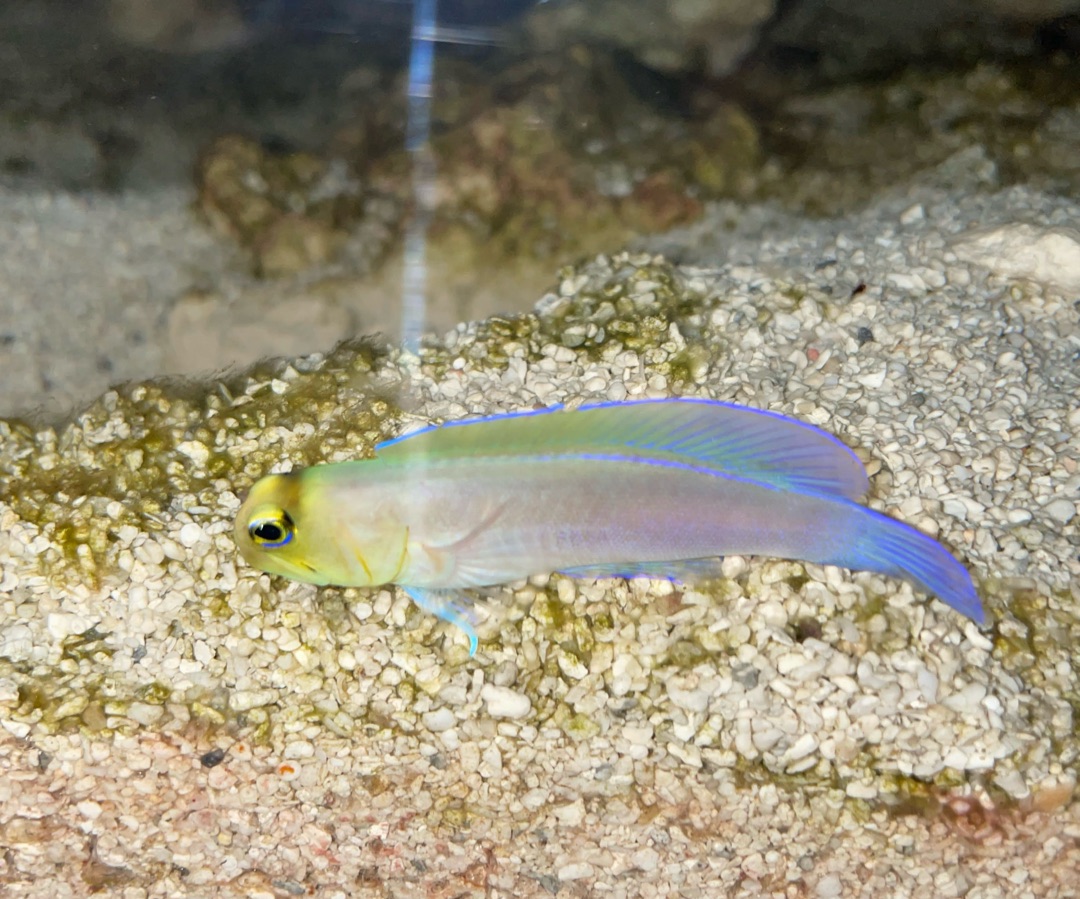
The Yellowhead Jawfish (Opistognathus aurifrons) is one of the most entertaining fish you can put on a reef sand bed. It builds its own burrow out of sand and rubble, hovers vertically above the entrance with that bright yellow face, and shoots back in tail-first the moment something startles it. It is peaceful, reef-safe, and invert-safe, which makes it a favorite for reefers who want personality without the coral risk.
The catch is that jawfish have very specific needs: a deep, mixed substrate to dig in, calm tankmates, and a lid with no gaps at all. This guide covers tank size, sand bed setup, diet, reef safety, tankmates, jump risk, and a buying checklist before you shop the ReefBay marketplace.
Quick care snapshot
- Scientific name: Opistognathus aurifrons
- Also called: Pearly Jawfish, Yellow-headed Jawfish, Gold-specs Jawfish
- Family: Opistognathidae — jawfishes
- Origin: Western Atlantic — Caribbean, Bahamas, and Florida
- Max size: about 4 inches
- Care level: moderate
- Temperament: peaceful; can squabble with other jawfish over burrow space
- Reef-safe: yes. Ignores corals and ornamental invertebrates
- Minimum tank: 30 gallons with a wide open sand bed
- Diet: carnivore — mysis, enriched brine, finely chopped seafood, and quality frozen or prepared foods
- Jump risk: very high. A tight-fitting lid is non-negotiable
- Social: single, or a small group in a larger tank with plenty of sand
Why reefers love the Yellowhead Jawfish
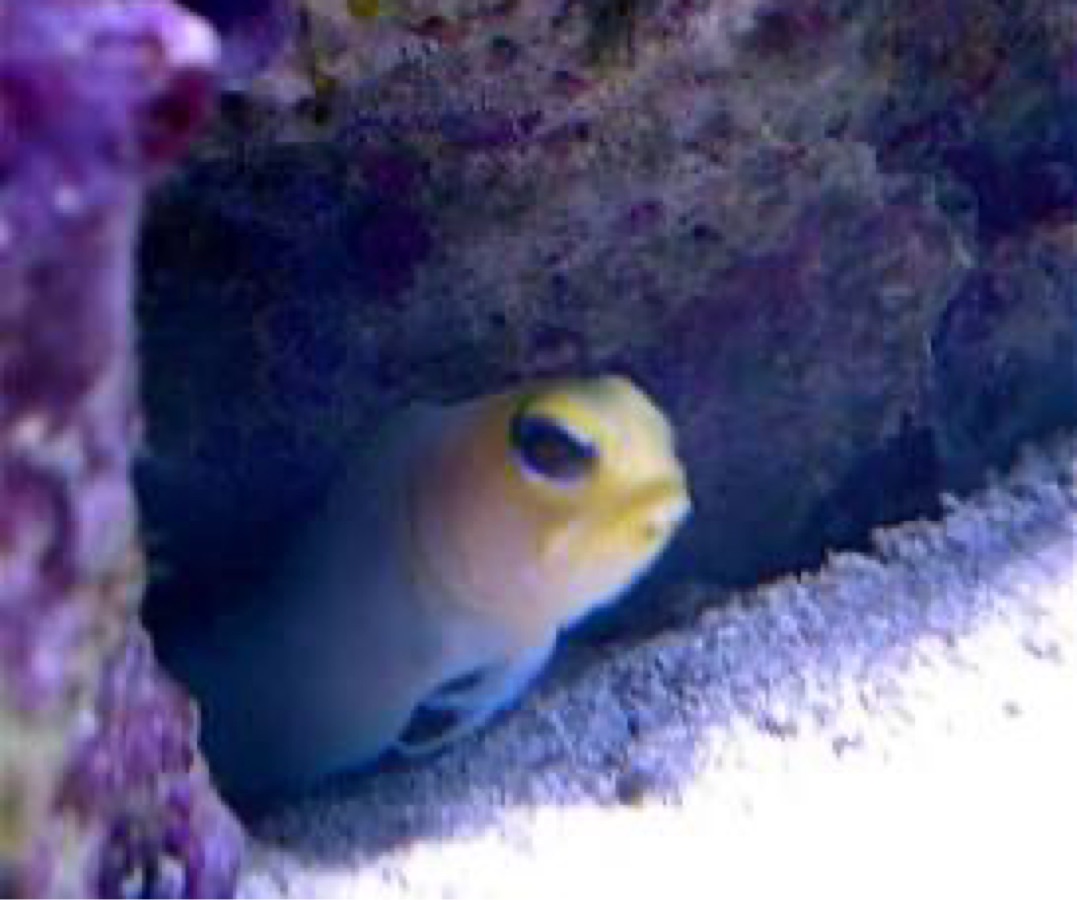
Most small reef fish hide in rockwork. The jawfish engineers its own home in the open. It picks up sand and small pieces of rubble in its mouth, spits them out to shape the burrow, and props up the entrance with shell or rock fragments. Once it settles in, you will see it hovering a few inches over its hole all day, picking food out of the water column.
- Constant activity: digging, rebuilding, and rearranging the burrow is a daily routine
- Unique look: pale yellow head, pearly blue-grey body, and big eyes
- Very reef-friendly: it leaves corals, clams, snails, and shrimp alone
- Owner favorite: reviewers on the ReefBay fish page describe jawfish as fun to watch and full of personality — and also warn that they try to jump a lot
Tank size and sand bed setup
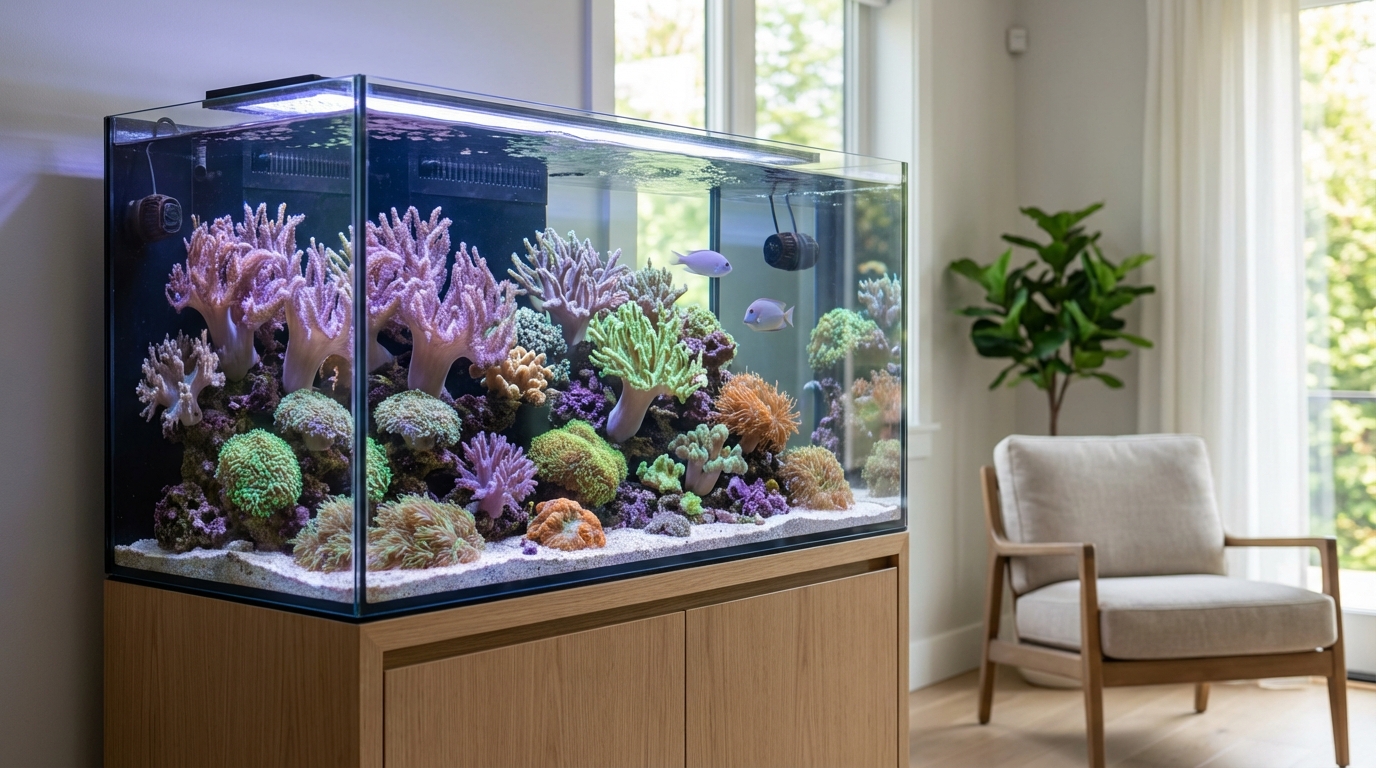
ReefBay's care data lists a 30-gallon minimum. Footprint matters more than height: the jawfish lives on the bottom, so a long tank with lots of open sand beats a tall cube with the same volume.
- Substrate depth: at least 3–4 inches in the area where you want the burrow
- Substrate mix: combine fine-to-medium sand with crushed coral, small shell pieces, and rubble. Pure sugar-fine sand collapses; the jawfish needs larger pieces to reinforce its tunnel
- Rockwork: keep rock stable and set directly on the glass or a rock base, not on top of the sand, so digging cannot undermine it
- Open space: leave a clear patch of sand away from the main rock structure for burrowing
- Flow: moderate. Strong flow that blasts the sand bed will keep collapsing the burrow
- Lid: full mesh or glass coverage, including the back gap and overflow cut-outs
If you want more than one jawfish, plan a larger tank with a wide sand bed so each fish can claim its own burrow. Adding them together tends to go better than adding a second fish later.
Water parameters
Yellowhead Jawfish come from the warm, stable waters of the Caribbean and do best when reef parameters stay boringly steady:
- Temperature: 72–78°F (22–26°C)
- Salinity: 1.024–1.026 specific gravity
- pH: 8.1–8.4
- Alkalinity: 7–11 dKH, held steady
- Ammonia and nitrite: 0 ppm
- Nitrate: low to moderate (about 2–20 ppm)
- Phosphate: low (about 0.03–0.1 ppm)
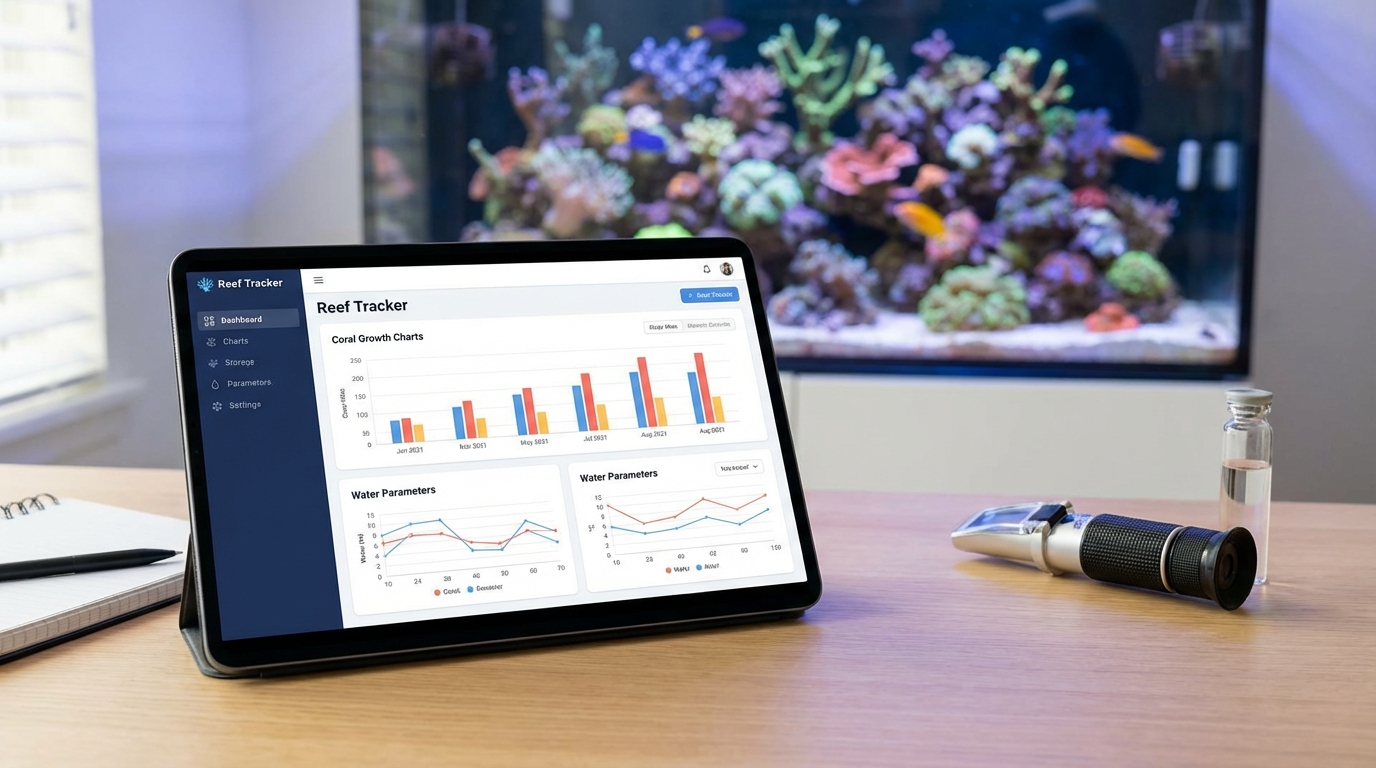
A deep sand bed only stays healthy in a stable, mature system. If you are still learning your test kits, start with our reef tank water parameters guide for beginners, and log results in the ReefBay app so you catch drift early.
Diet and feeding
In the wild, jawfish hover over their burrows and pick zooplankton out of the passing current. In the aquarium they are carnivores that want meaty foods delivered to the water column above the burrow.
- Staples: frozen mysis shrimp, enriched brine shrimp, and finely chopped marine seafood blends
- Prepared foods: many settle onto small sinking pellets once they are comfortable
- Frequency: two or three small feedings a day
- Delivery: turn pumps down briefly or use a feeding tube so food drifts near the burrow before faster fish grab it
- Watch for: a pinched belly, which usually means food competition from wrasses, chromis, or other fast eaters
A healthy jawfish is plump, spends most of the day hovering or perched at its burrow entrance, and darts out confidently at feeding time.
Reef safety: corals and invertebrates
The Yellowhead Jawfish is reef-safe and invert-safe. It does not nip at coral polyps, clam mantles, or snails, and it ignores ornamental shrimp.
- Safe with: soft corals, LPS, SPS, zoanthids, clams, snails, hermits, and cleaner or peppermint shrimp
- Watch your sand bed corals: it may drop sand or rubble on corals placed right next to the burrow, so keep frags and sand-dwelling corals a little away from its chosen spot
- Clean-up crew: sand-stirring snails are fine; just avoid large crabs that could raid the burrow at night. Our clean-up crew guide for beginners covers safe picks
Behavior and tankmates
Jawfish are peaceful but shy for the first days or weeks. They need calm neighbors so they feel safe hovering in the open instead of hiding in the burrow.
- Good tankmates: clownfish, firefish, royal grammas, cardinalfish, small peaceful gobies, fairy and flasher wrasses, and other mild community fish
- Use caution: other bottom dwellers that compete for sand territory, such as large sand-sifting gobies, and fast eaters that win every feeding
- Avoid: aggressive or predatory fish — dottybacks, larger hawkfish, triggers, groupers, lionfish, and eels — that will harass or eat a small jawfish
- Other jawfish: a small group can work in a big tank with plenty of sand, but males may squabble over burrow space
For other peaceful options that pair well, see our Firefish Goby care guide and Royal Gramma care guide.
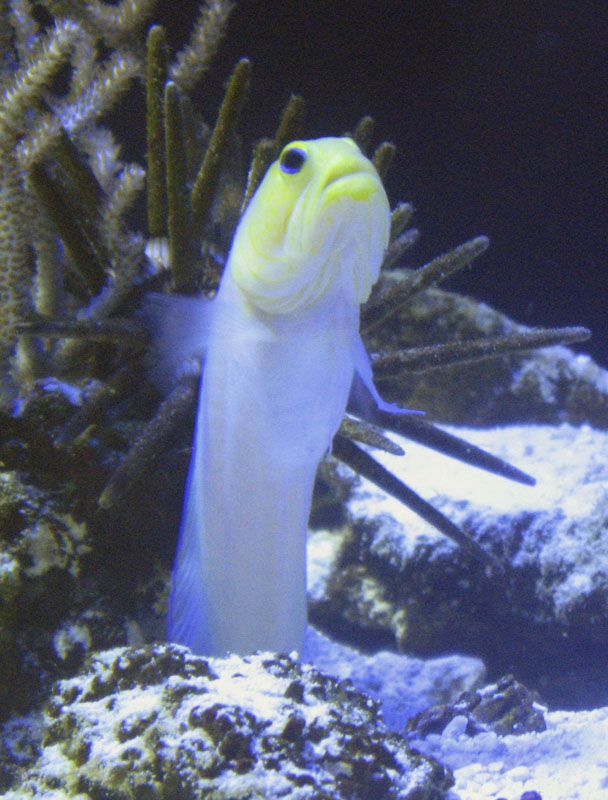
Photo: Wikimedia Commons, CC BY-SA 3.0 — the classic vertical hover above the burrow
Jump risk, acclimation, and health
Jumping is the number one way people lose jawfish. They bolt straight up when startled, especially at night, during lights-on, or in the first week after purchase.
- Install a full lid before the fish arrives and seal cable and overflow gaps
- Drip acclimate, then release the jawfish over the sand area where you want its burrow, with lights dimmed
- Keep the room calm for the first few days and avoid sudden lights-on in a dark room
- Quarantine when you can — our 30-day saltwater fish quarantine protocol is a solid template. Give the quarantine tank a container of sand and rubble so the jawfish can still dig
- Confirm it is eating frozen foods before moving it to the display
- Watch for rapid breathing, white spots, cloudy eyes, or a fish that stops coming out of its burrow
Common problems and quick fixes
- Jumped out of the tank: any gap is too big. Fix the lid before adding another jawfish
- Burrow keeps collapsing: the sand is too fine or too shallow. Add rubble, shell, and crushed coral to the burrow area
- Rockwork shifting: rocks were sitting on the sand. Rebuild them on the glass or a rock base
- Never comes out: usually bullying or a busy, aggressive tank. Re-check tankmates and give it time
- Getting thin: target feed near the burrow with pumps down, and add a third small feeding
- Fighting jawfish: not enough sand territory. Separate them or give each a distinct burrow zone
Buying checklist before you click purchase
- Confirm the tank is at least 30 gallons, cycled, and stable
- Have a 3–4 inch mixed sand and rubble bed ready before the fish arrives
- Install a full lid — no exceptions
- Check that current and planned tankmates are peaceful
- Look for a plump belly, clear eyes, intact fins, and alert behavior
- Ask the seller what it is eating; frozen mysis or brine is the green flag
- Pass on thin, scratched, or listless fish
Yellowhead Jawfish FAQ
Is the Yellowhead Jawfish reef-safe? Yes. It ignores corals and is safe with clean-up crew and ornamental shrimp.
What size tank does it need? At least 30 gallons with a wide, open sand bed. A longer footprint is better than a tall tank.
How deep should the sand be? At least 3–4 inches where it burrows, with a mix of sand, crushed coral, and small rubble so the tunnel holds its shape.
Do Yellowhead Jawfish jump? Yes — they are notorious jumpers. A complete, tight-fitting lid is essential.
Can I keep more than one? A small group can work in a larger tank with plenty of sand, but they may squabble over burrow space. One jawfish is the simplest plan for most tanks.
Ready to add one? Open the Yellowhead Jawfish fish page on ReefBay for more owner photos, reviews, and current listings, and browse the ReefBay marketplace for healthy, eating fish from trusted sellers. Then track feedings and water tests in the ReefBay app, and share a photo of your own jawfish hovering over its burrow so the next reefer can see what a settled jawfish looks like.