Blueline Triggerfish Care Guide: Tank Size, Diet, Reef Safety & Tankmates
Blueline Triggerfish care made simple: how big a tank it really needs, what to feed this meat eater, why it is not reef safe, and which tough tankmates can live with it.
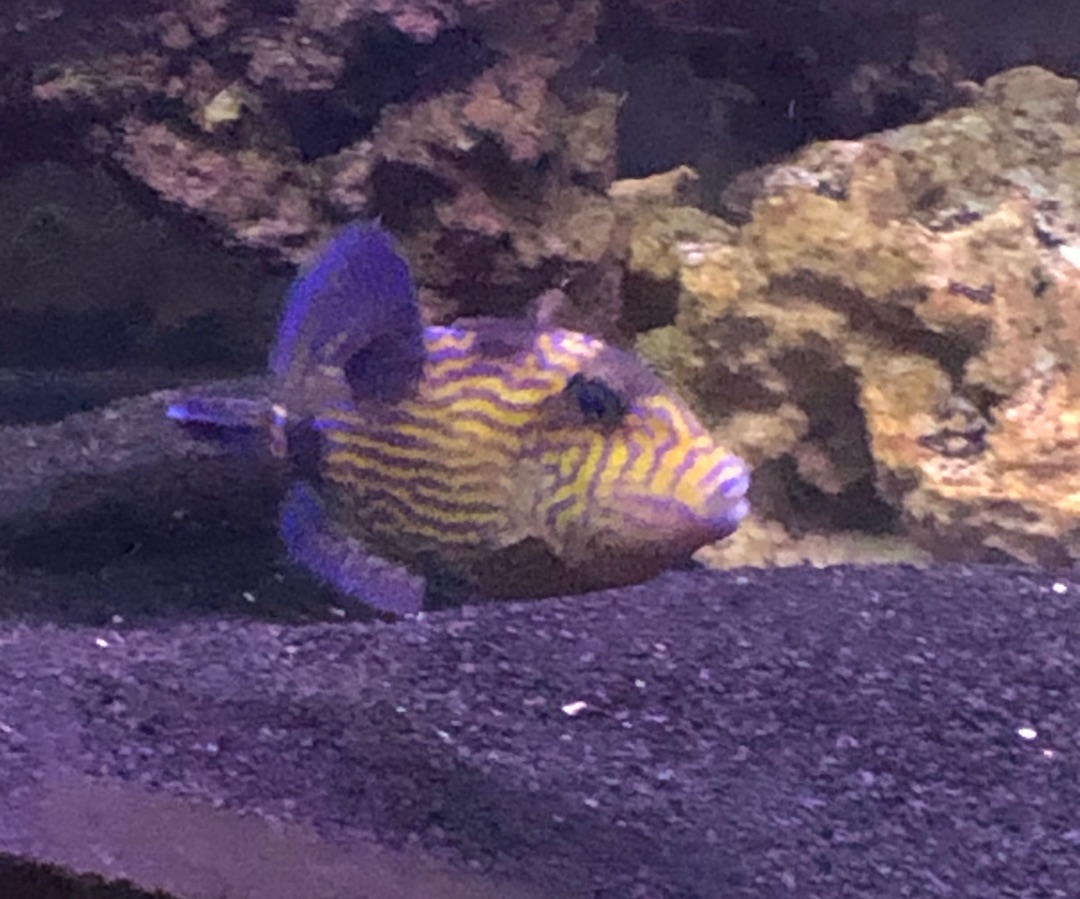
The Blueline Triggerfish (Pseudobalistes fuscus) is a big, bold Indo-Pacific trigger with a gold body covered in wavy electric-blue lines. It is a stunning showpiece, but it needs a very large fish-only tank and tankmates that can hold their own.
Quick facts
- Tank size: 300 gallons or more
- Adult size: up to about 22 inches
- Diet: carnivore; shrimp, squid, clams, krill, and hard-shelled foods
- Reef safe: no; it eats inverts and wrecks rockwork
- Difficulty: moderate
- Temperament: aggressive; best kept as the only trigger
What it looks like
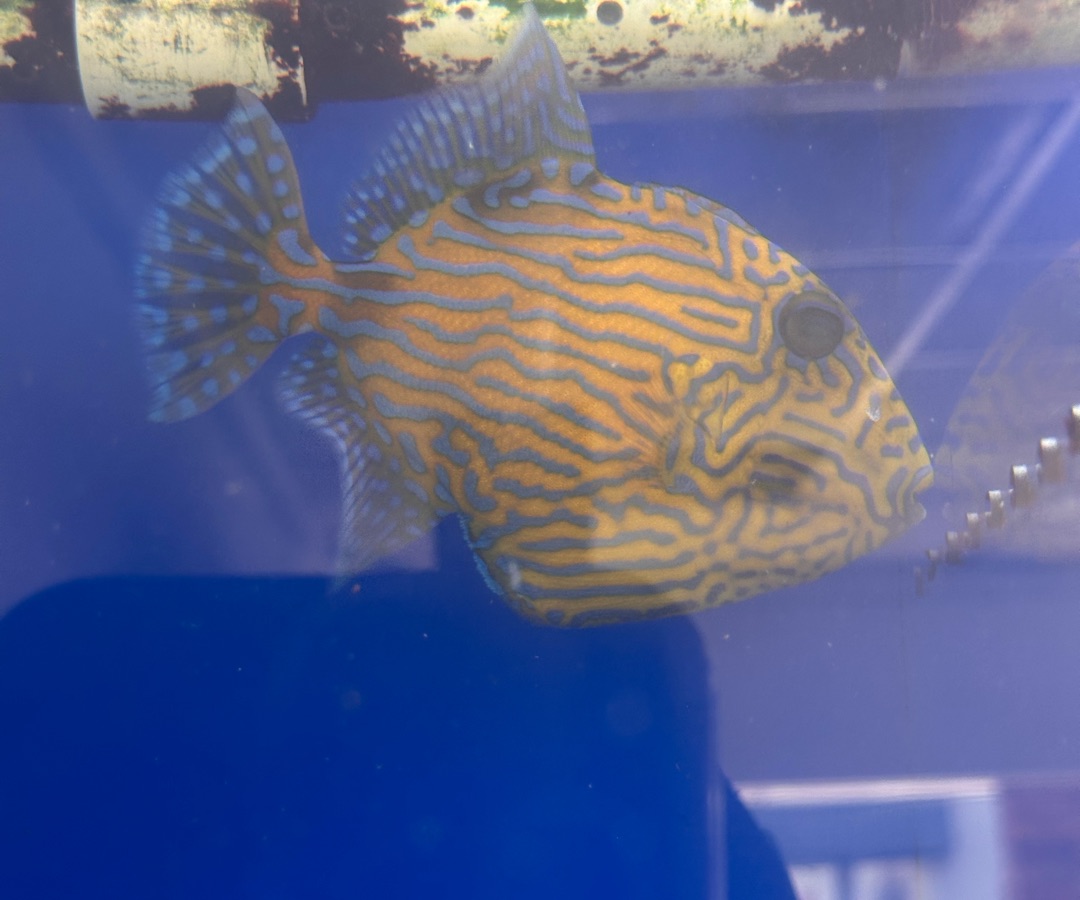
You may also see it sold as the Blue-lined, Rippled, Yellow-spotted, or Blue-and-Gold Triggerfish.
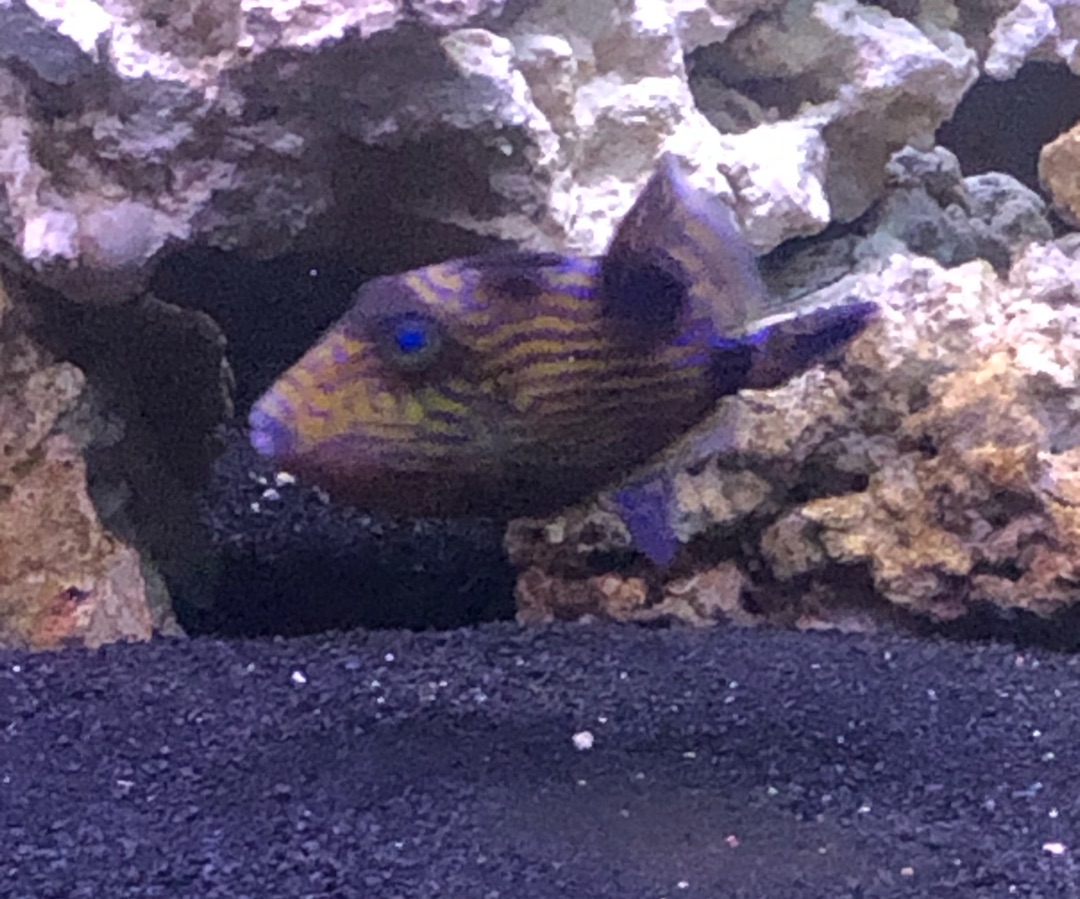
Juveniles are tan to yellow with a bright maze of blue scribbles. As they grow, adults darken to brown-blue with yellow-spotted scales, colorful fin edges, and green eyes.
Why keepers love it
Triggers act more like pets than most fish. Many learn to recognize their owner, beg at the glass, and even take food from tongs.
The Blueline also has one of the brightest juvenile patterns of any trigger, and it stays hardy once it is eating well.
Tank setup
This fish starts small in stores but grows fast and large. Plan for the adult size from day one.
- Space: 300+ gallons with a long, wide footprint for swimming
- Rockwork: glued or very stable, since it blows sand and moves loose rock
- Equipment: hide heaters, tubing, and airline; triggers will bite them
- Filtration: strong flow, a large skimmer, and heavy filtration for a messy eater
- Water: 75–80°F and salinity near 1.024–1.026
Feeding
Blueline Triggers are hungry meat eaters with strong teeth. Hard foods help keep those teeth worn down.
- Frozen shrimp, krill, squid, and clams
- Whole shell-on foods like clams or mussels a few times a week
- A quality marine pellet to round out the diet
Feed once or twice a day and remove leftovers. Big meals mean big waste, so keep up with water changes.
Reef safety
This is not a reef fish. It is a fish-only (FOWLR) species.
- Corals: may knock them over or pick at them while hunting
- Inverts: crabs, shrimp, snails, urchins, and clams are all food
- Cleanup crew: expect most of it to disappear
Behavior and tankmates
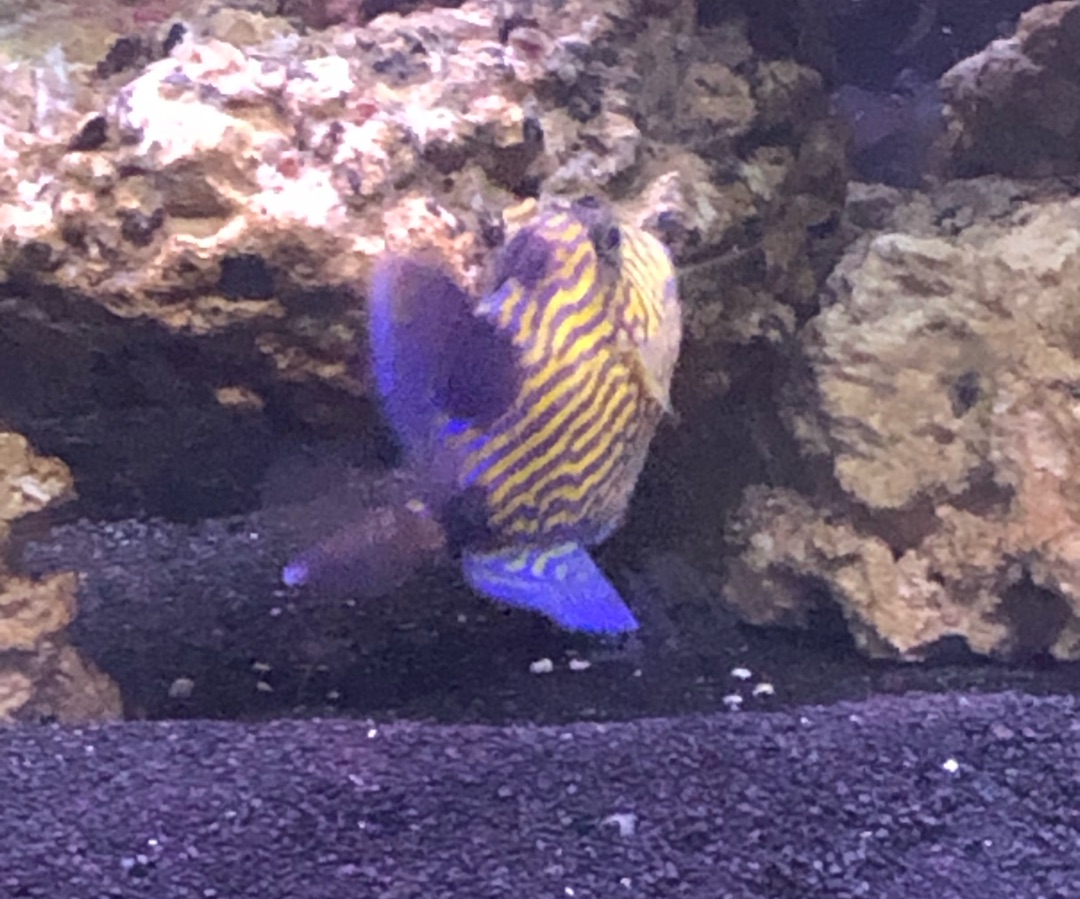
Blueline Triggers are curious and full of personality, but they get pushy as they grow. They bully small, shy, or similar-shaped fish.
- Good: large, sturdy fish like big tangs, large angelfish, groupers, and puffers
- Risky: other triggerfish, especially in anything under a very large system
- Avoid: small fish, slow eaters, and any invertebrates
Add it last, after the other big fish have settled. That keeps it from claiming the whole tank right away.
Health and care tips
- Lifespan: 10+ years with good care
- Watch for: white spots, cloudy eyes, rapid breathing, or refusing food
- Quarantine: follow our 30-day fish quarantine protocol
- Handling: it can bite hard, so keep fingers clear during feeding and maintenance
Comparing triggers? The smaller, calmer Bluejaw Triggerfish is a better fit for most home tanks.
Buying tips
- Pick a lively fish with clear eyes, full fins, and a rounded belly
- Ask to see it eat before you buy
- Only buy one if you already have, or will soon have, a 300+ gallon tank
FAQs
Is the Blueline Triggerfish reef safe?
No. It eats crabs, shrimp, snails, and clams and will rearrange rock and corals. Keep it in a fish-only tank.
How big does a Blueline Triggerfish get?
Adults can reach about 22 inches, which is why it needs 300 gallons or more.
Do Blueline Triggers lose their blue lines?
Mostly, yes. The bright juvenile scribbles fade as the fish grows into darker adult colors with yellow spots.
Ready to add one?
Looking for a Blueline Triggerfish or big, hardy tankmates? Browse fish from trusted sellers on the ReefBay shop.