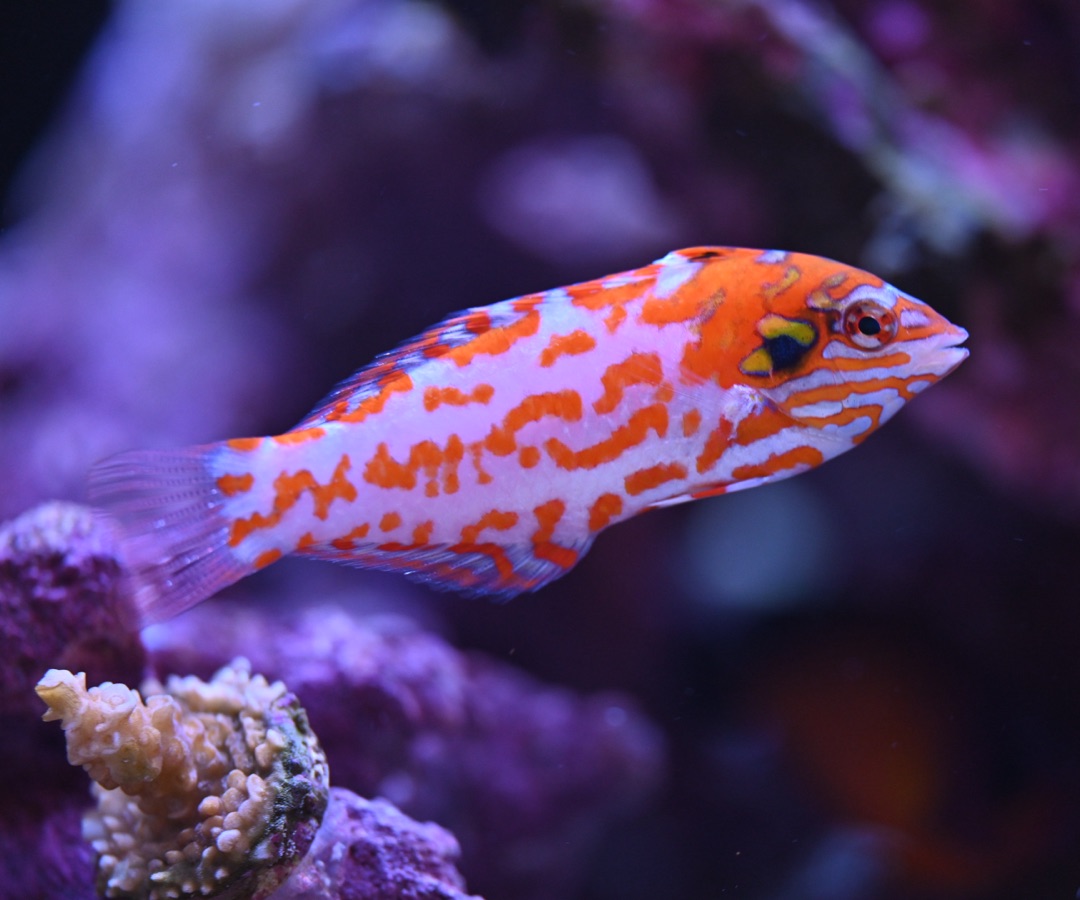
Choat's Wrasse Care Guide: Tank Size, Diet, Reef Safety & Tankmates
Choat's Wrasse care made simple: the tank size and sand bed it needs, how to get it eating, whether it is reef safe, and the best and worst tankmates.
Choat's Wrasse is a small, peaceful leopard wrasse covered in bright orange-red squiggles. It is stunning, but it is a fish for patient keepers with a mature reef tank.
Quick facts
- Tank size: 55 gallons or larger
- Adult size: about 4 inches
- Diet: carnivore; live pods, mysis, and small frozen foods
- Reef safe: yes with corals; may eat tiny snails, worms, and pods
- Difficulty: expert; hard to get eating and easy to starve
- Temperament: peaceful and shy
What it looks like
This wrasse has a white body with irregular orange-red blotches and red stripes running through the eye. A dark spot with a yellow ring sits on the gill cover.
- Other names: Choat's Red Leopard Wrasse, Red Leopard Wrasse, Vermiculate Wrasse
- Scientific name: Macropharyngodon choati
- Origin: eastern Australia and the Coral Sea
- Males: grow green and orange face bars and yellow lips
Is it reef safe?
Yes, it leaves corals and clams alone. That makes it a great fit for SPS, LPS, and soft coral reefs.
It does hunt tiny critters. Expect it to eat copepods, small worms, and baby snails. Larger shrimp and snails are usually safe.

An ornate leopard wrasse, a close cousin, on the reef. Photo: Rickard Zerpe, Wikimedia Commons, CC BY 2.0
Is it right for your tank?
This is not a first fish. It does best in a reef that has been running for six months or more.
- Good fit: mature reefs with lots of live rock, pods, and calm tankmates
- Poor fit: new tanks, bare-bottom tanks, or tanks with bullies
Tank setup
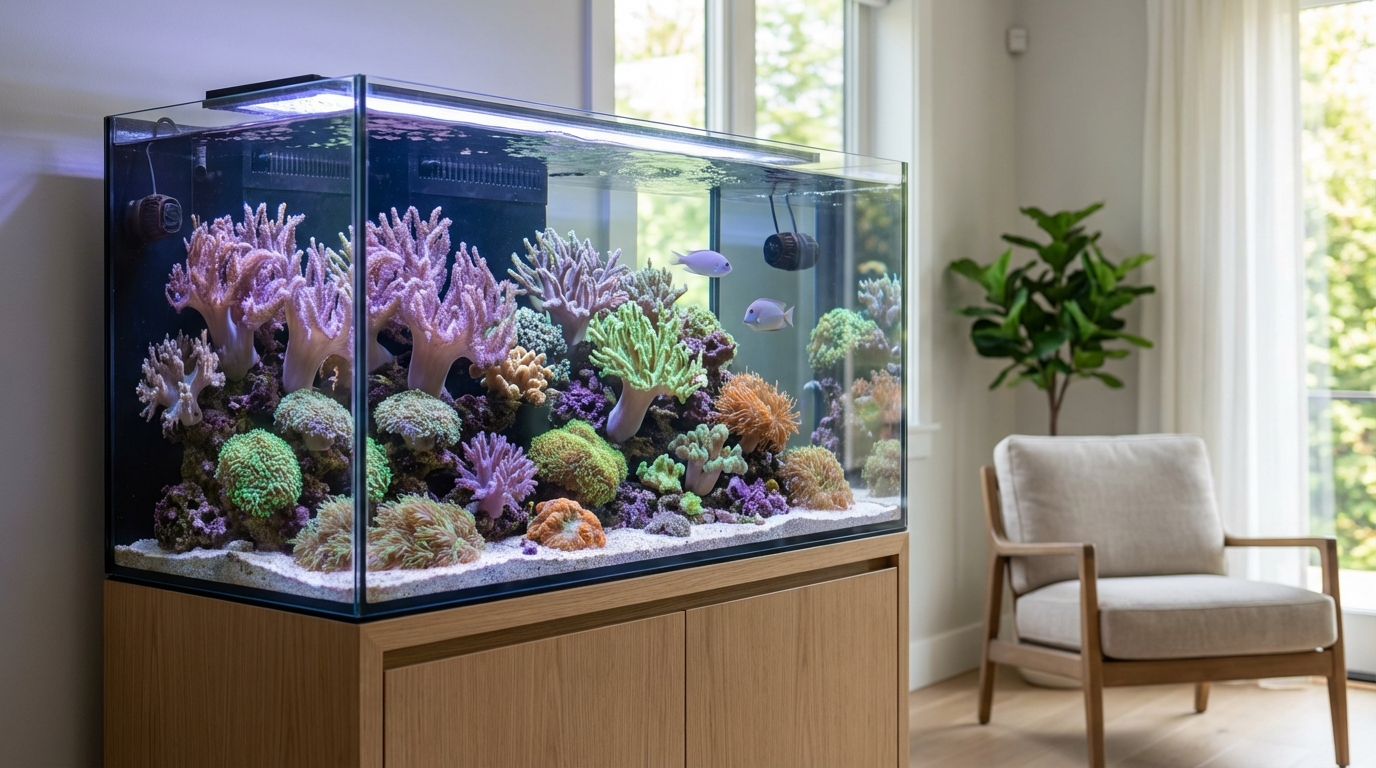
- Space: 55+ gallons with plenty of rockwork to pick at
- Sand bed: 1–2 inches of fine, soft sand; it buries itself to sleep
- Lid: a tight lid or mesh top, since it is a strong jumper
- Flow: medium
- Water: 74–79°F, salinity near 1.025, stable pH
Coarse or sharp gravel can scratch it at night, so stick with fine sand.
Feeding
Leopard wrasses graze all day on tiny live foods. Many starve because they never learn to eat frozen food.
- Live copepods and amphipods from a mature tank or a refugium
- Frozen mysis and enriched brine shrimp
- Small frozen blends and micro pellets once it is eating
Feed small meals two or three times a day. Adding a bottle of live pods now and then helps a lot.
Behavior
- Daytime: swims slowly over the rocks, picking at food
- Night: dives into the sand and may hide there for days after being added
- Groups: one male with one or two females can work in larger tanks
Do not panic if it vanishes for a few days at first. This is normal for leopard wrasses.
Buying tips
- Pick an eater: ask to see it eat frozen food before you buy
- Look for: a full belly, clean fins, and active swimming
- Quarantine: skip copper, which it handles poorly; see our 30-day fish quarantine protocol
Health tips
Watch a new Choat's Wrasse closely for the first few weeks. Most losses happen early from not eating.
- Watch for: a pinched belly, white spots, or fast breathing
- Thin fish: offer live pods and tiny frozen meals several times a day
Tankmates
- Good: clownfish, gobies, firefish, cardinals, and fairy or flasher wrasses
- Risky: other leopard wrasses, mandarins, and dragonets that also need pods
- Avoid: dottybacks, large hawkfish, triggers, and big angelfish
Want an easier wrasse? See our list of the best reef-safe wrasses.
FAQs
Is Choat's Wrasse good for beginners?
No. It needs a mature tank full of pods and can be slow to accept frozen food.
Why is my new Choat's Wrasse hiding in the sand?
Leopard wrasses often bury for several days after being added. Keep the lights on a normal schedule and give it time.
Can I keep it with a mandarin?
Only in a large, pod-rich tank. Both eat copepods and can run the supply dry.
Ready to add one?
Looking for a Choat's Wrasse or peaceful reef tankmates? Browse fish from trusted sellers on the ReefBay shop.