Cleaner Wrasse Care Guide: Tank Size, Diet & Reef Reality
Learn Cleaner Wrasse (Labroides dimidiatus) care: expert-level 90+ gallon systems, parasite/mucus diet weaning onto mysis and chopped seafood, peaceful reef-safe behavior, jump lids, and what to verify before you buy on ReefBay.
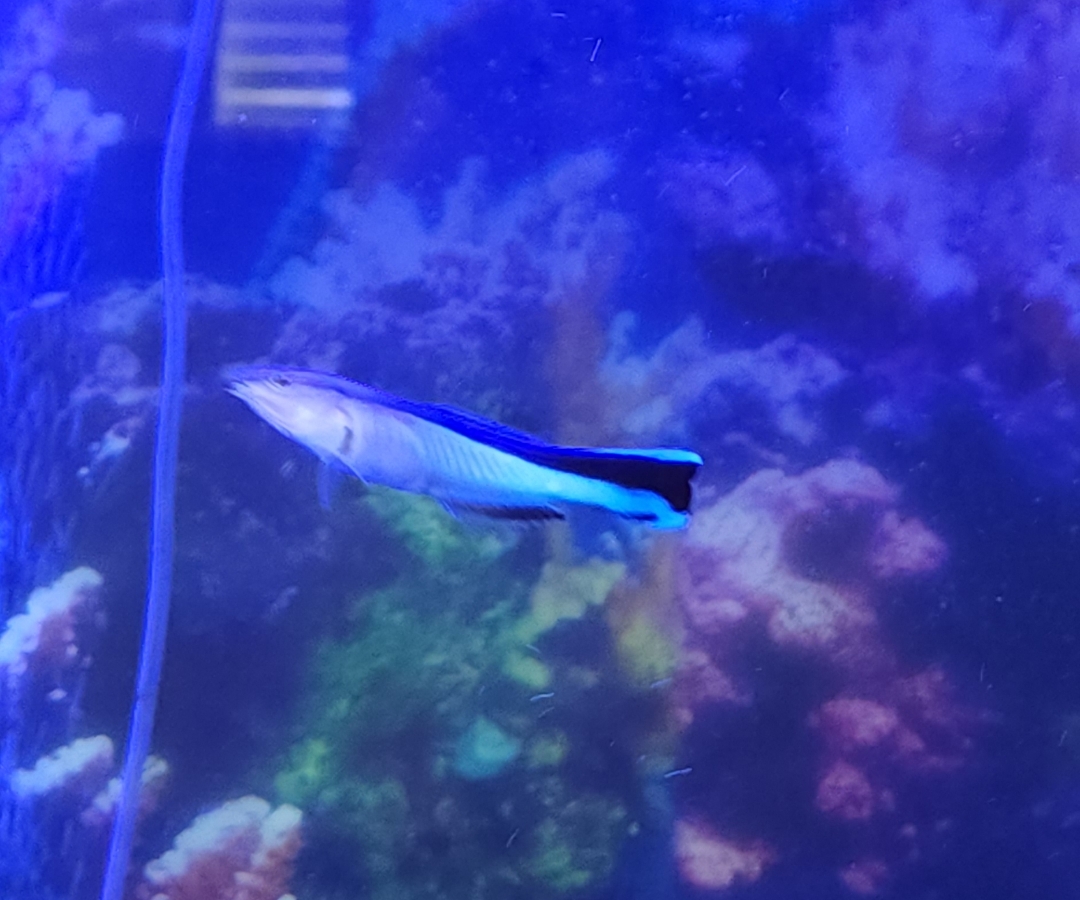
The Cleaner Wrasse (Labroides dimidiatus), also called the Bluestreak Cleaner Wrasse, is a slender Indo-Pacific wrasse with a pale body crossed by a bold black lateral stripe that widens toward the tail. Juveniles are mostly black with a single electric-blue stripe. Peaceful and constantly active, it swims with a characteristic tail-wagging motion and sets up cleaning stations where it picks parasites and mucus from tankmates.
This guide covers why most home reefs are a poor fit, the 90+ gallon mature systems that have a chance, diet weaning reality, jump lids, and a practical ReefBay buying checklist. When you are ready to shop, compare live listings against the care targets below — and be ready to walk away if the fish is not already eating prepared foods.
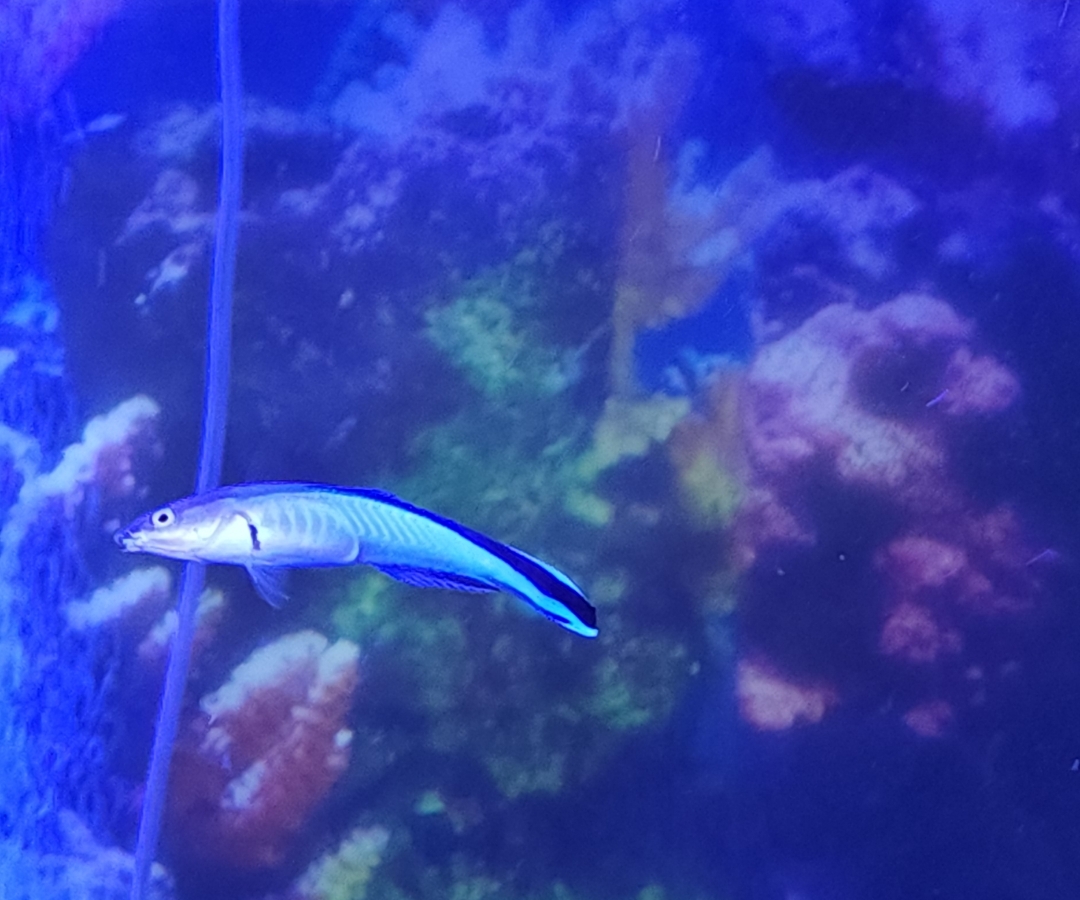
Quick care snapshot
- Scientific name: Labroides dimidiatus
- Also called: Cleaner Wrasse, Bluestreak Cleaner Wrasse, Common Cleaner Wrasse, Blue-streak Cleaner Wrasse, Common Cleanerfish
- Category: Wrasse
- Origin: Indo-Pacific, including the Red Sea
- Care level: expert (hard)
- Temperament: peaceful
- Reef-safe: yes — coral- and invertebrate-safe
- Suggested tank: mature 90+ gallons with many client fish
- Max size: about 5.5 inches
- Social: pair
- Diet: carnivore — parasites and mucus from tankmates; must be weaned onto finely chopped seafood, mysis, and frozen preparations fed several times daily
- Jump risk: yes — use a tight-fitting lid
- Invert-safe: yes
Tank size, aquascape, and why “cleaning stations” fail in small tanks
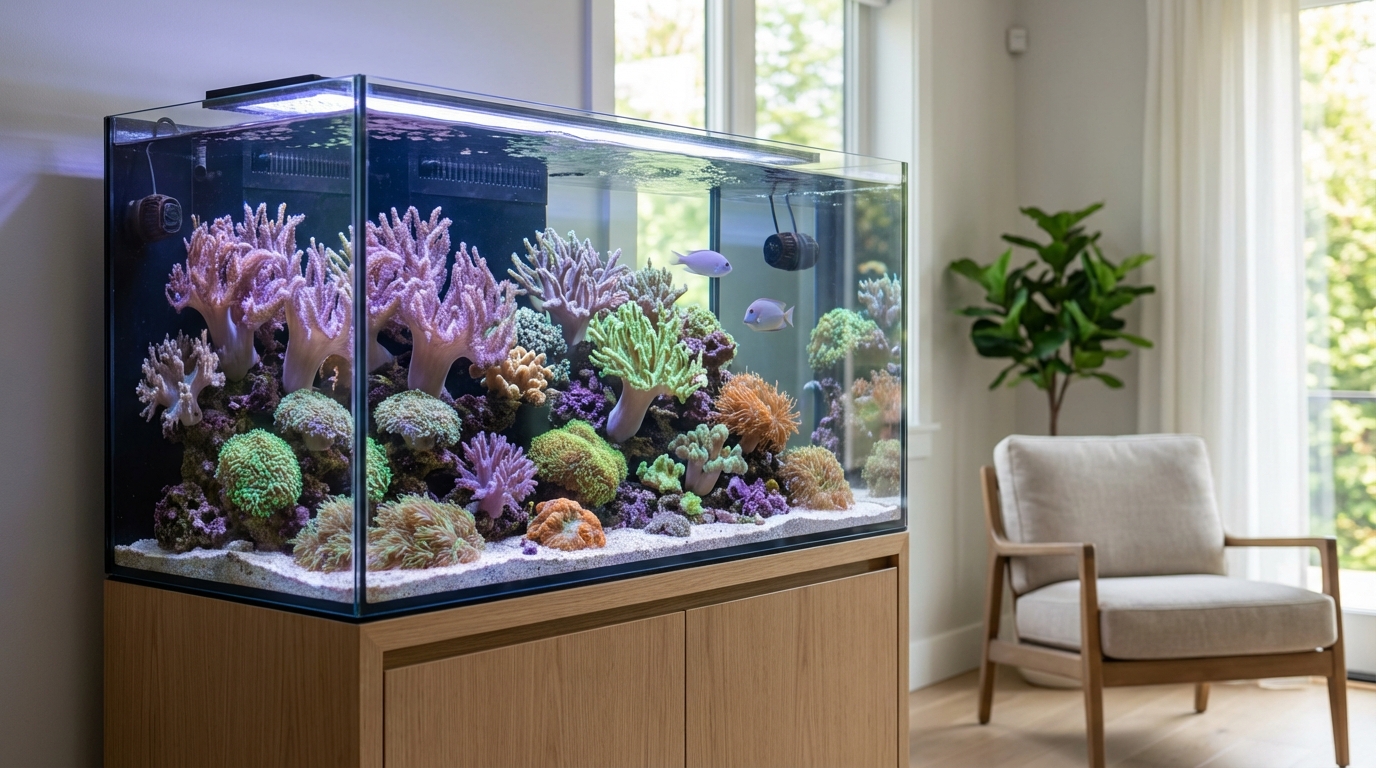
Plan for a mature system of about 90 gallons or larger. Cleaner Wrasses are not a beginner nano fish. They need a large, established, heavily stocked community with plenty of “client” fish so natural cleaning behavior can supplement prepared foods. In small or lightly stocked tanks they often starve even when keepers offer frozen foods daily.
- Use open mid-water swim lanes plus rock ledges where the wrasse can advertise a cleaning station
- Stock a busy community of peaceful to semi-aggressive fish that will visit the station
- Keep moderate flow; they are active swimmers, not cave sitters
- Add them only after the reef is cycled, stable, and already supporting multiple active fish
Under 90 gallons — or in a sparsely stocked “show reef” with only a few fish — this species is usually a bad match. The taxa care level is expert for a reason: starvation risk, not aggression.
Diet and feeding — the make-or-break factor
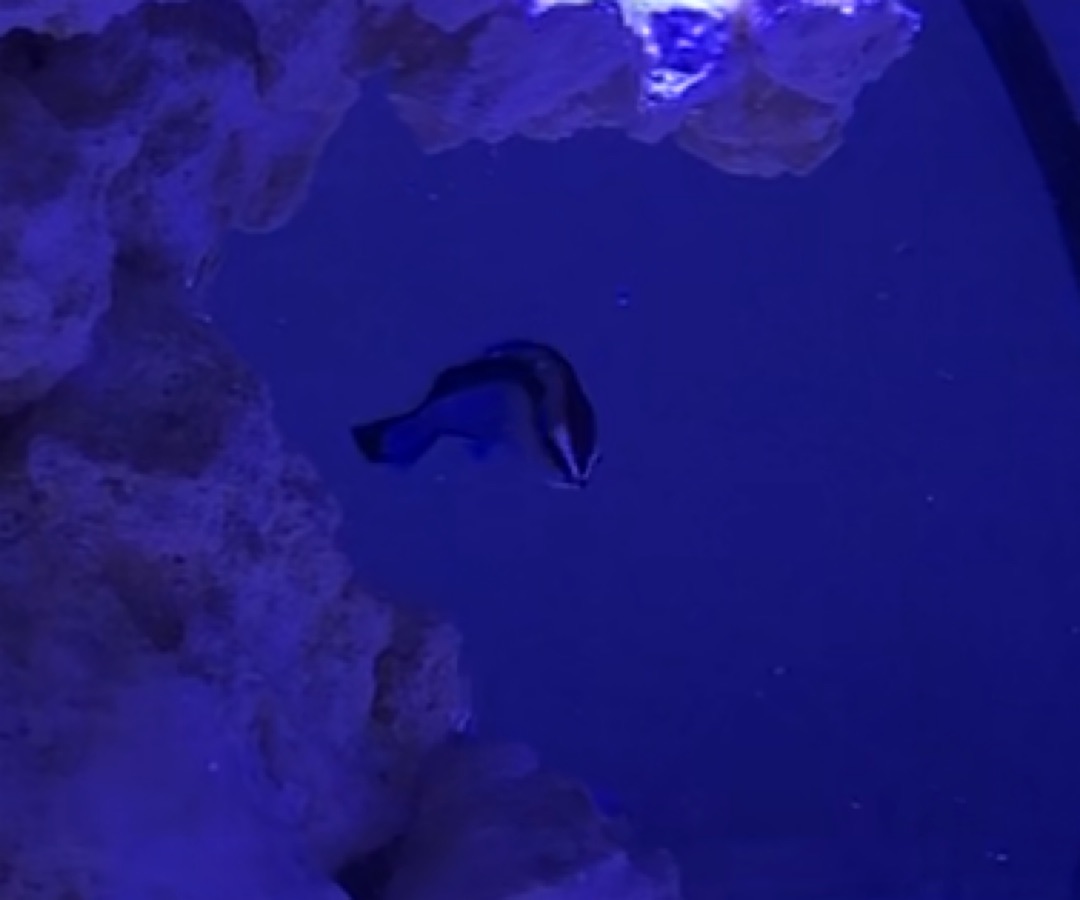
In the wild this carnivore lives on parasites and mucus from tankmates. In aquariums that diet is rarely enough by itself. Success requires weaning onto finely chopped seafood, mysis, and frozen preparations offered several times daily.
- Ask for recent feeding video before you buy — fish already hitting mysis or chopped seafood settle far better
- Feed small portions many times per day rather than one heavy meal
- Target-feed near the cleaning station if tankmates are faster competitors
- Watch body condition weekly; a thinning midsection is an emergency diet signal, not a wait-and-see problem
If a listing shows a fish that refuses tongs and only nips mucus, treat that as a red flag for home systems. Prefer ReefBay sellers who document prepared-food response in quarantine.
Compatibility, reef safety, and social notes
Cleaner Wrasses are peaceful, reef-safe, and invert-safe. They will not eat your corals or ornamental shrimp. The friction is husbandry difficulty, not bullying.
- Often works: mixed reefs with many mid-sized peaceful and semi-aggressive fish that visit cleaning stations
- Social: pair housing is the taxa social note — introduce carefully and watch for stress in smaller footprints
- Watch closely: large predators that may eat a slender wrasse; barren tanks with too few clients
- Quarantine: still QT — peaceful wrasses can carry parasites even when they look clean
Do not buy a Cleaner Wrasse as a “biological pest-control tool” for a new or understocked tank. That plan fails more often than it works.
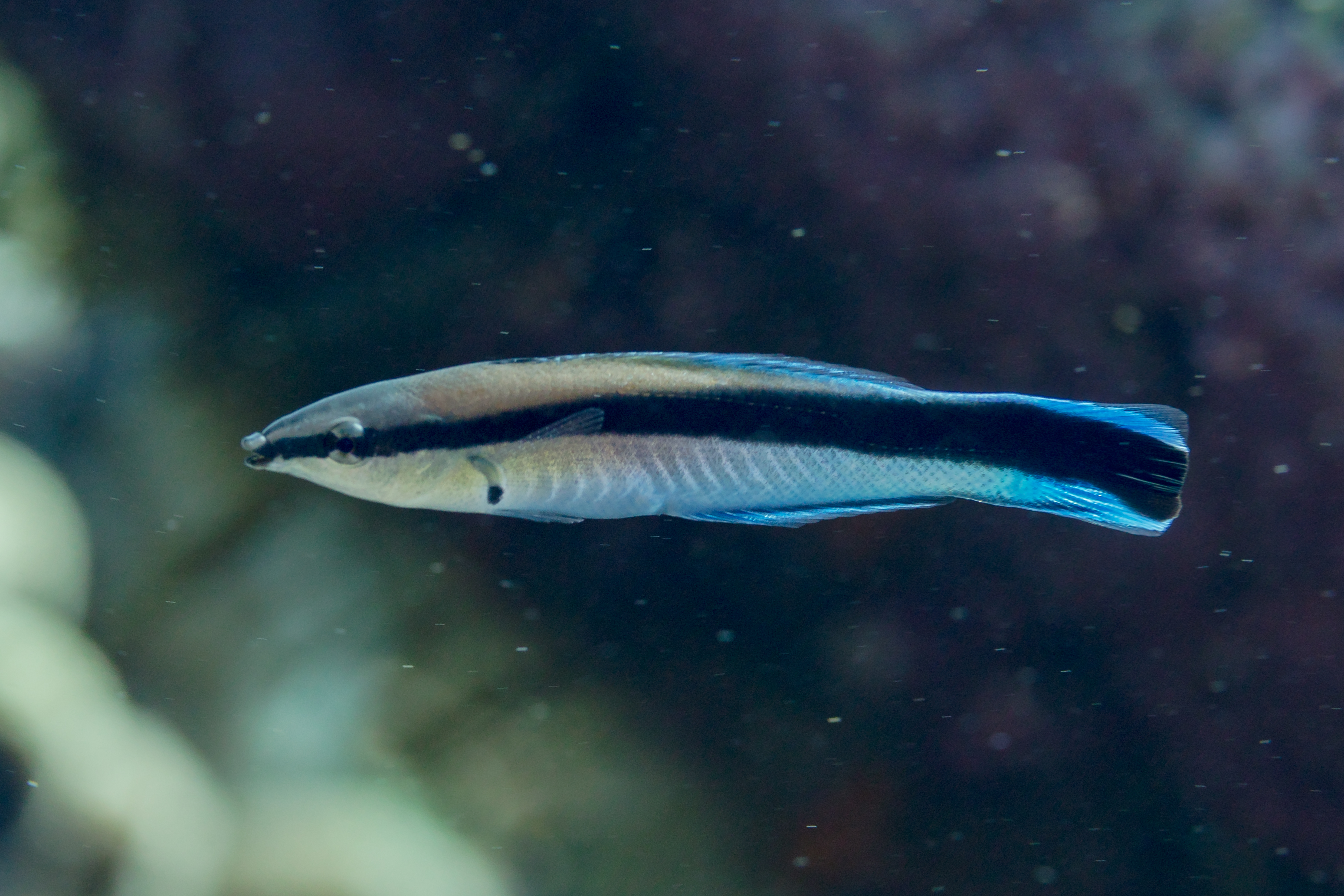
Photo: Diego Delso, CC BY-SA 4.0, via Wikimedia Commons
Jump risk — lid required
This species is flagged as jump-risk. Use a tight-fitting lid or mesh cover, especially during acclimation, after lights-out startles, and when the fish dashes across open water between clients.
- Cover rim gaps, overflow notches, and cable cutouts
- Dim lights for the first evenings after introduce
- Avoid sudden shadows and aggressive surface netting
Common problems and quick fixes
- Weight loss / starvation: increase feed frequency with finely chopped seafood and mysis; confirm the fish is actually eating prepared foods, not only nipping mucus
- Hiding / no cleaning station: usually too few client fish or a brand-new add — wait for settlement, keep food coming, reduce bullying
- Jump deaths: lid gaps — seal the canopy before the next startle event
- Sudden decline after shipping: check salinity/temp match, drip acclimation, and whether the fish ate before transport
Buying checklist before you click purchase
- Confirm a mature 90+ gallon system with many client fish already swimming
- Require evidence the fish eats prepared foods (mysis / chopped seafood), not mucus only
- Plan several small daily feeds and a quarantine protocol
- Install a sealed lid (jump risk)
- Compare active listings, seller reputation, and recent photos in ReefBay before you commit
Ready to shop? Open the Cleaner Wrasse taxon page in ReefBay, compare seller photos next to care notes, and browse the marketplace for specimens already weaned onto prepared foods.