Fuzzy Dwarf Lionfish Care Guide: Tank Size, Diet, Venom & Tankmates
Fuzzy Dwarf Lionfish care made simple: the tank size it needs, how to switch it to frozen food, venom safety, reef safety, and the best and worst tankmates.
The Fuzzy Dwarf Lionfish is a small, shaggy lionfish with big fan-like fins and a calm, sit-and-wait style. It is one of the easiest predators to keep, as long as you plan for its venom and its big appetite.
Quick facts
- Tank size: 50 gallons or larger
- Adult size: about 6–7 inches
- Diet: carnivore; frozen shrimp, krill, silversides, and chopped seafood
- Reef safe: with caution; ignores corals but eats small fish and shrimp
- Difficulty: moderate; easy once it eats frozen food
- Temperament: semi-aggressive toward anything it can swallow
What it looks like
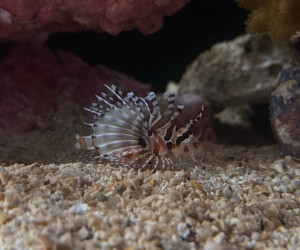
This lionfish has red, brown, and white bands with a mottled, "fuzzy" texture. Its wide pectoral fins spread out like a fan when it hunts.
- Other names: Dwarf Lionfish, Shortfin Lionfish, Fuzzy Lionfish, Short-finned Turkeyfish
- Scientific name: Dendrochirus brachypterus
- Origin: Indo-Pacific reefs and sea grass beds
- Males vs. females: males usually have a bigger head and longer fins

A Fuzzy Dwarf Lionfish resting on rubble. Photo: Rickard Zerpe, Wikimedia Commons, CC BY 2.0
Is it venomous?
Yes. The spines on its back, belly, and tail fin can give a very painful sting.
- Use long tools and a net, not your hands, near the fish
- Know where it sits before you reach into the tank
- If stung, soak the spot in hot (not scalding) water and call a doctor if pain or swelling is bad
Is it reef safe?
It does not bother corals, clams, or snails. The problem is its mouth.
It will eat small fish and ornamental shrimp like cleaner and peppermint shrimp. Only keep it in a reef if you skip small fish and shrimp.
Tank setup
- Space: 50+ gallons with caves and overhangs to rest under
- Flow: low to medium; it is a slow swimmer
- Filtration: a strong skimmer, since meaty meals add a lot of waste
- Water: 74–80°F, salinity near 1.025, stable pH
It spends most of the day perched on rock or sand. A quiet corner helps it settle in.
Feeding
Many dwarf lionfish arrive eating only live food. Your first goal is to switch it to frozen.
- Offer thawed frozen shrimp, krill, or silversides on a feeding stick
- Wiggle the food slowly near its face to trigger a strike
- Soak foods in a vitamin supplement once or twice a week
Feed adults every two or three days. Do not feed live freshwater fish like feeder goldfish; they are poor nutrition and can cause fatty liver.
Buying tips
- Ask first: make sure it already eats frozen food
- Look for: clear eyes, clean fins, and a rounded belly
- Quarantine: follow our 30-day fish quarantine protocol before adding it to your display

A dwarf lionfish fanning its fins between rocks. Photo: Jon Radoff, Wikimedia Commons, CC BY 2.5
Behavior
- Daytime: rests on rocks and waits for food to come by
- Feeding time: learns to swim to the front and "beg"
- Groups: best kept alone; two can fight unless the tank is large
Tankmates
A good rule: if a fish fits in its mouth, it will likely be eaten.
- Good: tangs, larger angelfish, foxfaces, rabbitfish, and big wrasses
- Risky: mid-size fish like clownfish that may fit later as it grows
- Avoid: gobies, firefish, small shrimp, and fin-nippers like triggers and puffers
Want a bigger lionfish? Read our Volitans Lionfish care guide.
FAQs
Is a Fuzzy Dwarf Lionfish good for beginners?
Yes, if you plan for its venom and tankmates. It is hardy and much smaller than a Volitans Lionfish.
Why won't my dwarf lionfish eat frozen food?
Many are caught eating live food only. Keep offering moving frozen food on a stick, and be patient for a week or two.
Will it eat my cleaner shrimp?
Probably. Most dwarf lionfish will eat any shrimp small enough to swallow.
Ready to add one?
Looking for a Fuzzy Dwarf Lionfish or safe tankmates? Browse fish from trusted sellers on the ReefBay shop.