Kamohara Blenny Care Guide: Tank Size, Diet, Venom & Reef Safety
Kamohara Blenny care made simple: the tank size it needs, what to feed it, how its venomous fangs work, reef safety, and the best and worst tankmates.
The Kamohara Blenny is a small, dark fang blenny with a bright white line down its side. It is peaceful, reef safe, and easy to feed, but it is rare in the hobby.
Quick facts
- Tank size: 30 gallons or larger
- Adult size: about 2.5 inches (6 cm)
- Diet: omnivore; mysis, enriched brine shrimp, and small pellets
- Reef safe: yes; leaves corals alone
- Difficulty: easy
- Temperament: peaceful, but may fight other fang blennies
What it looks like
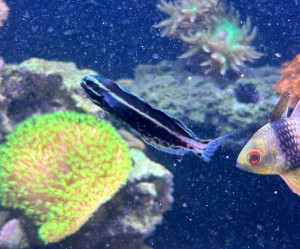
This blenny has a slim, dark body with one bright white to pale blue stripe from its nose to its tail. Its tail is forked, and it swims in open water instead of sitting on rocks.
- Other names: Kamohara Fang Blenny, Kamohara's Blenny, Japanese Fang Blenny
- Scientific name: Meiacanthus kamoharai
- Origin: reefs of southern Japan
- Males vs. females: they look the same

A Kamohara Blenny in the wild. Photo: Izuzuki, Wikimedia Commons, CC BY-SA 3.0
Is it venomous?
Yes. Like all fang blennies, it has two large fangs in its lower jaw with mild venom. Bigger fish that try to eat it usually spit it right back out.
It does not go looking for fights. The bite is for defense, so you only need to take care when moving it by hand.
Is it reef safe?
Yes. It does not pick at corals, clams, or snails.
It is usually fine with crabs and shrimp too. Very tiny shrimp could be at risk, so watch closely at first.
Tank setup
- Space: 30+ gallons with open swimming room
- Rock: add small holes and caves for it to sleep in at night
- Lid: use a tight lid or mesh top; fang blennies can jump
- Water: 74–78°F, salinity near 1.025, stable pH
It hovers above the rockwork during the day. At night it backs into a small hole to rest.
Feeding
In the wild it eats tiny floating animals and some algae. In a tank it takes most foods quickly.
- Offer frozen mysis and enriched brine shrimp
- Add small pellets or flakes for variety
- Feed small amounts once or twice a day
Behavior and tankmates
This is a calm fish that gets along with most peaceful tankmates. Keep one per tank, or a pair added at the same time.
- Good: clownfish, gobies, firefish, cardinalfish, and small wrasses
- Risky: other fang blennies or fish with a similar shape
- Avoid: large predators like lionfish and groupers
Want a similar fish? Read our Disco Blenny care guide, another easy fang blenny.
Common problems
- Jumping out: the most common way people lose blennies, so cover every gap
- Fighting: two fang blennies in a small tank may chase each other
- Thin body: often means it is not getting enough food; feed more often
Good water and a steady routine prevent most issues. Test your water weekly and do small water changes.
Buying tips
- Look for: a full belly, clear eyes, and clean fins
- Ask first: make sure it eats frozen food at the store
- Quarantine: follow our 30-day fish quarantine protocol before adding it to your display
FAQs
Is the Kamohara Blenny good for beginners?
Yes. It is hardy, eats well, and stays small. The hardest part is finding one for sale.
Is its bite dangerous to people?
It can hurt a little, but it is not known to be dangerous to people. Use a net or cup when moving it.
Can I keep it with a Midas Blenny?
Often yes in a larger tank, but watch for chasing. Add them at the same time if you can.
Ready to add one?
Looking for a Kamohara Blenny or peaceful tankmates? Browse fish from trusted sellers on the ReefBay shop, or log your own fish in the ReefBay app.