Yellow Coris Wrasse Care Guide: Tank Size, Diet, Sand Bed & Reef Safety
Yellow Coris Wrasse care made simple: tank size, diet, why it needs a sand bed, reef safety, pest control, peaceful tankmates, and buying tips.
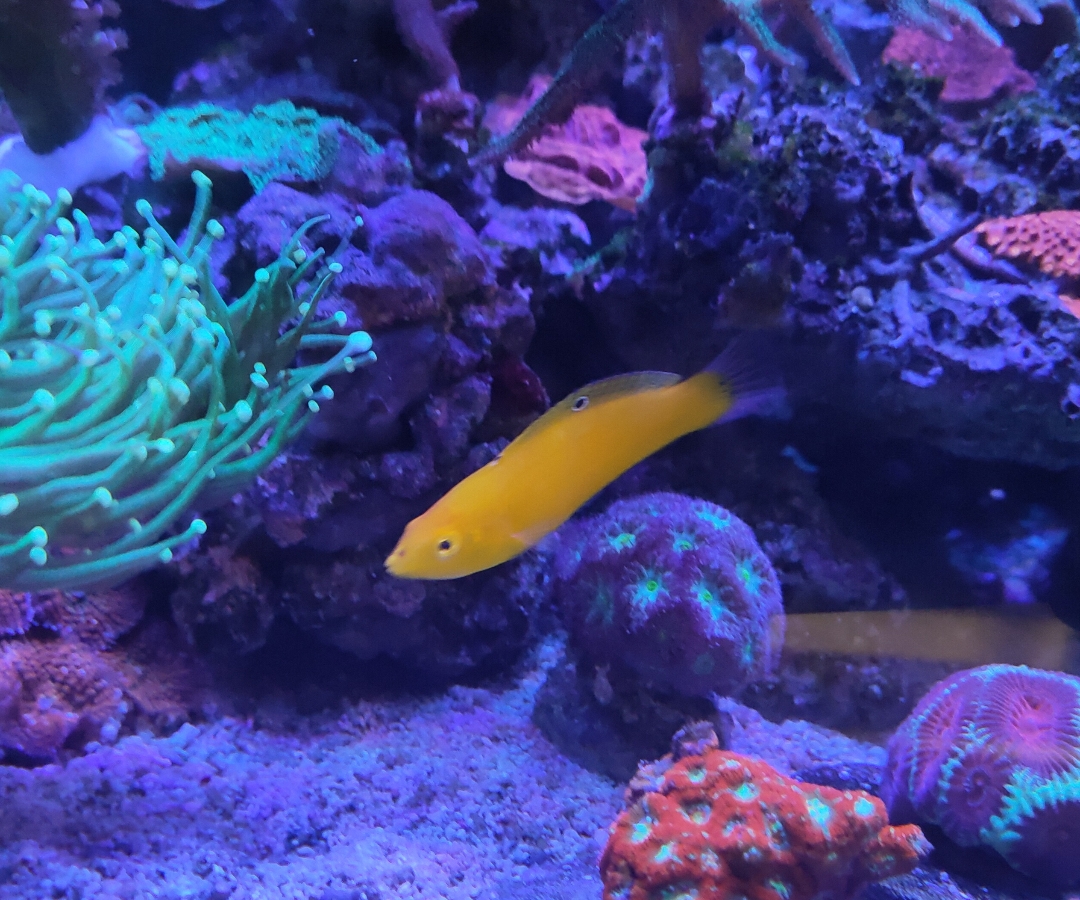
The Yellow Coris Wrasse (Halichoeres chrysus), also sold as the Canary Wrasse, is a small, bright yellow fish that stays busy all day. It is peaceful, hardy, and great at hunting pests in a reef tank.
Quick facts
- Tank size: 50 gallons or more
- Adult size: about 4 to 5 inches
- Diet: carnivore; mysis, brine shrimp, and small pellets
- Reef safe: yes with corals; may eat tiny snails and worms
- Difficulty: easy
- Temperament: peaceful
Why reefers love it
Its lemon-yellow color pops against blue lights and live rock. It also spends the day cruising the rocks looking for food.
While it searches, it eats pests like flatworms, bristle worms, and the tiny pyramid snails that bother clams.
It sleeps in the sand
Like many wrasses, the Yellow Coris dives into the sand at night and when it feels scared.
- Give it a soft sand bed at least 2 inches deep
- Use fine sand, not sharp crushed coral
- Expect it to hide for a few days after you add it; this is normal
Do not dig it up to check on it. It will come out once it feels safe.
Tank setup
- Swimming room: open space along the rocks and the sand
- Lid: a must, because wrasses jump when startled
- Water: 72–78°F, salinity 1.023–1.025, pH 8.1–8.4
- Flow: moderate is fine
Diet and feeding
This wrasse eats meaty foods and is rarely picky.
- Frozen mysis or enriched brine shrimp
- Small marine pellets
- Chopped clam or krill now and then
- Feed 2 to 3 small meals a day
Frequent meals keep it plump, since it burns a lot of energy swimming.

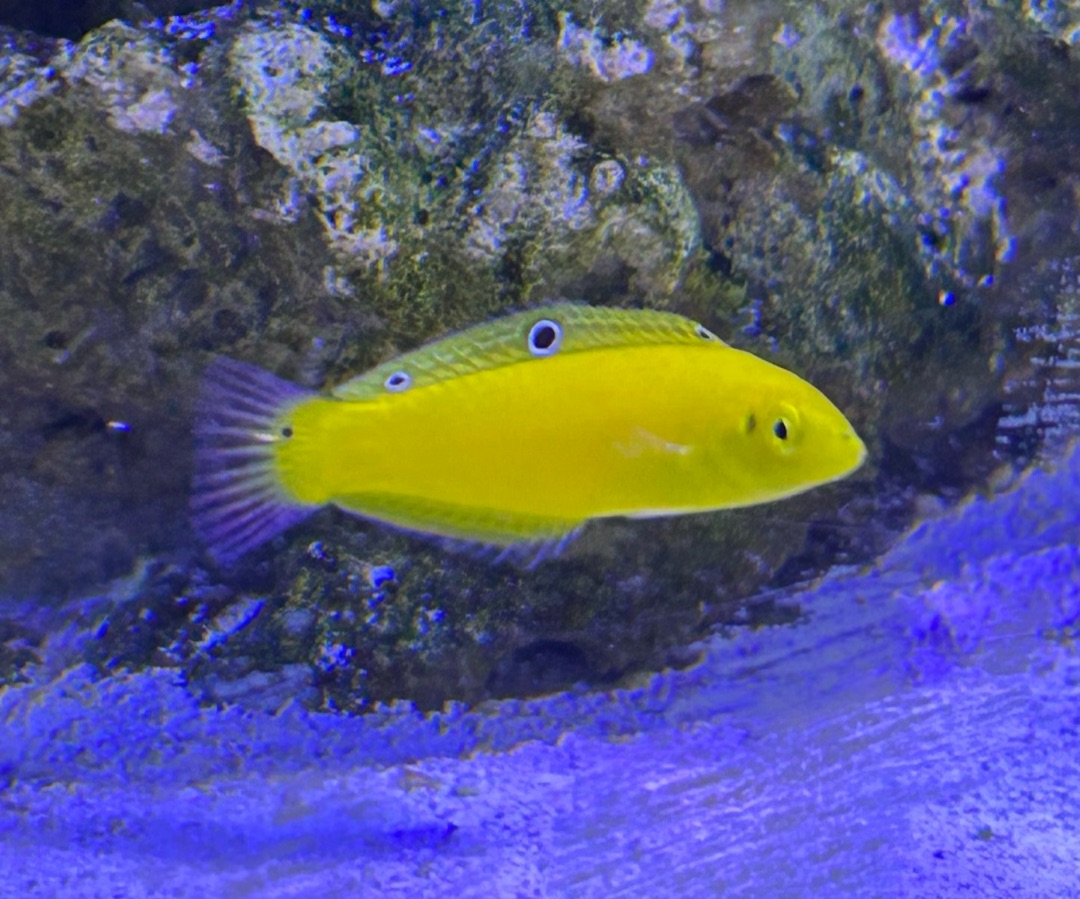
Photo: Sushi Girl1995, Wikimedia Commons, CC BY-SA 3.0 — adult Yellow Coris Wrasse
Is it reef safe?
Yes, it leaves corals, clams, and anemones alone. It is one of the safest wrasses for a reef.
It may snack on very small snails, worms, and baby shrimp. Bigger cleaner shrimp and snails are usually fine.
Tankmates
- Good matches: clownfish, gobies, chromis, cardinalfish, tangs, and other peaceful wrasses
- Use caution: other Halichoeres wrasses in small tanks, which may fight
- Avoid: lionfish, groupers, and big, pushy fish
Keep one per tank unless the tank is large.
Colors change as it grows
Young fish are yellow with a few dark spots on the back fin and body. As they grow, most of the spots fade.
Older males can pick up faint green or pink lines on the face. All of these are the same species, so do not worry if your fish looks a little different from the store photo.
Health and lifespan
- Hardy: handles small swings in water quality better than many wrasses
- Watch for: white spots, cloudy eyes, or fast breathing, which can mean a parasite
- Lifespan: often 5 years or more with good care
Small, regular water changes and steady feeding are the best way to keep it healthy.
Buying tips
- Look for: bright color, a full belly, and active swimming
- Skip: fish with torn fins, sores, or fast breathing
- Quarantine: keep it in a separate tank (with sand) for a few weeks first
Want more pest-hunting helpers? Read our Six Line Wrasse guide next.
FAQ
Why did my new Yellow Coris Wrasse disappear? It is most likely buried in the sand. New wrasses often hide for several days before coming out.
Will it eat my pyramid snails? Yes, it is one of the best fish for that job, along with flatworms and bristle worms.
Can I keep it in a tank with no sand? It is not a good idea. Without sand to sleep in, it gets stressed and may not live long.
Ready to add one? Browse livestock and gear in the ReefBay shop, then track feedings and water tests in the ReefBay app.