
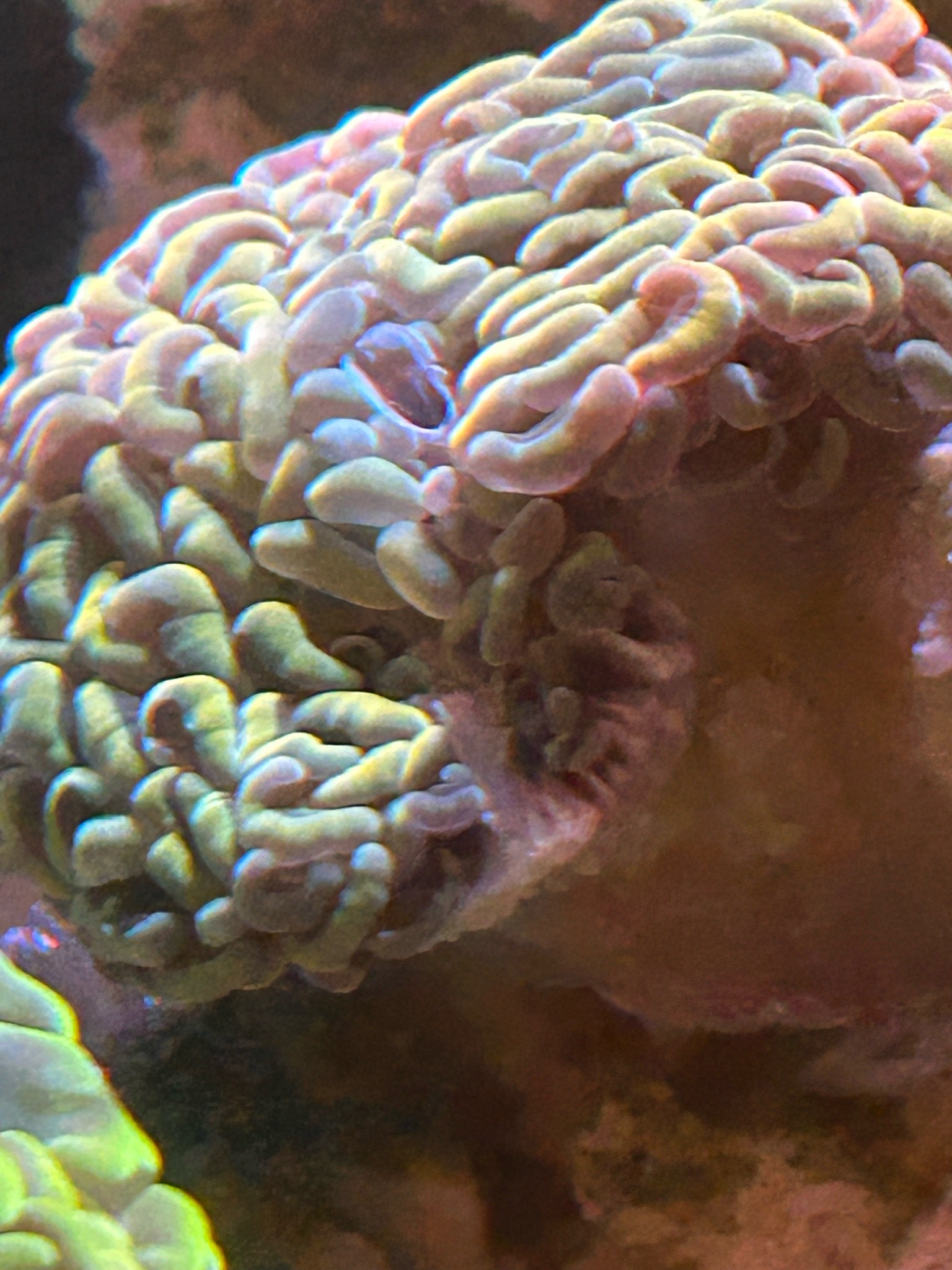
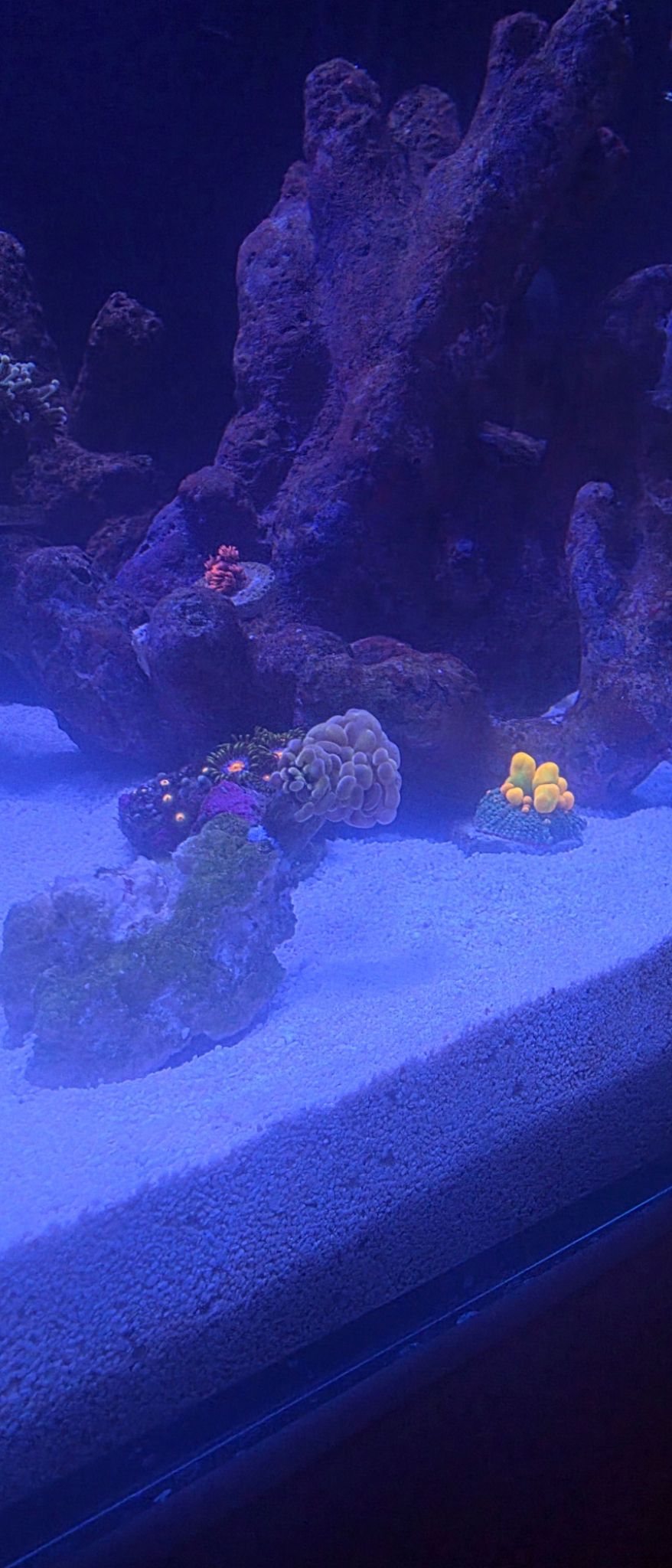
ello everyone. I’d like to know if this is RTN? And if so, what can be done? My parameters are within range: KH 8.3, Ca 457, Mg 1535, NO3 11, PO4 0.05, pH 8.4, Temp 24, Salinity 1.027. I would appreciate your help.
Comments
Sign in to leave a comment
No comments yet
Be the first to start the conversation.
 @jasmine_ilands
14h
The numbers aren't your problem, and that's the annoying part. KH 8.3, Ca 457, PO4 0.05, NO3 11 is a working tank. RTN doesn't care. It moves in hours, not weeks, and it usually starts at a point: a spot with no flow, a fresh glue joint, a sting from a neighbour, or a nick from handling. So the questions that actually decide this: - Is the white edge advancing while you watch it? Take a photo now and one in an hour. If the white is bigger, it's RTN and you act today. - Does tissue peel off in sheets or strings? That's the tell. A slow pale patch is different, that's STN and you have time to look for the cause. If it's RTN: cut the healthy part off, an inch above the line, into clean skeleton, and mount that. Assume the affected section is lost. Run fresh carbon and do a 20 percent water change for the die-off, not to chase any number. One thing in your list I'd double check: salinity 1.027. If that's a swing-arm hydrometer it could be a lot higher than you think. Calibrated refractometer before you trust it. Don't dose anything to fix this. Changing alk or Ca mid-event makes it faster. And post the two photos, I'll look.
@aviram
12h
I cut one of them, and for now, it seems the spread has stopped; I made the cut slightly above the living tissue. As for the coral itself, it completely disintegrated within just a few hours. I performed a 15% water change and started using STN/RTN-X. I hope I won’t wake up to any new surprises tomorrow and that the spread to other corals will halt.
Sign in to join the conversation.






Check if it spreads fast first