Achilles Tang Care Guide: Tank Size, Diet, Ich Risk & Tankmates
Achilles Tang care made simple: the tank size and flow it needs, what to feed, how to avoid ich, reef safety, and which tankmates work best.
The Achilles Tang (Acanthurus achilles) is a jet-black fish with a bright orange teardrop near its tail. It is one of the most wanted tangs in the hobby, but it is also one of the hardest to keep.
Quick facts
- Tank size: 180 gallons or more, with a long footprint
- Adult size: about 10 inches
- Diet: herbivore; nori, seaweed, and algae foods every day
- Reef safe: yes, it leaves corals and invertebrates alone
- Difficulty: expert
- Temperament: semi-aggressive, especially toward other tangs
What makes it special
You may also see it sold as the Red-spotted Surgeonfish or Red-tailed Surgeonfish. It comes from the clear, wave-washed reefs of the Central and South Pacific, including Hawaii.
Adults have white marks on the chin and gill cover and orange edges on the fins. Young fish have a much smaller orange spot that grows as they mature.
Like all tangs, it has a sharp spine (a "scalpel") at the base of the tail. Use a net or container when moving it, and keep your hands clear.
Is it right for your tank?
Only pick this fish if you already have a large, stable reef and some experience with tangs. It is not a beginner fish.
- Good fit: big, mature tanks with strong flow and lots of open swimming room
- Poor fit: new tanks, small tanks, or low-flow setups
- Plan ahead: it is expensive, so careful quarantine is worth the time
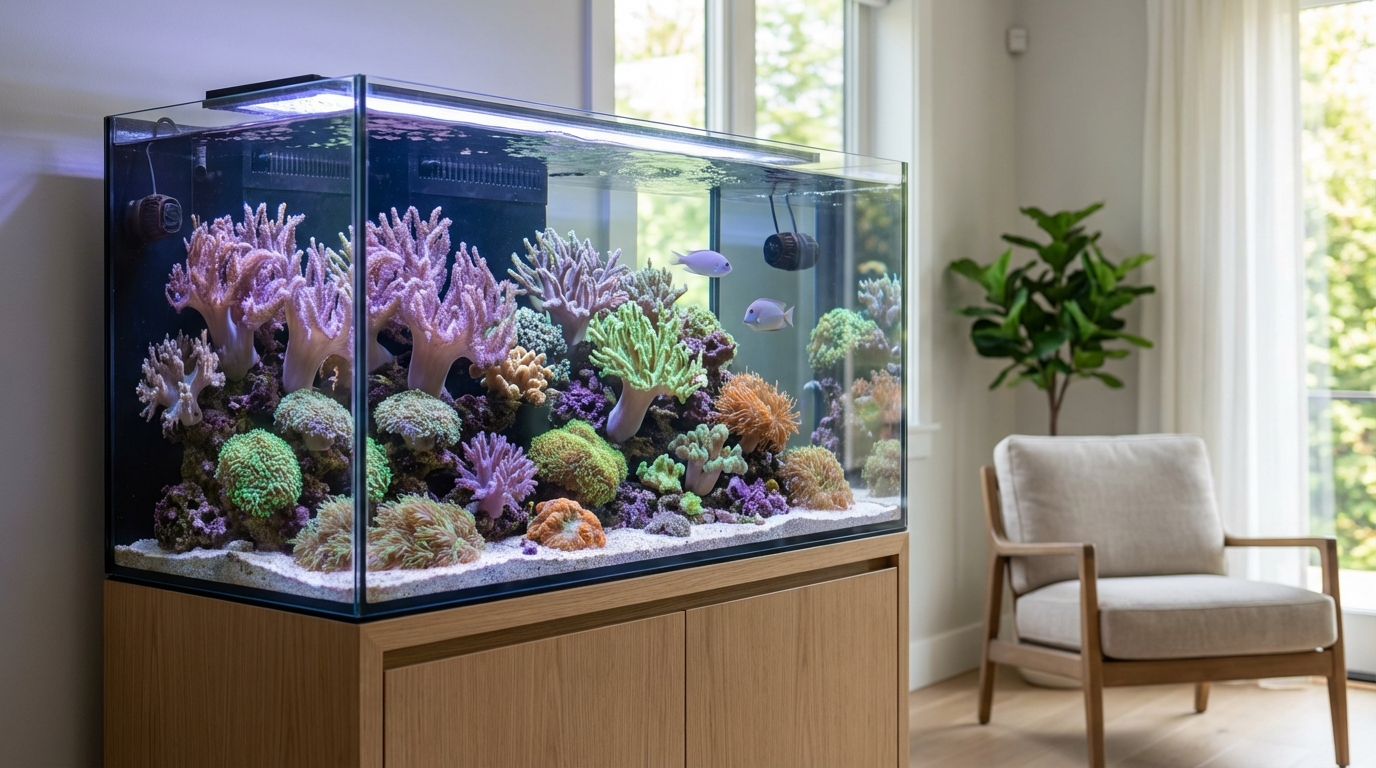
Tank setup
- Space: 180+ gallons, ideally 6 feet long or more
- Flow: strong, choppy water movement, like surf on a reef
- Oxygen: high; a big skimmer and good surface movement help
- Water: 75–80°F, salinity near 1.025, very clean and stable
- Lid: yes; it can jump when scared
Leave lots of open water with rockwork to the sides or back. Add it to a tank that has been running for at least a year.

Photo: Jean, Wikimedia Commons, CC BY 2.0
Feeding
In the wild, Achilles Tangs graze on algae all day. A well-fed tang is calmer and fights disease better.
- Dried seaweed (nori) on a clip, one or more sheets a day
- Algae pellets or flakes made for herbivores
- Some frozen foods like mysis or spirulina brine for extra protein
Feed small amounts two or three times a day. A thin belly or pinched look behind the head means it needs more food.
Health: the big challenge
This tang is known for catching ich (white spot disease) and other parasites. Most losses happen in the first few weeks.
- Quarantine: follow our 30-day fish quarantine protocol
- Look for: a round belly, bright colors, and clean fins
- Ask: to see it eat before you buy
- Watch for: white spots, fast breathing, or scraping on rocks
Reef safety
It is reef safe. It will not eat corals, clams, shrimp, or snails, and it helps keep film algae down.
Tankmates
- Good: clownfish, gobies, wrasses, anthias, and other peaceful fish
- Risky: other tangs, especially similar-shaped Acanthurus tangs
- Avoid: a second Achilles Tang, or small tanks crowded with tangs
If you want more than one tang, add the Achilles last and pick tangs with different shapes. See our guide to the best tangs for reef tanks or the Powder Blue Tang care guide.
FAQs
Is the Achilles Tang reef safe?
Yes. It grazes on algae and ignores corals and invertebrates.
Why is it so hard to keep?
It needs a huge, oxygen-rich tank and is prone to ich. Stress from shipping makes this worse.
Can I keep it with a Yellow Tang?
Often yes in a large tank, since they look different. Add the Achilles last and watch for chasing.
Ready to add one?
Looking for an Achilles Tang or easier tankmates? Browse fish from trusted sellers on the ReefBay shop.