Powder Blue Tang Care Guide: Tank Size, Diet, Ich Risk & Tankmates
Powder Blue Tang care: 125+ gallon tanks, an algae-heavy diet, ich prevention and quarantine, reef safety, tang aggression and tankmates, plus a ReefBay buying checklist.
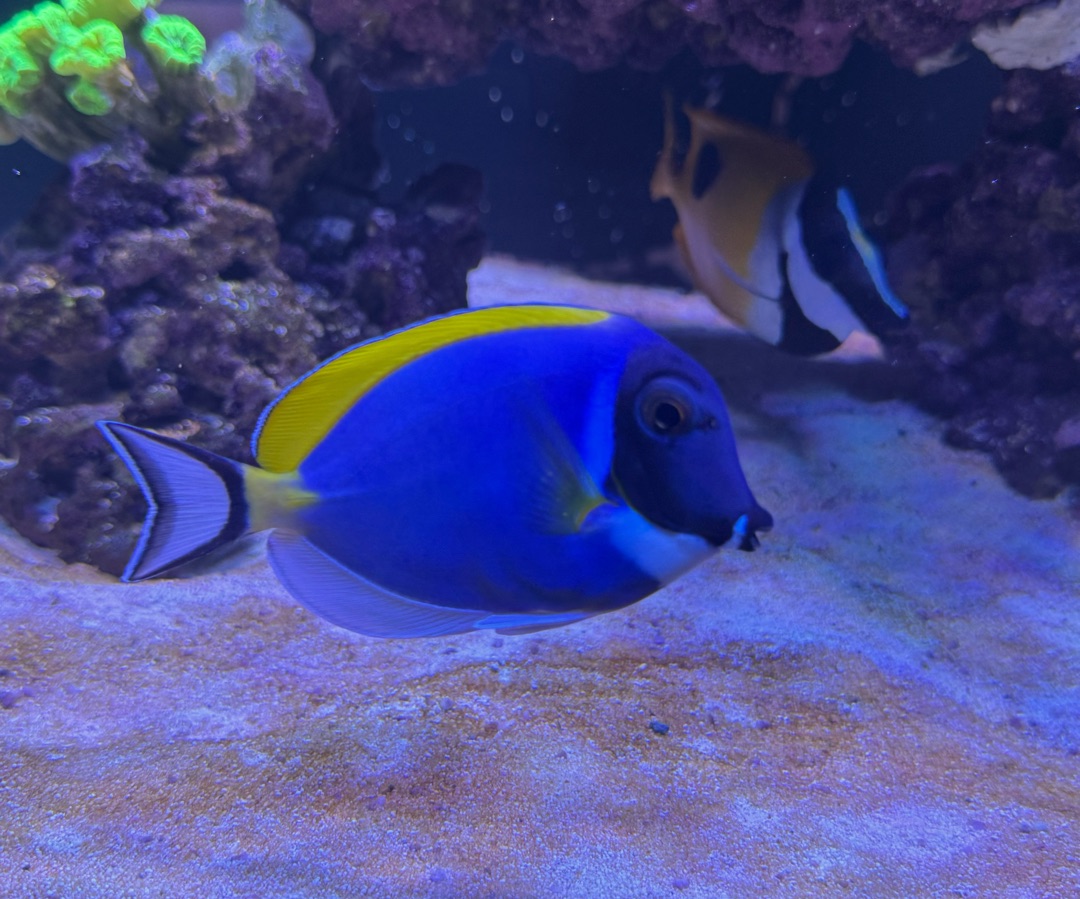
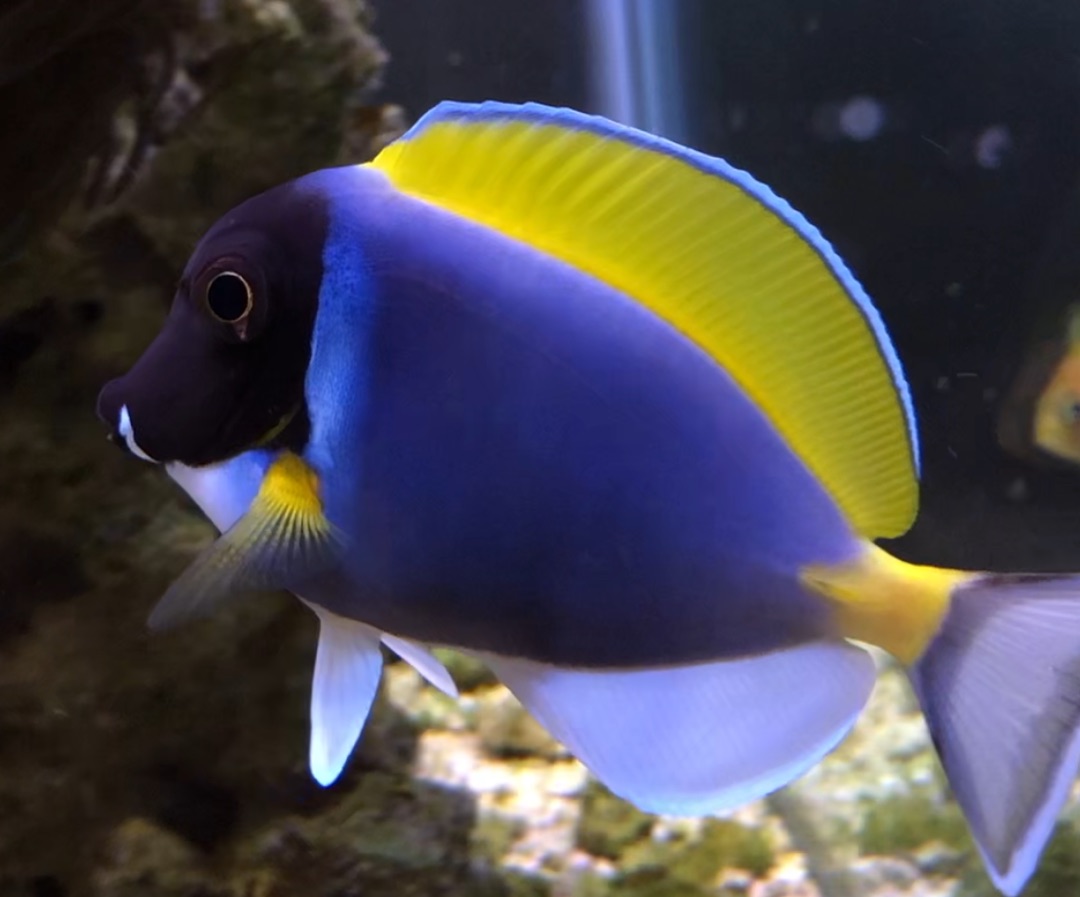
The Powder Blue Tang (Acanthurus leucosternon) is one of the most recognizable fish in the hobby: a powder-blue body, jet-black face, crisp white throat, and a lemon-yellow dorsal fin that glows under reef lighting. It is a constant, open-water grazer that keeps rock clean and adds real motion to a large display.
It is also one of the tangs most often lost by reefers who buy on looks alone. Powder Blues need a big, mature tank, a steady supply of marine algae, careful quarantine because they are ich magnets, and a stocking plan that accounts for their attitude toward other tangs. This guide covers tank size, diet, water quality, disease prevention, reef safety, tankmates, and a buying checklist before you shop the ReefBay marketplace.
Quick care snapshot
- Scientific name: Acanthurus leucosternon
- Also called: Powder Blue Surgeonfish, White-breasted Surgeonfish
- Family: Acanthuridae — surgeonfishes and tangs
- Origin: Indian Ocean, from East Africa to the Andaman Sea and Bali
- Max size: about 9 inches in aquariums
- Care level: difficult — best for keepers with a stable, established reef
- Temperament: semi-aggressive; often aggressive toward other tangs and herbivores
- Reef-safe: yes, with caution. Ignores most corals and inverts, but individuals may pick at fleshy LPS
- Minimum tank: 125 gallons, ideally 6 feet long or more
- Diet: herbivore — nori, macroalgae, and spirulina-based foods, plus some meaty foods
- Social: keep one per tank
- Special note: a sharp scalpel spine on each side of the tail base
Why reefers want a Powder Blue Tang
Few fish give a reef tank the same color contrast. The Powder Blue is constantly on the move, cruising the rockwork, grazing film algae, and patrolling the front glass. Owners on the ReefBay fish page regularly call it the most beautiful fish they own — and many of the same owners warn that it can be the biggest bully in the tank.
- Always visible: an active swimmer that rarely hides once settled
- Useful grazer: picks at film and filamentous algae on rock
- Show fish: a centerpiece for large mixed reefs and fish-heavy systems
- Trade-off: it can limit what other tangs and herbivores you can add later
Tank size and aquascape
ReefBay's care data lists a 125-gallon minimum, and most experienced owners on the ReefBay fish page recommend 125 to 220 gallons. Length matters more than volume: a Powder Blue needs a long, open swimming lane, so a 6-foot tank is a realistic starting point for an adult.
- Swimming room: leave open water along the front and top of the tank
- Rockwork: plenty of mature live rock for grazing, with caves and overhangs for shelter at night
- Flow: strong, turbulent, well-oxygenated water — this is a surge-zone fish
- Maturity: add it to a tank that has been stable for at least 6–12 months, with natural algae growth on the rock
- Lid: tangs can jump when startled; mesh lids are a cheap insurance policy
A juvenile may look fine in a smaller tank at first, but it will grow quickly. Plan the tank for the adult fish, not the 3-inch fish in the bag.
Water parameters
Powder Blues come from clear, warm, oxygen-rich reefs and do poorly with swings. Aim for stable reef parameters:
- Temperature: 75–80°F (24–27°C)
- Salinity: 1.024–1.026 specific gravity
- pH: 8.1–8.4
- Alkalinity: 7–11 dKH, held steady
- Ammonia and nitrite: 0 ppm
- Nitrate: low to moderate (about 2–20 ppm)
- Phosphate: low (about 0.03–0.1 ppm)
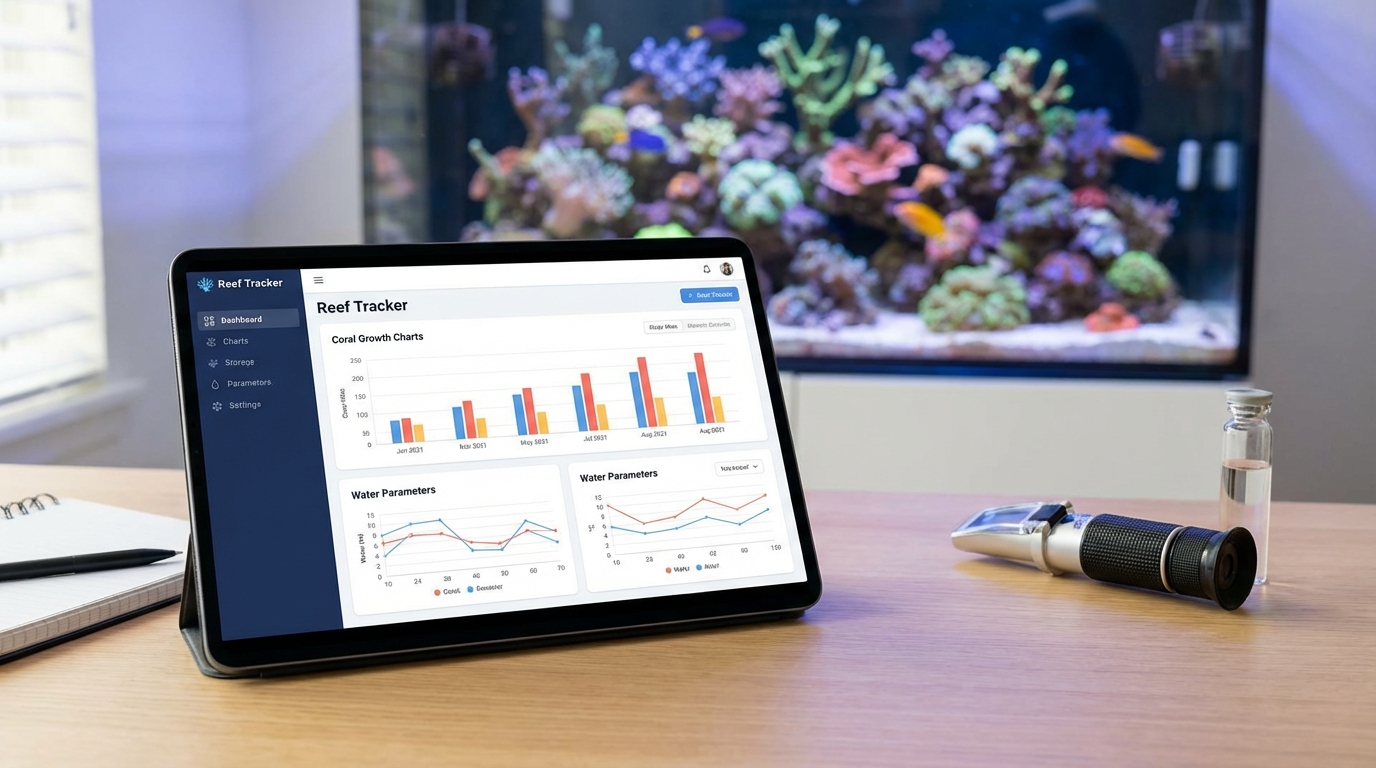
Good oxygenation from a skimmer and surface agitation matters as much as the numbers. If you are still dialing in your testing routine, start with our reef tank water parameters guide for beginners, and log every test in the ReefBay app so you can spot drift before your tang does.
Diet and feeding
In the wild, Powder Blues graze algae from the reef almost all day. In the aquarium, a steady supply of plant matter is the single biggest factor in color, immune health, and even temperament.
- Daily staple: dried marine algae (nori) on a clip, offered at least once a day — owners report that more nori means less aggression
- Prepared foods: quality spirulina- and algae-based pellets and flakes
- Variety: frozen herbivore blends, mysis shrimp, and frozen spirulina brine a few times a week
- Frequency: two or three feedings a day plus the algae clip
- Enrichment: vitamin-soaked foods help, especially during quarantine
- Watch for: a pinched belly or a sunken area behind the head, which means it is not getting enough food
Grazing on rock is helpful, but do not count on natural algae alone to feed a tang this size.
Ich, quarantine, and health
Powder Blue Tangs have a well-earned reputation for marine ich (Cryptocaryon irritans). Stress from shipping, a new tank, or bullying is often enough to trigger an outbreak. One ReefBay owner wrote that theirs was the first fish to show ich in a system that had never had a problem — and the last to recover.
- Quarantine every Powder Blue before it enters the display. Our 30-day saltwater fish quarantine protocol is a solid template
- Use a proven treatment approach (copper at measured, tested levels, or the tank transfer method) and follow the product directions exactly
- Offer nori from day one in quarantine; a tang that eats in QT is a tang that recovers
- Keep the display stable and low-stress afterward — consistent temperature, salinity, and feeding
- Watch for white spots, rapid breathing, scratching on rock, cloudy eyes, or faded color
- Long-term, poor diet and stray voltage are linked to head and lateral line erosion (HLLE); a varied algae-rich diet and good water quality are the best prevention
A UV sterilizer can help reduce free-swimming parasites in the display, but it does not replace quarantine. See our UV sterilizer guide for reef tanks if you are considering one.
Reef safety: corals and invertebrates
Most Powder Blues are good reef fish. They focus on algae and leave shrimp, snails, crabs, and most corals alone.
- Generally safe with: SPS, most soft corals, zoanthids, clean-up crew, and ornamental shrimp
- Use caution with: fleshy LPS. One ReefBay owner caught theirs picking at the tips of goniopora and torch coral
- Tubeworms and clams: some individuals nibble at feather dusters or clam mantles, usually when they are underfed. Extra nori and macroalgae typically stop it
Behavior and tankmates
Temperament varies a lot between individuals. Some owners report a peaceful community fish that never bothered other tangs, while others describe a Powder Blue half the size of a Sailfin tang bullying it relentlessly. Plan for the bully and be pleasantly surprised if you get the peaceful one.
- Add it last: introducing the Powder Blue after other fish are established reduces territorial aggression
- One per tank: never mix two Powder Blues, and avoid similar-shaped Acanthurus tangs such as the Achilles and Powder Brown Tang
- Other tangs: different-shaped tangs like the Yellow Tang or Blue Hippo Tang can work in large tanks when added together or before it
- Good tankmates: clownfish, wrasses, anthias, chromis, cardinalfish, gobies, blennies, and dwarf angelfish in a large system
- Watch out for: other herbivores; owners have seen it chase lawnmower blennies over grazing territory
For a wider stocking plan, see our guide to choosing the right tang for your reef.

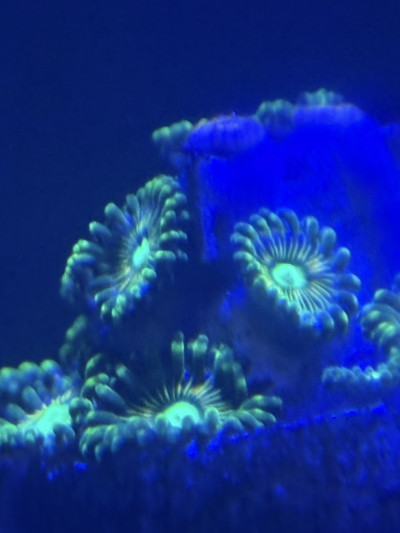
Photo: Diego Delso, Wikimedia Commons, CC BY-SA 4.0 — a wild Powder Blue grazing the reef in Zanzibar
Handling: respect the scalpel
Like all surgeonfish, the Powder Blue carries a sharp, blade-like spine on each side of the tail base. It uses it when threatened or when fighting other fish.
- Move it with a container or a fine net-and-cup combo instead of grabbing it by hand
- Wear gloves when working in the tank during acclimation and quarantine moves
- Expect the spines to snag in coarse nets — another reason to use a cup
Common problems and quick fixes
- White spots after adding it: classic ich. Move the fish to quarantine for treatment rather than dosing the reef display
- Bullying new fish: rearrange rockwork before additions, or hold the tang in a separate tank for a couple of weeks — one ReefBay owner did exactly that
- Getting thin: increase nori and add a third feeding; check that faster fish are not winning every meal
- Faded color or pitting on the face: improve diet variety and water quality, and check for stray voltage
- Nipping corals or tubeworms: usually hunger. More macroalgae and nori typically fixes it
- Hiding nonstop: a tank that is too small, too busy, or too aggressive
Buying checklist before you click purchase
- Confirm the tank is at least 125 gallons, long, mature, and stable
- Have a quarantine tank set up and cycled before the fish arrives
- Choose a healthy, medium-size fish (about 3–4 inches) that is past the fragile juvenile stage
- Look for a full belly, clean skin, clear eyes, intact fins, and steady breathing
- Ask the seller what it is eating — nori and pellets are the green flag
- Ask whether the fish has been quarantined or treated
- Pass on thin, scratching, spotted, or listless fish, no matter how good the price looks
Powder Blue Tang FAQ
Is the Powder Blue Tang reef-safe? Yes, with caution. Most ignore corals and inverts, but some pick at fleshy LPS or tubeworms, especially when underfed.
What size tank does a Powder Blue Tang need? At least 125 gallons, ideally 6 feet long, with strong flow and lots of open swimming space.
Are Powder Blue Tangs hard to keep? They are considered difficult because they are ich-prone, sensitive to stress, and need a large, mature tank and a steady algae diet.
Can I keep a Powder Blue with other tangs? Sometimes. Avoid other Powder Blues and similar Acanthurus tangs. Differently shaped tangs can work in large tanks if the Powder Blue is added last.
How big do Powder Blue Tangs get? Around 9 inches in aquariums.
Ready to add one? Open the Powder Blue Tang fish page on ReefBay for owner reviews, member photos, and current listings, and browse the ReefBay marketplace for healthy, eating fish from trusted sellers. Then track quarantine, feedings, and water tests in the ReefBay app, and share a photo of your own Powder Blue so the next reefer can see what a healthy, settled tang looks like.




,_Zanz%C3%ADbar,_Tanzania,_2024-05-30,_DD_80.jpg)