Blue Hippo Tang Care Guide: Tank Size, Diet & Ich Prevention
Learn Blue Hippo Tang (Paracanthurus hepatus) care: 180+ gallon tank size, water parameters, nori-plus-mysis diet, ich and velvet prevention, reef-safe tankmates, and what to check before you buy a Dory tang on ReefBay.
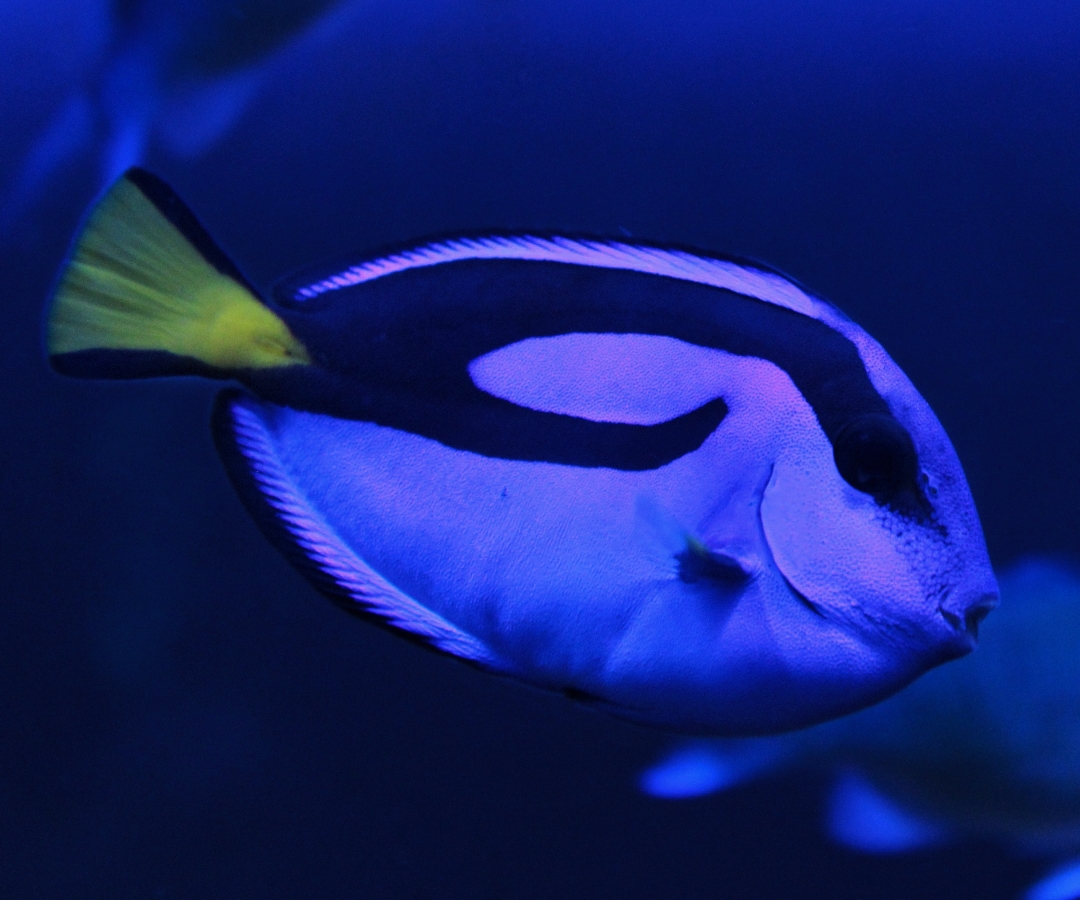
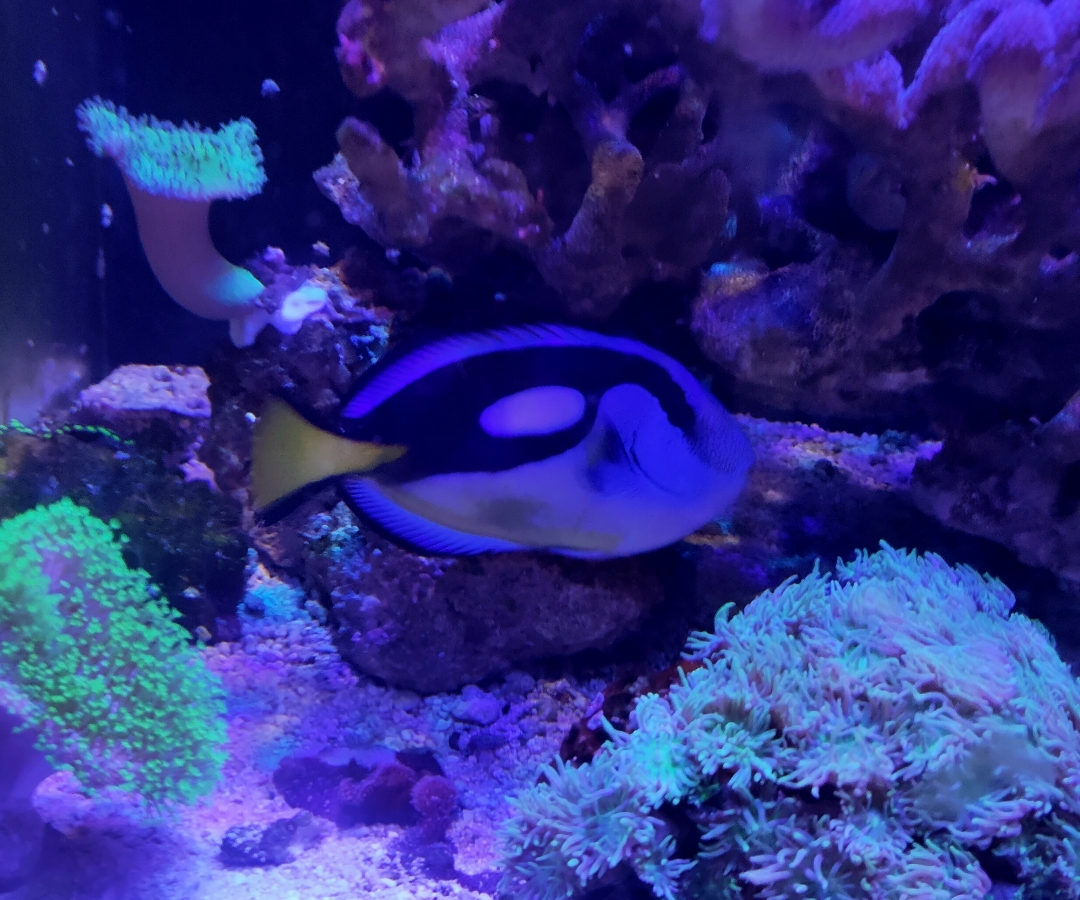
The Blue Hippo Tang (Paracanthurus hepatus) — also sold as the Blue Tang, Regal Tang, Palette Surgeonfish, or simply “Dory” — is one of the most recognizable fish in the hobby. An electric royal-blue oval body, a bold black “palette” marking along the flank, and a bright yellow tail make it an instant showpiece. Indian Ocean fish often add a yellow wash across the belly and are sold as Yellow Belly Blue Tangs.
That popularity hides a demanding fish. Blue Hippo Tangs grow to about 12 inches, need long open swimming room, and are notoriously prone to ich and velvet. This guide covers realistic tank size, water parameters, diet, disease prevention, tankmates, and a practical ReefBay buying checklist so you can decide whether your system is truly ready before you buy one.
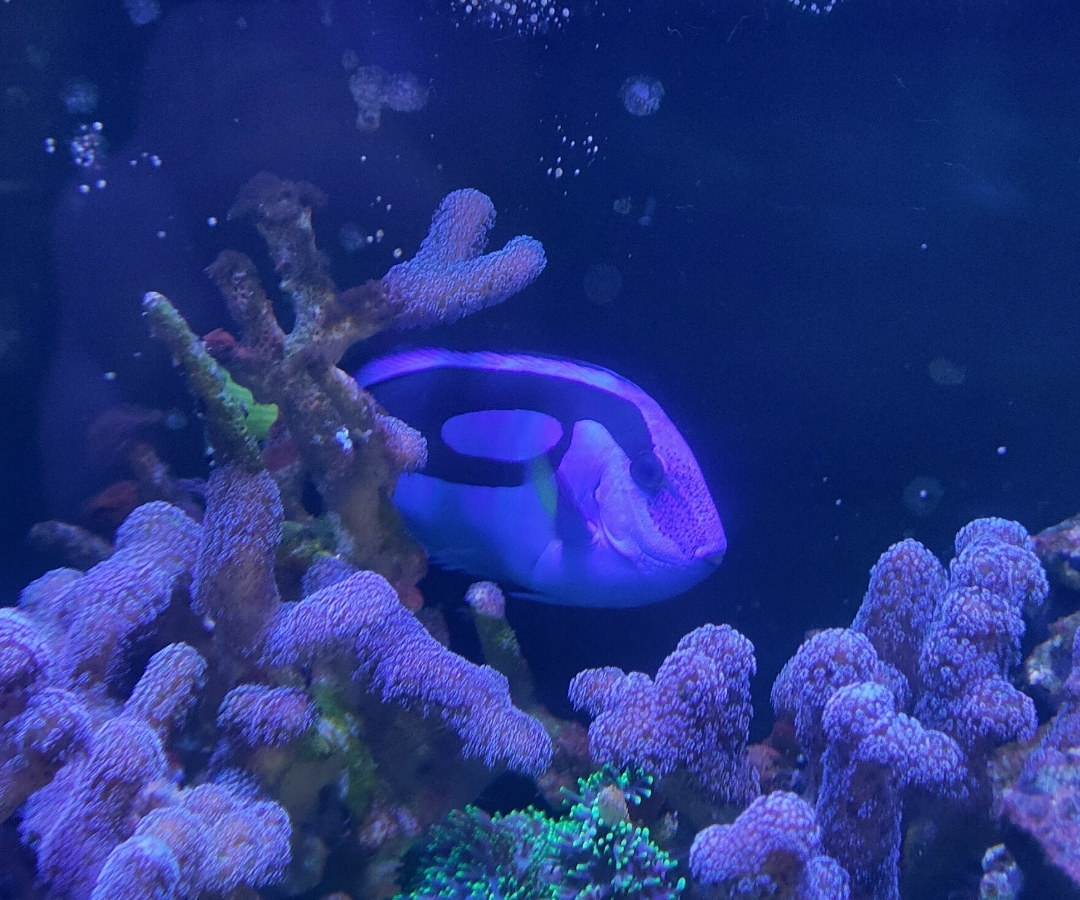
Quick care snapshot
- Scientific name: Paracanthurus hepatus
- Also called: Blue Tang, Regal Tang, Hippo Tang, Palette Surgeonfish, Pacific Blue Tang, Royal Blue Tang, Dory
- Category: Tang (surgeonfish)
- Origin: Indo-Pacific (Yellow Belly form from the Indian Ocean)
- Care level: moderate — easy to feed, hard to keep disease-free
- Temperament: semi-aggressive, mainly toward other tangs
- Reef-safe: yes — leaves corals and ornamental inverts alone
- Suggested tank: 180+ gallons, ideally 6 feet or longer
- Max size: about 12 inches
- Social: solitary — one per tank in most home systems
- Diet: herbivore-leaning omnivore — nori and algae plus meaty frozen foods
- Jump risk: yes — use a lid or mesh cover
- Handling: sharp caudal spine (“scalpel”) at the tail base — net and handle with care
Tank size and aquascape: buy for the adult, not the juvenile
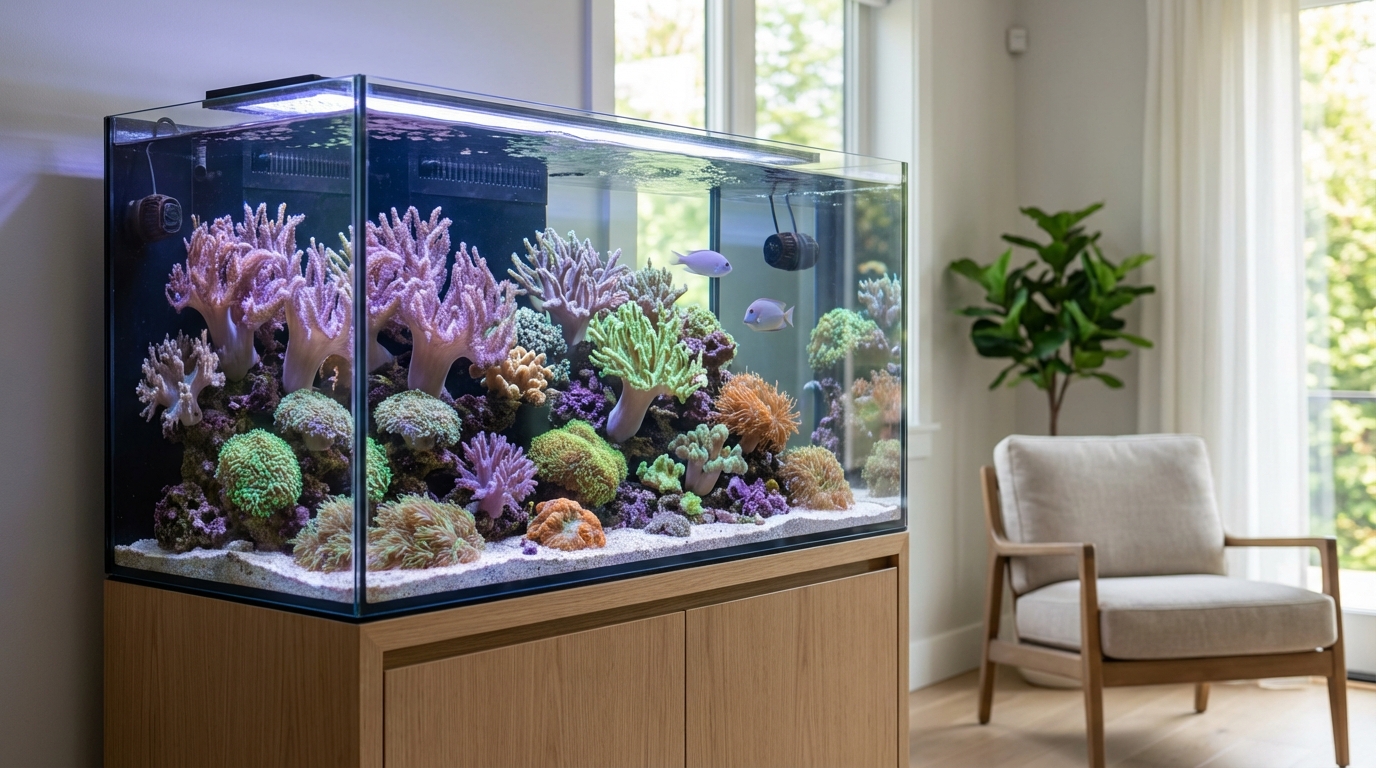
Most Blue Hippo Tangs are sold at 1–3 inches, which tempts keepers to drop them into 40- or 75-gallon tanks “for now.” They grow steadily and spend all day cruising, so plan for the adult from day one: about 180 gallons or more, with a footprint of at least 6 feet in length. Length matters more than height — a tang needs long, uninterrupted laps.
- Leave wide open swim lanes across the front and top of the display
- Build dense rockwork with caves and narrow slots — hippo tangs wedge themselves into crevices when startled or at night
- Run strong, well-oxygenated flow and generous surface agitation
- Add the tang only to a mature, stable system (several months old is ideal), not a freshly cycled tank
A juvenile can grow out in a smaller quarantine or grow-out system for a short period, but if you do not have a realistic upgrade plan, choose a smaller species. Our guide to choosing the right tang compares options for smaller footprints.
Water parameters
Blue Hippo Tangs are not unusually sensitive to chemistry, but stress from swings is a common trigger for disease outbreaks. Aim for stable reef parameters:
- Temperature: 76–80°F (24–27°C), with minimal day-night swing
- Salinity: 1.024–1.026 specific gravity (about 35 ppt)
- pH: 8.1–8.4
- Alkalinity: 7–11 dKH, held steady
- Nitrate / phosphate: low but detectable; avoid sudden drops from aggressive nutrient export
- Oxygen: high — strong surface movement and a properly sized skimmer help a lot
If you are still dialing in your system, start with our reef tank water parameters guide and log tests in the ReefBay app so you can see trends before they become problems.

Photo: Donald Davesne, CC BY 4.0, via Wikimedia Commons
Diet and feeding
Unlike the strictly grazing Yellow Tang, the Blue Hippo Tang is a herbivore-leaning omnivore. In the wild, juveniles hover above branching coral picking zooplankton from the water column while also grazing algae. In aquariums, the best results come from a mix of both:
- Daily algae: dried nori or seaweed sheets on a clip, plus spirulina- and algae-based pellets or flakes
- Meaty frozen foods: mysis, enriched brine, and quality marine frozen blends several times per week
- Frequency: two to three smaller feedings per day beat one large meal for an active, fast-metabolism fish
- Vitamins: soaking foods in a marine vitamin supplement can support immune health and color
Healthy hippo tangs are usually eager eaters. A fish that refuses food for more than a couple of days after arrival — or shows a pinched belly behind the head — needs attention right away.
Ich, velvet, and HLLE: the real difficulty
The Blue Hippo Tang’s reputation as an “ich magnet” is earned. Tangs carry a thin protective slime coat and are often the first fish in a tank to show white spots (Cryptocaryon irritans) or the fine dusting of marine velvet (Amyloodinium), which can kill within days.
- Quarantine every tang. A proper quarantine and observation period is the single best protection for both the tang and the rest of your display. Our 30-day saltwater fish quarantine protocol walks through the process.
- Reduce stress: avoid bullying tankmates, sudden lighting changes, and parameter swings
- Watch for HLLE: head and lateral line erosion shows as pitting around the face and along the flank; it is commonly linked to poor diet, stress, and fine carbon dust, so feed a varied diet and rinse carbon before use
- Breathing rate: rapid gill movement or scratching on rocks are early warning signs
Compatibility and reef safety
Blue Hippo Tangs are reef-safe and invert-safe: they ignore corals, clams, shrimp, and snails, and their grazing helps keep film and nuisance algae in check. Aggression is mostly directed at other tangs and similarly shaped fish.
- Usually works: clownfish, gobies, blennies, cardinalfish, peaceful wrasses, anthias, and dwarf angelfish in an appropriately sized system
- Use caution: other tangs — mixing genera (for example a Zebrasoma with a Paracanthurus) can work only in large tanks with the tangs added together or the more aggressive one added last
- Avoid: two Blue Hippo Tangs in a typical home reef — they tend to fight with their own kind; also avoid large predators that could swallow a juvenile
- Stocking order: add tangs after the tank is mature and the peaceful community is established
Behavior quirks worth knowing
New owners are often alarmed the first time a hippo tang “plays dead.” When frightened, these fish dive into a crevice and may lie on their side, motionless, until they feel safe. At night they often wedge into rockwork and their colors fade to a paler, blotchy pattern. Both behaviors are normal — what matters is a healthy appetite and normal swimming during the day.
The caudal spine on each side of the tail base is sharp. Tangs flick their tails when cornered, so use a container or cup rather than a net when possible, and keep fingers clear during maintenance.
Common problems and quick fixes
- White spots or scratching: classic ich signs — consult your quarantine and treatment plan; do not treat a reef display with copper
- Dusty sheen, rapid breathing: possible velvet — act immediately, it progresses fast
- Facial pitting or faded color: review diet variety, vitamins, carbon use, and stress
- Constant chasing: tank too small or too many tangs — rehome or re-scape to break sight lines
- Carpet surfing or jump deaths: cover open tops and cable cutouts
Buying checklist before you click purchase
- Confirm a mature tank of about 180+ gallons and 6+ feet long, or a committed upgrade plan
- Have a quarantine tank ready before the fish arrives
- Ask the seller for recent video showing the fish eating, swimming normally, and free of spots or pitting
- Choose a lively, round-bellied specimen with clear eyes and intact fins
- Plan one Blue Hippo Tang per tank and check compatibility with any existing tangs
- Stock nori, frozen mysis, and a lid before purchase day
Ready to shop? Open the Blue Hippo Tang fish page on ReefBay to compare community photos with these care targets, then browse the ReefBay marketplace for healthy, eating specimens from trusted sellers. Track your parameters and livestock in the ReefBay app so your tang has the stable system it needs to thrive.