Checkerboard Wrasse Care Guide: Tank Size, Diet, Reef Safety & Tankmates
Checkerboard Wrasse care made simple: the tank size this big wrasse needs, what to feed it, why it needs a sand bed, how reef safe it really is, and the best tankmates.
The Checkerboard Wrasse (Halichoeres hortulanus) is a large, hardy wrasse covered in a black-and-white checker pattern. It is a busy, fun fish for big tanks, but it will hunt small shrimp, snails, and crabs.
Quick facts
- Tank size: 125 gallons or larger
- Adult size: up to about 10 to 11 inches
- Diet: carnivore; mysis, chopped seafood, and pellets 2 times a day
- Reef safe: with caution; leaves corals alone but eats small inverts
- Difficulty: easy to moderate; hardy once settled
- Temperament: semi-aggressive as it grows
What makes it special
You may also see it sold as the Marble Wrasse or Hortulanus Wrasse. It lives on reefs across the Indo-Pacific and Red Sea.
Its look changes as it grows:
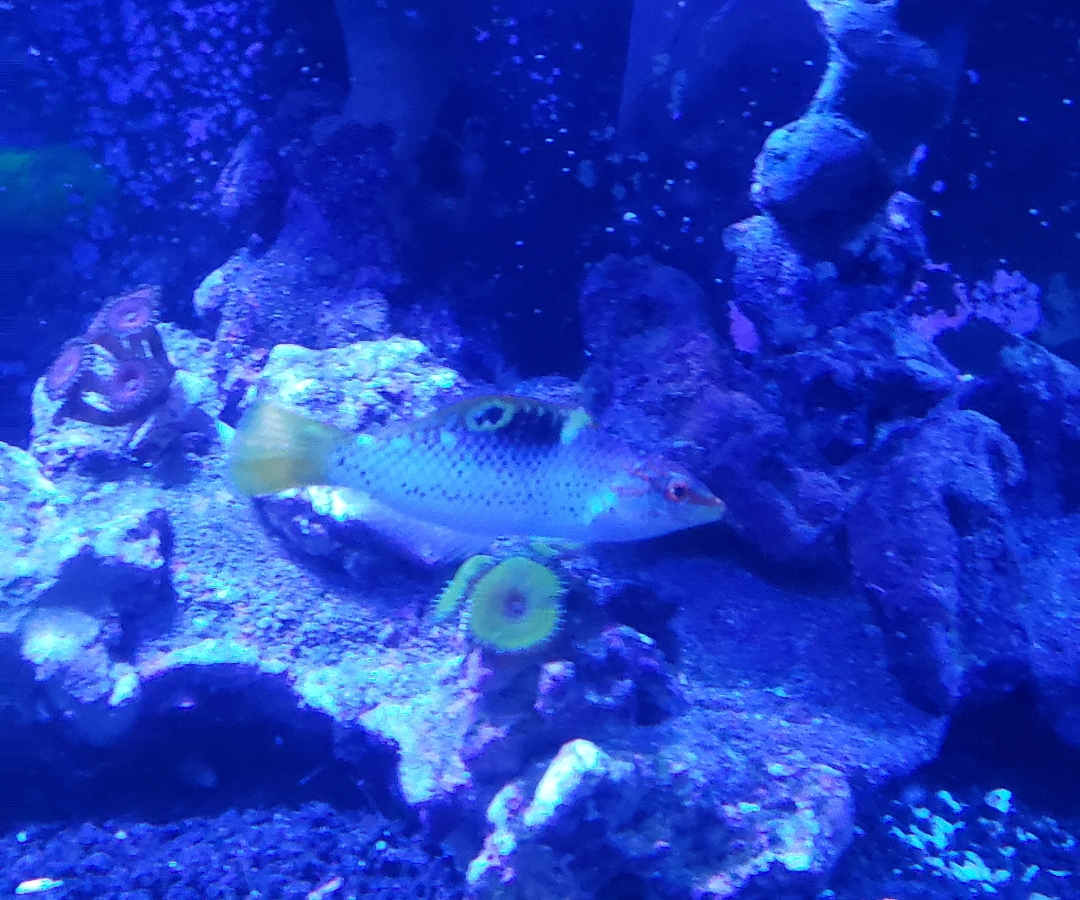
- Juveniles: black and white with a yellow spot on the back
- Adults: blue-green checker scales, a bright yellow tail, and pink-orange lines on the head
Like many wrasses, it starts life as a female. The largest fish in a group can later turn into a male.
Behavior you'll see
This wrasse is always on the move. It swims the whole tank, flips over small rocks, and picks at every crack.
- Hunting: it searches the rockwork for worms, snails, and tiny crabs
- Sleeping: it dives into the sand at night and when scared
- New-fish hiding: it may stay buried for a few days after you add it

Photo: Derek Keats, Wikimedia Commons, CC BY 2.0
Is it right for your tank?
It is a great pick for a big fish-only tank or a reef without small cleanup crew.
- Good fit: large tanks with open swimming room and a deep sand bed
- Poor fit: small tanks, nano reefs, or tanks full of small shrimp and snails
Tank setup
- Space: 125+ gallons with long, open swimming lanes
- Sand bed: 2 to 3 inches of soft, fine sand for sleeping
- Rockwork: plenty of live rock to hunt through
- Water: 74–80°F, salinity near 1.025, stable pH
- Lid: use a tight mesh lid; wrasses are known jumpers
Glue rocks together or set them on the tank floor. A digging wrasse can tip loose rocks and frags.
Feeding
Checkerboard Wrasses are easy eaters. Most take frozen food within a day or two.
- Mysis shrimp and enriched brine shrimp
- Chopped clam, squid, and krill
- Quality marine pellets and flakes
Feed 2 meals a day. Live rock gives it extra snacks between meals. Remove leftover food so it does not rot in the sand.
Health tips
This fish is tough, but it can still bring in ich or flukes.
- Quarantine: follow our 30-day fish quarantine protocol
- Sand in QT: give it a small dish of sand so it feels safe
- Look for: clear eyes, full belly, and active swimming
Reef safety
It does not eat corals, but it is not safe for every reef.
- Safe: soft corals, LPS, SPS, and clams
- At risk: small shrimp, snails, hermit crabs, and feather dusters
- Bonus: it may eat pests like bristleworms and pyramid snails
Tankmates
- Good: tangs, larger angelfish, rabbitfish, and other robust fish
- Risky: other large wrasses; keep only one Checkerboard per tank
- Avoid: tiny gobies, small shrimp, and very shy fish
Want a smaller sand-sleeping wrasse? See our Yellow Coris Wrasse care guide or the best reef-safe wrasses list.
FAQs
Will a Checkerboard Wrasse eat my corals?
No. It leaves corals alone, but it will eat small shrimp, snails, and crabs.
Why did my new wrasse disappear?
It is likely buried in the sand. Give it a few days to come out.
How big does it get?
Up to about 10 to 11 inches in the wild, so plan for a large tank.
Ready to add one?
Looking for a Checkerboard Wrasse or big-tank tankmates? Browse fish from trusted sellers on the ReefBay shop.