Convict Tang Care Guide: Tank Size, Diet, Tankmates & Reef Safety
Convict Tang care made simple: how big a tank it needs, what to feed, whether it is reef safe, which fish it gets along with, and how to keep it healthy.
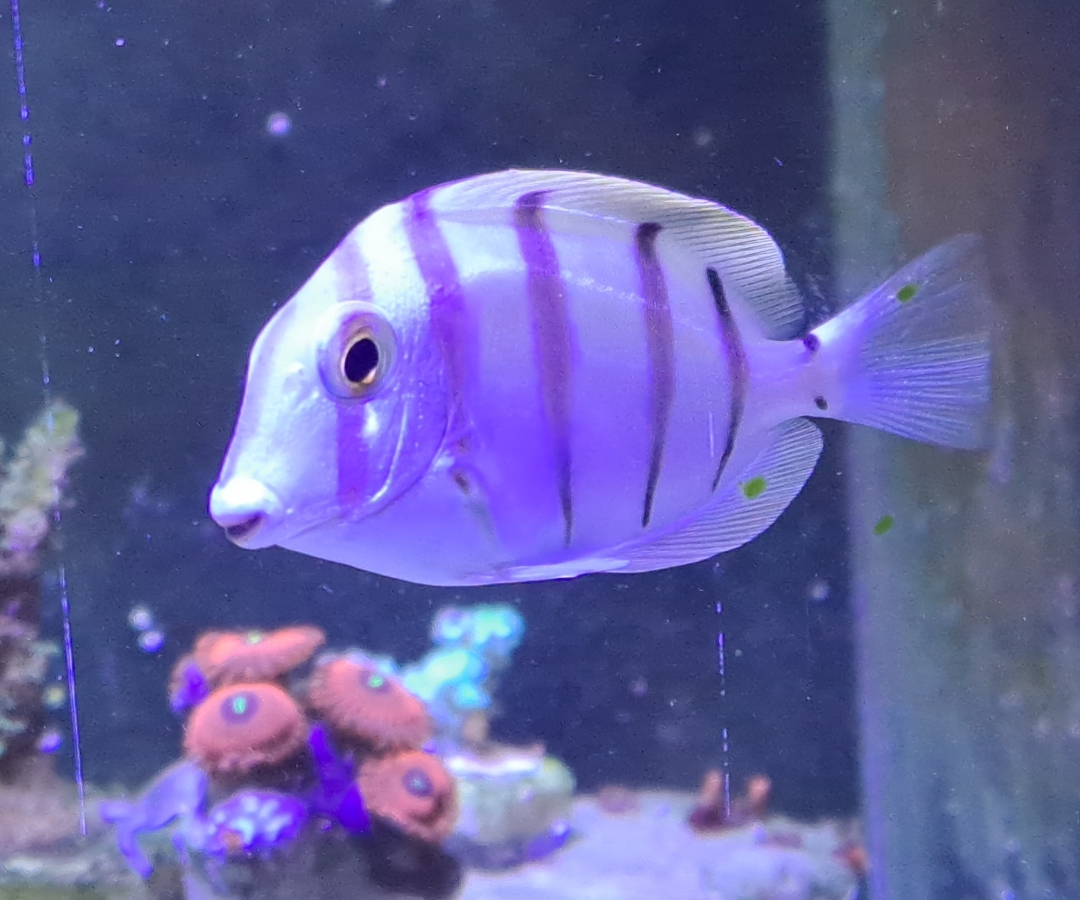
The Convict Tang (Acanthurus triostegus) is a silver-white tang with bold black stripes, like an old jail uniform. It is one of the calmer, hardier tangs, but it grows big and needs a lot of room to swim.
Quick facts
- Tank size: 125 gallons or more, with a long open swimming area
- Diet: mostly algae — nori, algae pellets, and some frozen food
- Reef safe: yes, with corals and cleanup crew
- Difficulty: moderate
- Temperament: calm for a tang, but may fight with other tangs
- Adult size: about 8 to 10 inches
How to spot one
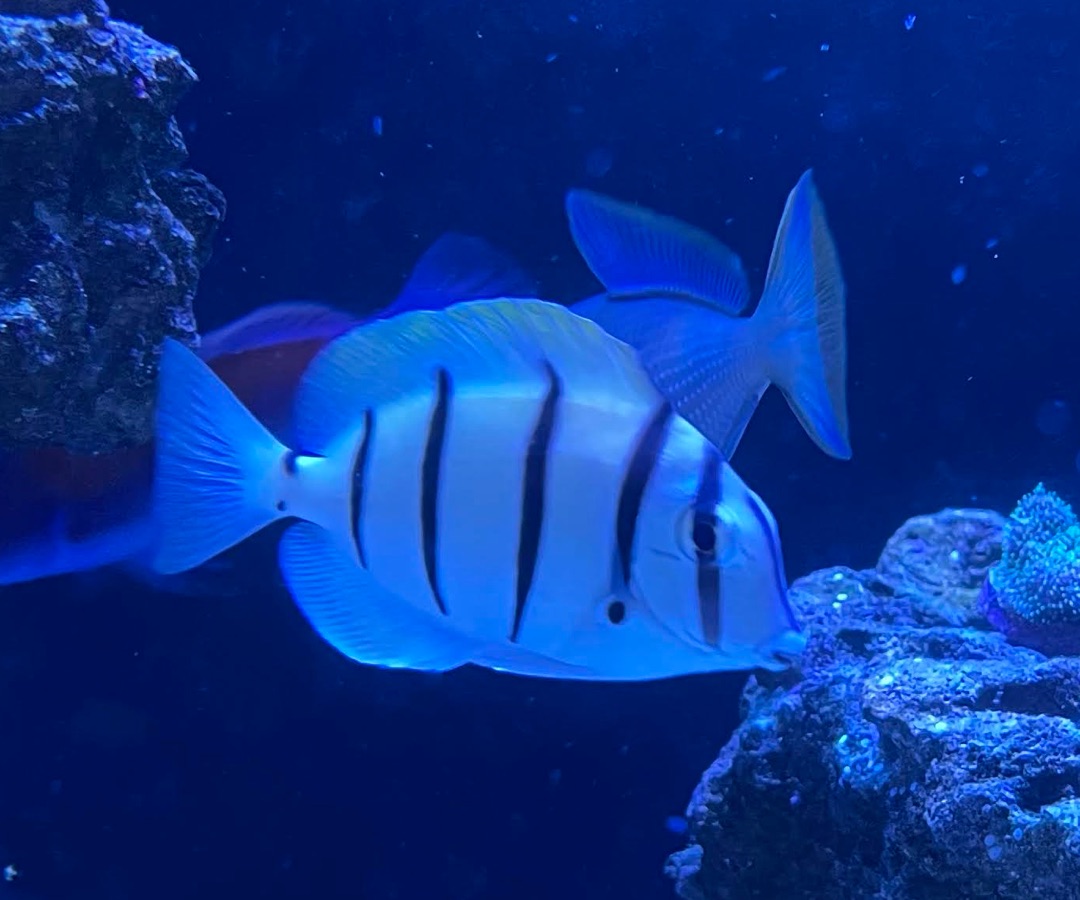
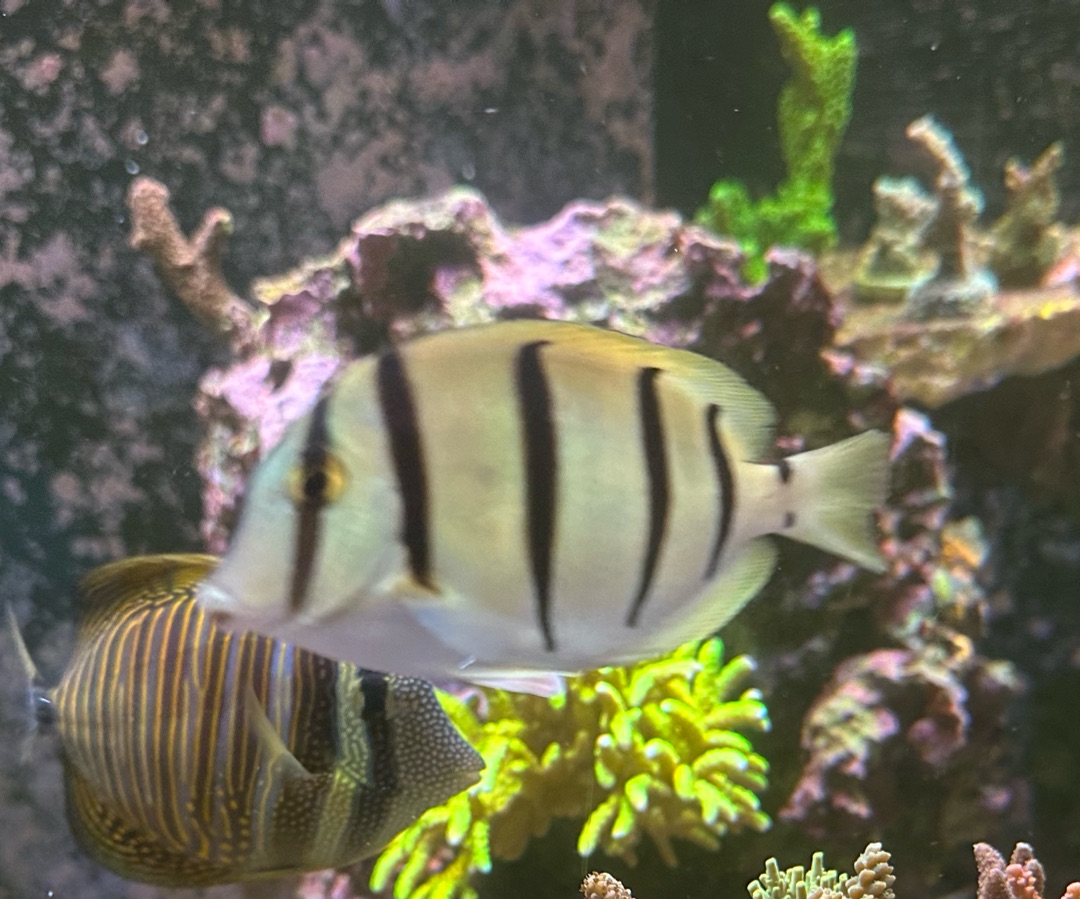
Look for a pale, oval body with five or six thin black bars running top to bottom. There is also a small black mark near the tail.
Under blue reef lights, the body can look bright white or even purple. In daylight, it often has a soft yellow tint.
Tank size and setup
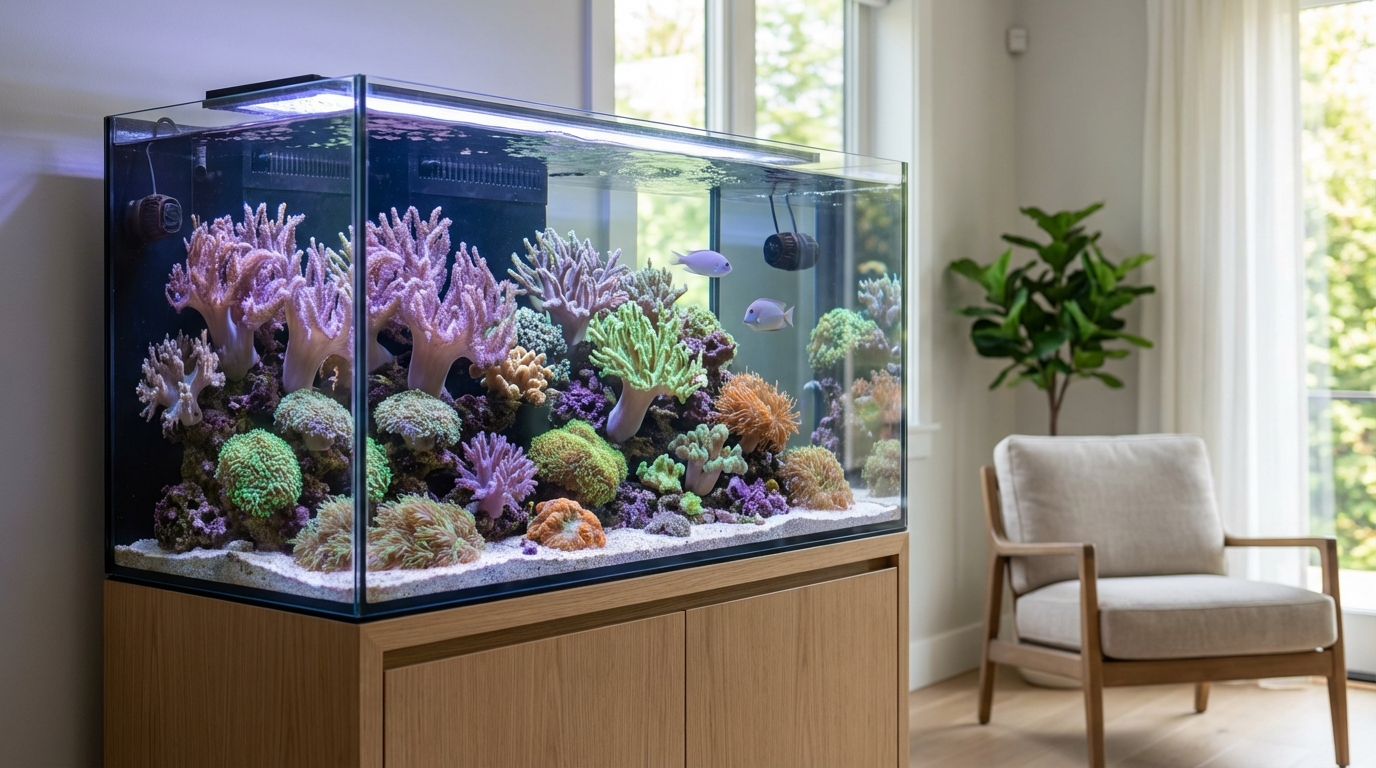
Convict Tangs swim all day, so tank length matters more than height. A tank around 6 feet long gives them room to cruise.
- Open space: keep rockwork low or off to the sides so it has a clear lane
- Rock to graze: live rock with some algae gives it something to pick at
- Strong flow: good water movement keeps oxygen high, which tangs need
- Lid: it can jump when scared, so cover the top
- Mature tank: add it to a stable tank that is at least a few months old
What to feed
In the wild, this fish grazes on algae from morning to night. Copy that at home with small meals spread through the day.
- Every day: dried seaweed (nori) on a clip
- Staple food: pellets or flakes made with algae or spirulina
- A few times a week: frozen mysis or brine shrimp for extra protein
- Bonus: it will graze hair algae off your rocks
A well-fed tang has a rounded belly. A pinched or sunken belly means it needs more food.
Is it reef safe?
Yes. It leaves corals, shrimp, crabs, and snails alone. It mostly eats algae.
A few owners say it may pick at clam edges or large fleshy corals now and then. Keep an eye on it for the first few weeks.
Tankmates
Convict Tangs get along with most peaceful and semi-peaceful fish. The main trouble is other tangs.
- Good mates: clownfish, wrasses, gobies, blennies, anthias, and dwarf angelfish
- Other tangs: other tangs often pick on it. Only mix tangs in a very large tank, and add them at the same time
- Groups: wild Convict Tangs swim in big schools, but in a home tank one is usually best
Not sure which tangs mix well? Read our guide to picking the right tang.

Photo: Rickard Zerpe, Wikimedia Commons, CC BY 2.0 — a wild Convict Tang
Health tips
Like all tangs, Convict Tangs can catch ich, a parasite that shows up as tiny white dots on the skin and fins.
- Quarantine first: keep new fish in a separate tank for a few weeks before adding them. Our 30-day quarantine plan walks you through it
- Feed well: plenty of algae keeps its immune system strong
- Keep water steady: sudden changes stress tangs and make them sick
FAQ
How big does a Convict Tang get? Usually about 8 inches in a home tank, and up to around 10 inches in the wild.
Can a Convict Tang live in a 75-gallon tank? Not long term. It may be fine while small, but plan for 125 gallons or more as it grows.
Is the Convict Tang good for beginners? It is one of the easier tangs if you have a big, stable tank and feed plenty of algae.
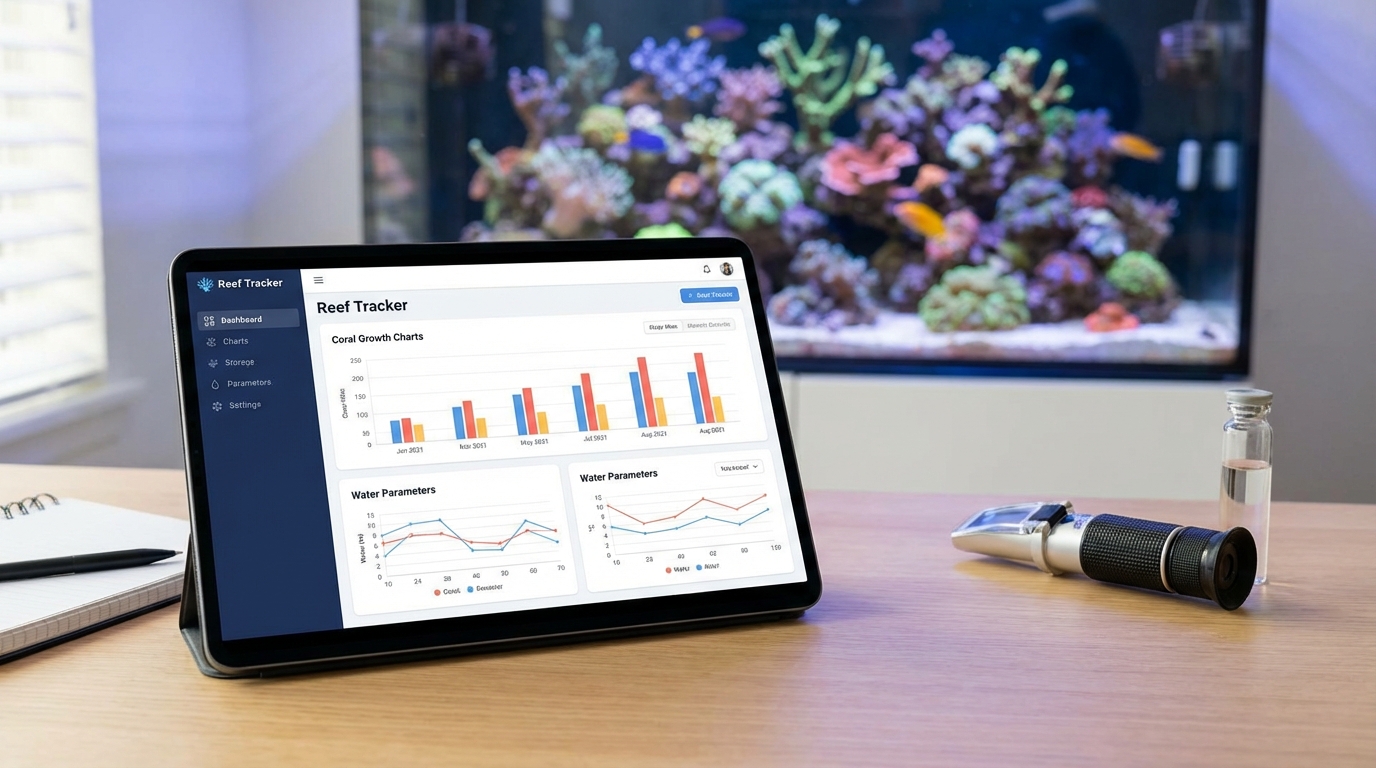
Ready to add one? Check the Convict Tang page on ReefBay for owner reviews, member photos, and current listings, then track feedings and water tests in the ReefBay app.