Coral Beauty Angelfish Care Guide: Tank Size, Diet, Reef Safety & Tankmates
Coral Beauty Angelfish care made simple: the tank size it needs, what to feed, how reef safe it really is, and the best tankmates for this hardy dwarf angel.
The Coral Beauty Angelfish (Centropyge bispinosa) is a small dwarf angel with a deep blue body and orange stripes on its sides. It is one of the hardiest angelfish you can buy, which makes it a favorite first angel for new reef keepers.
Quick facts
- Tank size: 30 gallons minimum; 50+ gallons is better
- Adult size: about 4 inches
- Diet: omnivore; algae, nori, spirulina foods, and meaty frozen foods
- Reef safe: with caution; may nip some corals and clams
- Difficulty: easy
- Temperament: semi-aggressive, mostly toward other dwarf angels
What makes it special
You may also see it sold as the Twospined Angelfish or Dusky Angelfish. It comes from reefs across the Indo-Pacific, from East Africa to the South Pacific.
Color changes a lot from fish to fish. Some are almost all purple, while others have bright orange flanks with thin dark bars.
It is busy all day. It swims in and out of the rocks, picking at algae and tiny food it finds on every surface.
Is it right for your tank?
This is a great pick if you want angelfish color without the size or fuss of a large angel.
- Good fit: fish-only tanks and reefs with mostly soft corals and tough LPS
- Poor fit: tanks full of prized clams, zoanthids, or fleshy LPS
- Watch out: it may fight with other dwarf angels in small tanks
Tank setup
- Space: 30+ gallons for one fish; more room is always better
- Rockwork: lots of live rock with caves and ledges to explore
- Algae: a mature tank with some film algae to graze on
- Flow: moderate is fine
- Water: 75–80°F, salinity near 1.025, stable and clean
Add it to a tank that has been running for a few months. A mature tank gives it plenty to pick at between meals.
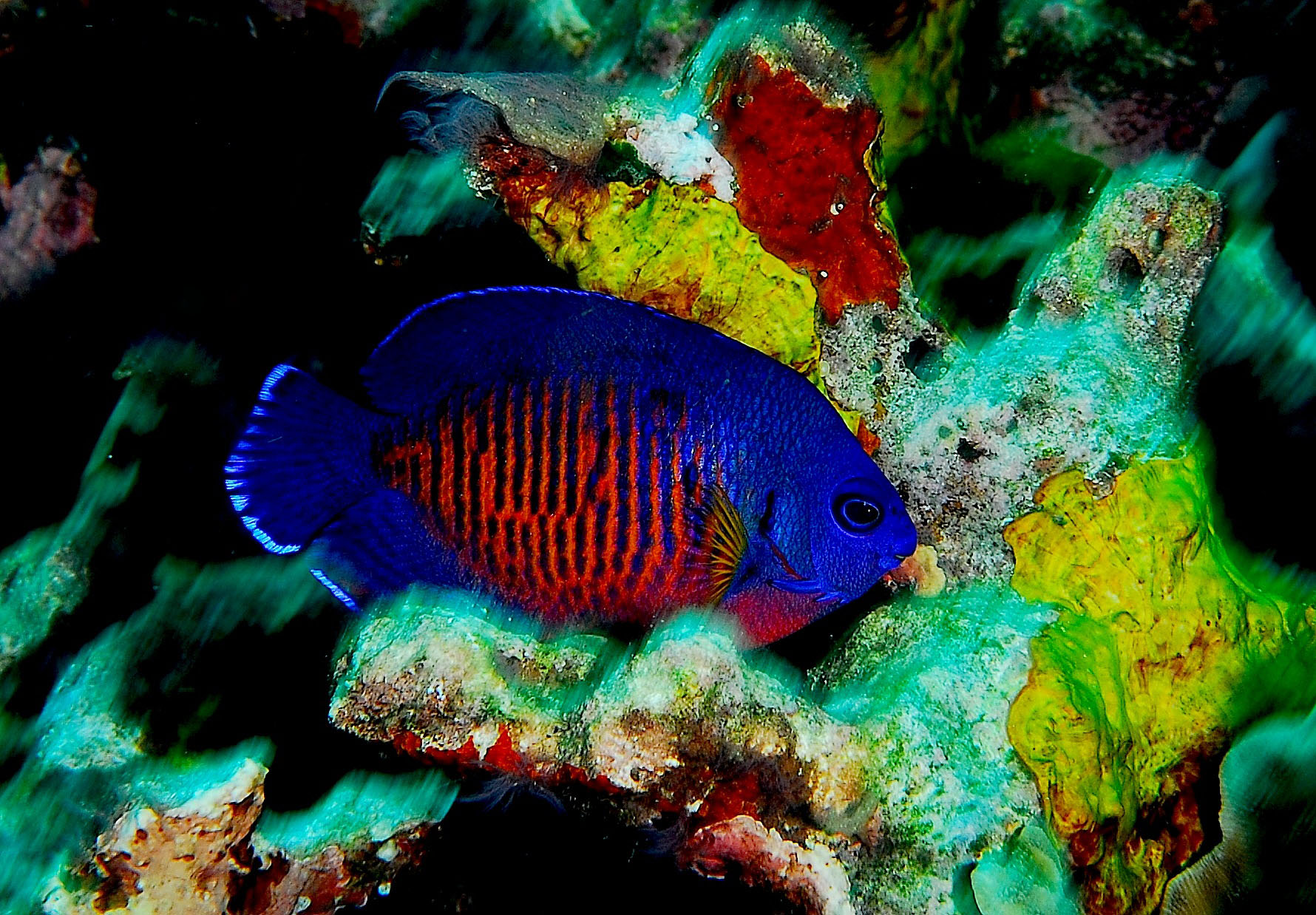
Photo: Jenny (JennyHuang) from Taipei, Wikimedia Commons, CC BY 2.0
Feeding
In the wild, Coral Beauties graze on algae all day. At home, they need a mix of plant and meaty foods.
- Nori or dried seaweed on a clip
- Spirulina flakes or angelfish frozen blends
- Frozen mysis shrimp and brine shrimp
- Quality pellets once it is eating well
Feed small amounts two or three times a day. Regular feeding also helps keep it from picking at corals.
Health tips
Coral Beauties are tough, but new fish can still carry ich or velvet.
- Quarantine: follow our 30-day fish quarantine protocol
- Look for: clear eyes, clean fins, and a rounded belly
- Ask: to see it eat before you buy
Reef safety
Many reefers keep Coral Beauties with no trouble. Still, some fish start nipping corals, so it is a bit of a gamble.
- Usually safe: leather corals, mushrooms, and hard SPS corals
- Sometimes nipped: zoanthids, clam mantles, and fleshy LPS like brains
- Safe: shrimp, crabs, and snails are almost always left alone
Tankmates
- Good: clownfish, tangs, wrasses, gobies, and cardinals
- Risky: other dwarf angels, unless the tank is large and the angel is added last
- Avoid: lionfish, groupers, and fish big enough to eat it
Comparing dwarf angels? Read our Flame Angelfish care guide or the Lemonpeel Angelfish care guide.
FAQs
Is the Coral Beauty reef safe?
It is reef safe with caution. Most leave corals alone, but some nip zoanthids, clams, and fleshy LPS.
Can I keep two Coral Beauties?
It is best to keep just one. Two usually fight unless the tank is very large.
Is a Coral Beauty good for beginners?
Yes. It is one of the hardiest angelfish and eats almost anything once settled.
Ready to add one?
Looking for a Coral Beauty or peaceful tankmates? Browse fish from trusted sellers on the ReefBay shop.