Gold Rim Tang Care Guide: Tank Size, Diet, Reef Safety & Tankmates
Gold Rim Tang care made simple: the tank size this whitecheek surgeonfish needs, what to feed it, how to avoid ich, why it is reef safe, and the best tankmates.
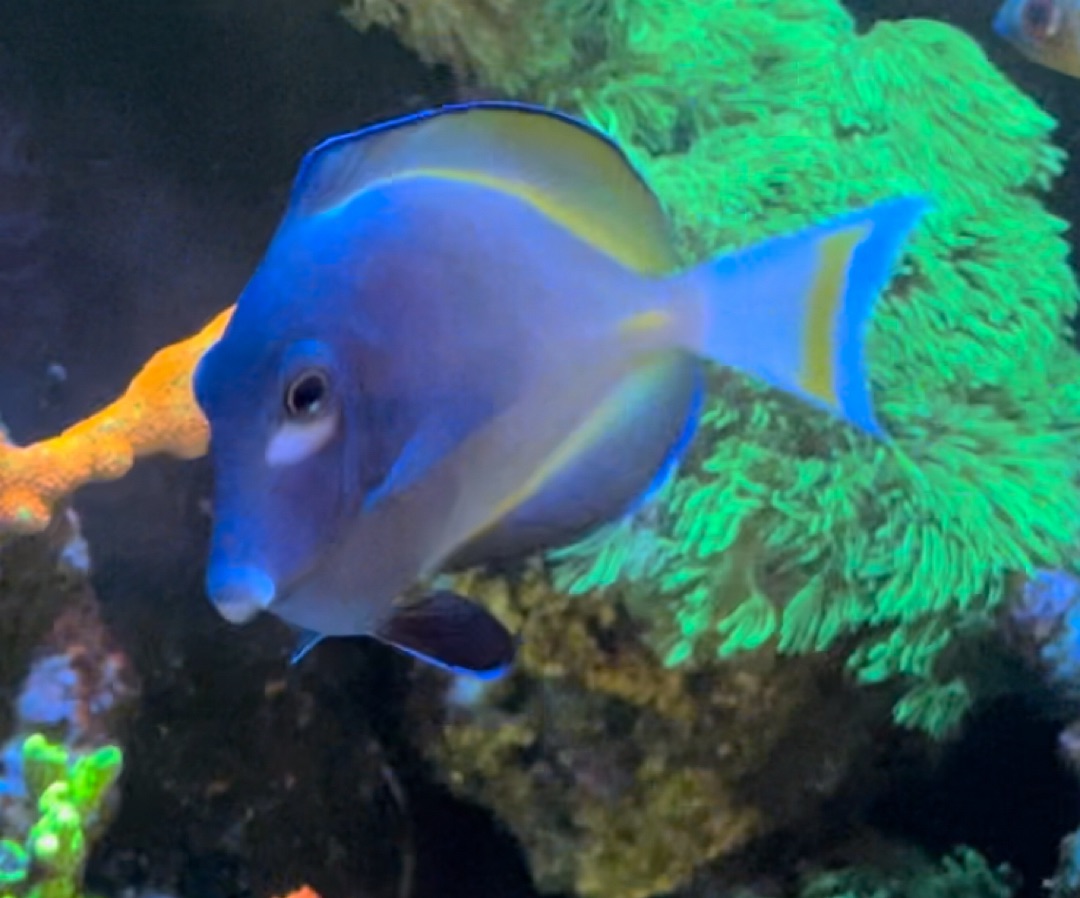
The Gold Rim Tang (Acanthurus nigricans) is a dark, sleek surgeonfish with a white cheek spot and thin gold lines on its fins. It is reef safe and gorgeous, but it needs a big tank, lots of algae, and a careful start.
Quick facts
- Tank size: 125 gallons or larger, with a long footprint
- Adult size: up to about 8 inches
- Diet: herbivore; nori, algae pellets, and some meaty food
- Reef safe: yes; leaves corals and cleanup crew alone
- Difficulty: hard; best for keepers with some tang experience
- Temperament: semi-aggressive toward other tangs
What makes it special
You may also see it sold as the Goldrim Surgeonfish or Whitecheek Tang. It lives on reefs from the Indo-Pacific to the eastern Pacific.
Look for these marks:
- Body: deep blue-black, almost velvet in color
- Cheek: a bright white patch under the eye
- Fins: thin yellow lines along the top and bottom fins
- Tail: a white tail with a yellow mark near the base
It is often mixed up with the Powder Brown Tang. The Gold Rim has a smaller white cheek spot and bolder yellow fin lines.

Photo: Rickard Zerpe, Wikimedia Commons, CC BY 2.0
Behavior you'll see
This tang swims all day. It cruises the open water and stops often to graze on rock.
- Grazing: it picks film algae off rocks and glass
- Bossy moments: it may chase new fish with a similar shape
- Scalpel: a sharp spine near the tail; handle it with a net or cup
Is it right for your tank?
It is a good pick for a large, mature reef with stable water.
- Good fit: big tanks with open swimming room and grown-in rockwork
- Poor fit: new tanks, small tanks, or tanks already full of tangs
Tank setup
- Space: 125+ gallons, at least 5 to 6 feet long
- Rockwork: mature live rock with caves for hiding at night
- Flow: strong, steady water movement
- Water: 75–80°F, salinity near 1.025, high oxygen
- Lid: a mesh lid helps, since scared tangs can jump
Add it to a tank that has run for at least 6 to 12 months. Stable water helps it settle in.
Feeding
Gold Rim Tangs need plant food every day. Most learn to eat well once they feel safe.
- Nori sheets on a clip, 1 to 2 times a day
- Spirulina and algae-based pellets or flakes
- Small meaty foods like mysis a few times a week
Soak food in vitamins now and then. A well-fed tang stays brighter and fights off disease better.
Health tips
Like many tangs, the Gold Rim is prone to ich and other parasites.
- Quarantine: follow our 30-day fish quarantine protocol
- Pick a healthy fish: look for a full belly, clear eyes, and no white spots
- Keep stress low: give it hiding spots and steady water
Reef safety
This fish is fully reef safe. It eats algae, not corals.
- Safe: soft corals, LPS, SPS, clams, shrimp, snails, and crabs
- Bonus: it helps keep film and hair algae in check
Tankmates
- Good: clownfish, wrasses, anthias, gobies, and angelfish
- Risky: other Acanthurus tangs like Powder Blue or Achilles
- Avoid: a second Gold Rim, unless the tank is very large
Add it last so it does not claim the whole tank. Compare it with our Powder Blue Tang care guide or the best tangs for reef tanks.
FAQs
Is the Gold Rim Tang reef safe?
Yes. It eats algae and leaves corals and cleanup crew alone.
Can I keep it with other tangs?
Yes, in a big tank with different-shaped tangs. Add it last and watch for chasing.
How big does it get?
Up to about 8 inches, so plan for a 125-gallon or larger tank.
Ready to add one?
Looking for a Gold Rim Tang or peaceful tankmates? Browse fish from trusted sellers on the ReefBay shop.