Orange Spotted Blenny Care Guide: Tank Size, Diet & Reef Safety
Learn Orange Spotted Blenny (Blenniella chrysospilos) care: 30+ gallon rock-heavy setup, algae and nori diet, reef safety with SPS and clams, blenny-safe tankmates, jump-proof lids, and a ReefBay buying checklist.
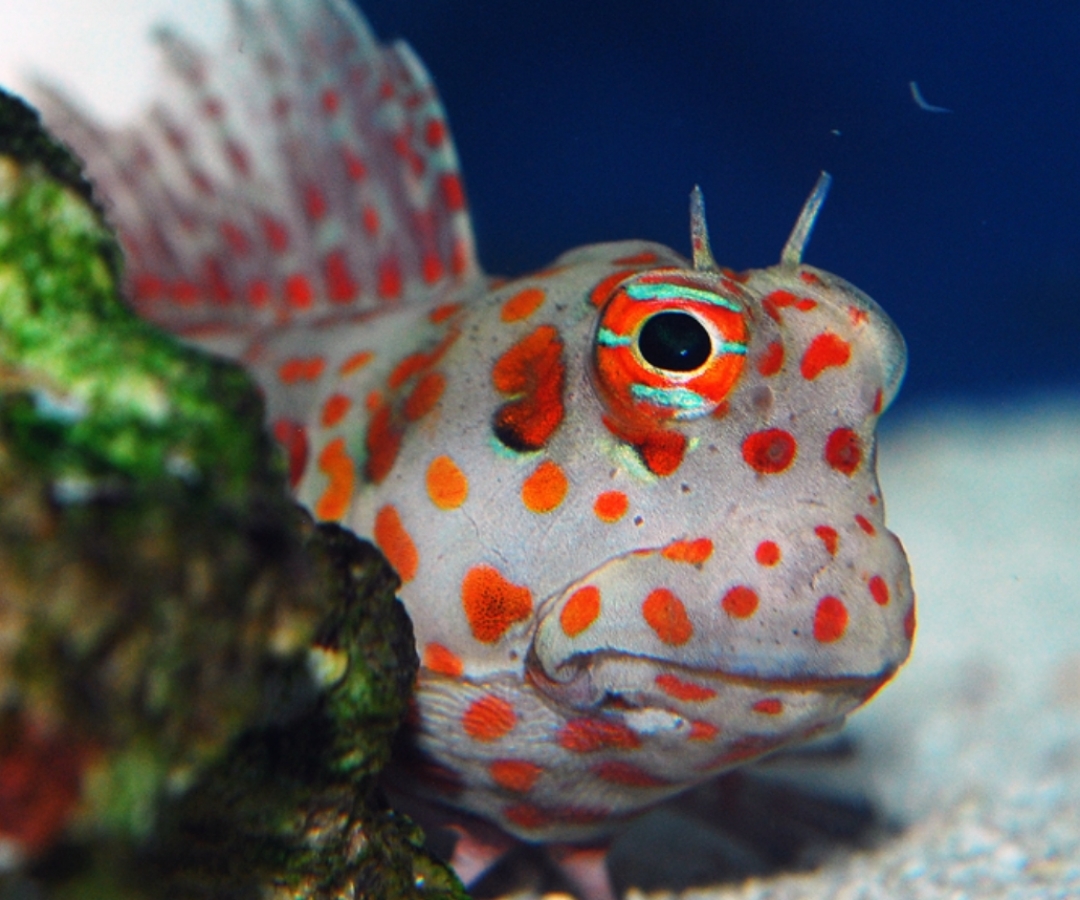
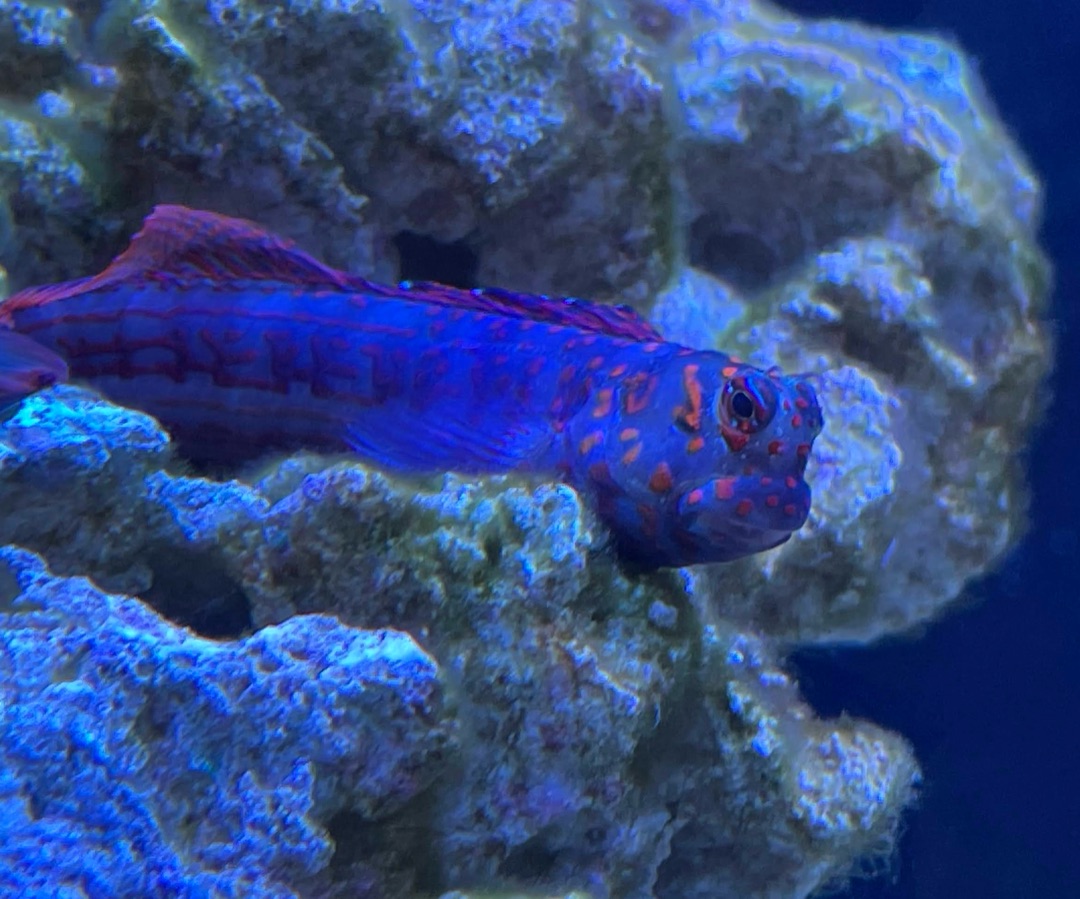
The Orange Spotted Blenny (Blenniella chrysospilos), also sold as the Red-spotted Blenny or Red-spotted Rockskipper, is one of the most expressive fish you can add to a reef. It has a pale white to gray body covered in bright orange-red spots, a comb-like dorsal fin, branched head cirri that look like little eyebrows, and big eyes that seem to follow you around the room. Under blue reef lighting the same fish can look almost electric violet.
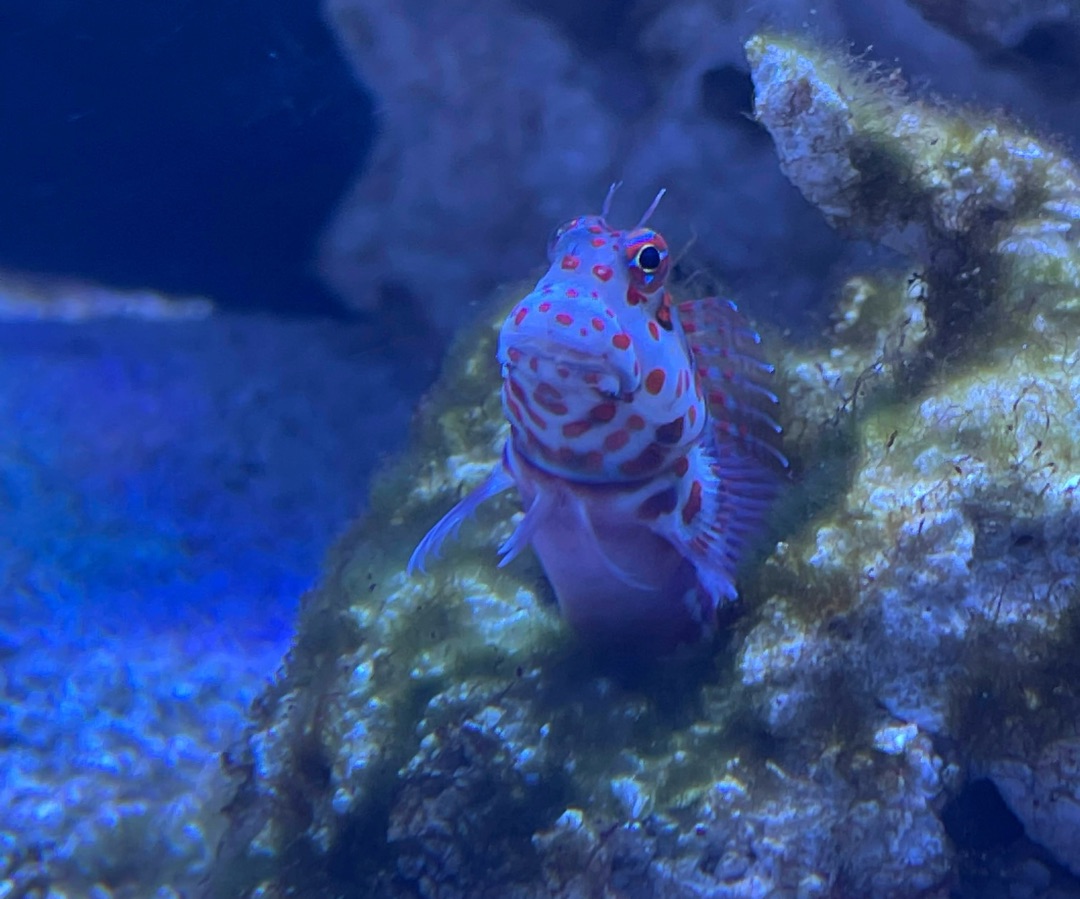
Most of its charm comes from personality. An Orange Spotted Blenny picks a hole in the rockwork, backs into it so only its face sticks out, and watches everything that goes on in the tank. It is a hardy grazer once it is eating, but it does have real needs: plenty of rock to graze and perch on, a steady supply of algae, a tight lid, and tankmates that won't be mistaken for rivals. This guide covers tank size, water parameters, diet, reef safety, compatibility, health, and a buying checklist before you shop the ReefBay marketplace.
Quick care snapshot
- Scientific name: Blenniella chrysospilos (older trade name Istiblennius chrysospilos)
- Also called: Red-spotted Blenny, Red-spotted Rockskipper, Redspotted Blenny
- Family: Blenniidae (combtooth blennies)
- Origin: Indo-Pacific, from the Indian Ocean (including the Maldives) east to Fiji. Found on shallow, surge-swept reef flats and rocky shorelines
- Max size: about 5 inches (ReefBay lists up to 5.5 inches)
- Care level: easy once it is eating. The main risk is starving in a young, algae-poor tank
- Temperament: semi-aggressive. Peaceful with most fish, territorial toward other blennies and look-alike perching fish
- Reef-safe: yes, with caution. It may occasionally nip at SPS polyps or clam mantles
- Minimum tank: 30 gallons with lots of live rock. 40+ gallons is better for a busy reef
- Diet: herbivore and grazer. Film algae, nori, and herbivore frozen and pellet foods
- Jump risk: high. Rockskippers are built to hop between tide pools, so use a lid
Don't confuse it with Hypleurochilus springeri, a small Atlantic blenny that is sometimes also called an orange-spotted blenny. The fish in this guide is the Indo-Pacific rockskipper with red spots on a pale body.
Tank size and aquascape
ReefBay's care sheet suggests a 30-gallon minimum, and that is a realistic floor. An Orange Spotted Blenny doesn't swim laps, but it grazes across a lot of rock surface every day and it reaches about 5 inches as an adult. A nano simply doesn't grow enough algae to keep it fed, and a small footprint puts it nose-to-nose with every other bottom dweller. A 40-gallon breeder or larger mature reef gives it room to roam and more surface to graze.
- Lots of rock: live rock with holes, ledges, and crevices. It will pick one or two favorite bolt holes and defend them
- Perches up front: rock edges near the front glass let it sit and watch, which is when it's most fun to keep
- Sand and rubble: it will rest on and poke around the substrate, so a sandy bottom with some rubble suits it well
- Moderate to strong flow: it comes from surge zones and handles movement fine, as long as there are calm pockets to rest in
- A mature tank: add it after the system has run for several months and has a visible film of algae and diatoms on the rock
- Close every gap: mesh lids, covered overflows, and sealed cable cut-outs
Water parameters
This blenny is hardy, but like every reef fish it does best when conditions stay steady instead of swinging from day to day. Aim for normal reef numbers:
- Temperature: 74–79°F (23–26°C)
- Salinity: 1.024–1.026 specific gravity
- pH: 8.1–8.4
- Alkalinity: 7–11 dKH, held steady
- Ammonia and nitrite: 0 ppm
- Nitrate: low to moderate (about 2–20 ppm)
- Phosphate: low but not zero (about 0.03–0.1 ppm)
Don't strip nutrients to zero in a tank with an algae grazer. An ultra-low-nutrient system stays spotless but leaves a rockskipper with very little to pick at between feedings. If you're still learning your test kits, start with our reef tank water parameters guide for beginners, and log your results in the ReefBay app so you can spot drift early.
Diet and feeding
In the wild, the Orange Spotted Blenny scrapes fine filamentous algae, diatoms, and detritus off rock all day. In the aquarium that grazing is the base of its diet, and prepared foods fill the gaps. A fish that arrives thin and drops into a brand-new tank with clean rock is the most common way this species is lost.
- Grazing: mature live rock with a visible algae film. Don't scrub every rock surface clean during maintenance
- Seaweed: dried nori or red and green seaweed sheets on a veggie clip, offered every day or two
- Frozen foods: herbivore and spirulina-enriched blends. Many also take mysis and enriched brine, which helps with weight
- Pellets and flakes: a quality marine herbivore pellet or spirulina flake, soaked so it sinks past faster fish
- Frequency: two small feedings a day plus constant grazing. Watch the belly, not the clock
A well-fed blenny has a gently rounded belly and bright, clean spots. A pinched stomach, a fish that stays tucked in its hole all day, or faded color usually means it isn't finding enough food or is being pushed around by another fish.
Reef safety: corals and inverts
Most Orange Spotted Blennies are good reef citizens. They graze rock, not coral, and they ignore most corals, snails, crabs, and ornamental shrimp. ReefBay's care sheet does flag one caution: some individuals nip at small-polyp stony corals (SPS) and clam mantles. That behavior is more likely when the fish is hungry, so keeping it well fed with seaweed and frozen herbivore foods is your best prevention.
- Usually safe: soft corals, zoanthids, mushrooms, most LPS, snails, hermit crabs, cleaner and peppermint shrimp
- Watch closely: SPS colonies, tridacnid clams, and any coral that starts staying closed after the blenny goes in
- Algae control bonus: it will help keep film algae and some hair algae in check, but don't buy it as your only fix for a major algae outbreak
Behavior and tankmates
This is a bold, curious fish that spends much of its day perched on rock or peeking out of a crevice. It gets along with most fish that swim in the water column, but it treats anything with a similar body shape and lifestyle as competition for food and holes.
- Good tankmates: clownfish, cardinalfish, chromis, royal grammas, fairy and flasher wrasses, tangs in larger tanks, and most dwarf angelfish
- Use caution: other blennies and rock-perching fish such as gobies that live on the rock, small hawkfish, and other rockskippers. Mixing two blennies only works in a large tank with very different species added at the same time. Our Lawnmower Blenny care guide covers a close relative that competes for exactly the same niche, so pick one or the other
- Avoid: large predators like groupers, lionfish, and big triggers, plus aggressive dottybacks or large damsels that will push it out of its holes
- One per tank: keep a single Orange Spotted Blenny unless you have a very large system and an established pair
For a side-by-side look at the reef-safe blennies and how they differ, see our complete blenny care guide.
Health, jump risk, and acclimation
A settled Orange Spotted Blenny is a tough fish, but the first few weeks matter most. Blennies have thick slime coats and little in the way of scales, and many reefers find them more sensitive to copper and harsh medications than tangs or clownfish. If you treat in quarantine, watch it closely and dose carefully. Many keepers prefer observation quarantine or the tank transfer method for blennies.
- Fit a tight canopy or fine mesh screen lid and close every cable gap before the fish arrives
- Drip acclimate, then release it near rockwork with the lights dimmed for the first day
- Quarantine in a covered tank with a few pieces of algae-covered rock or rubble so it has something to graze. Our 30-day saltwater fish quarantine protocol is a solid template
- Offer nori from day one, even if it ignores it at first
- Weigh it by eye every day. If the belly is shrinking after a week, add more algae rock and try different frozen herbivore foods

Photo: BEDO (Thailand), CC BY-SA 4.0, via Wikimedia Commons
Common problems and quick fixes
- Hiding all day: normal for the first few days. If it lasts past week two, look for a bully and target-feed near its hole
- Getting thin: not enough algae. Add a veggie clip with nori, leave some film on the rock, and add frozen herbivore food
- Nipping corals or clams: usually a hungry fish. Feed more seaweed and move vulnerable pieces until the habit stops
- Chasing another fish: it's guarding its holes. Rearrange rock to create new territories, or rehome one of the two
- Color looks different under blue light: normal. Its pale body and red spots can look violet or dark under actinics and at night
- Found on the floor: a jump. Seal the lid before you add anything else
Buying checklist before you click purchase
- Confirm the tank is at least 30 gallons, several months old, and has plenty of rock with visible algae film
- Check the lid for gaps before the fish ships
- Make sure there's no other blenny or rock-perching rival in the tank
- Look for clear eyes, intact fins, bright spots, and a rounded belly. Ask the seller what it's eating and pass on a fish with a pinched stomach
- Stock nori, a veggie clip, and frozen herbivore food before it arrives
- Plan for a covered quarantine with grazing rock, and go easy on copper
- Decide ahead of time how you'll handle a clam or SPS colony if it starts nipping
Ready to add one? Open the Orange Spotted Blenny fish page on ReefBay for more community photos and marketplace listings. Browse the ReefBay marketplace for healthy, eating specimens from trusted sellers. Then track feedings and water tests in the ReefBay app, and share photos of your own blenny so the next reefer can see what a happy, well-fed rockskipper looks like.




.jpg)