Panther Grouper Care Guide: Tank Size, Diet, Growth & Tankmates
Panther Grouper care made simple: how big this polka dot grouper really gets, the tank size it needs, what to feed, reef safety, and the best tankmates for a predator tank.
The Panther Grouper (Cromileptes altivelis) is a white fish covered in bold black polka dots. It looks cute as a small juvenile, but it grows into a big predator that needs a huge tank.
Quick facts
- Tank size: 300 gallons minimum for an adult
- Adult size: up to about 27 inches
- Diet: carnivore; silversides, krill, squid, and shrimp
- Reef safe: with caution; safe with corals, not with shrimp or crabs
- Difficulty: moderate; hardy, but needs lots of space
- Temperament: semi-aggressive; eats any fish it can swallow
What makes it special
You may also see it sold as the Polka Dot Grouper, Humpback Grouper, or Barramundi Cod. It comes from the Indo-Pacific, from the eastern Indian Ocean to the western Pacific.
It has a small, pointed head and a tall, humped back. Juveniles have fewer, larger spots, and they swim with a funny side-to-side wobble.
The size problem
Most Panther Groupers are sold at just 2 to 4 inches. They grow fast and can pass a foot long in a few years.
- Plan ahead: buy it only if you already own, or will soon own, a very large tank
- No rehoming plan: stores and public aquariums rarely take big groupers
- Never release it: it does not belong in local waters
Behavior you'll see
This grouper is bold and quickly learns who feeds it. Many owners say it acts like a pet dog at the glass.
- Slow cruising: it drifts around the rocks, then strikes fast
- Big gulp: its wide mouth sucks in prey in a split second
- Resting: it often parks in a cave or under a ledge
Is it right for your tank?
It is a great pick if you want one big, friendly showpiece fish.
- Good fit: large fish-only tanks with other big, tough fish
- Poor fit: nano tanks, mixed reefs with shrimp, or peaceful community tanks
Tank setup
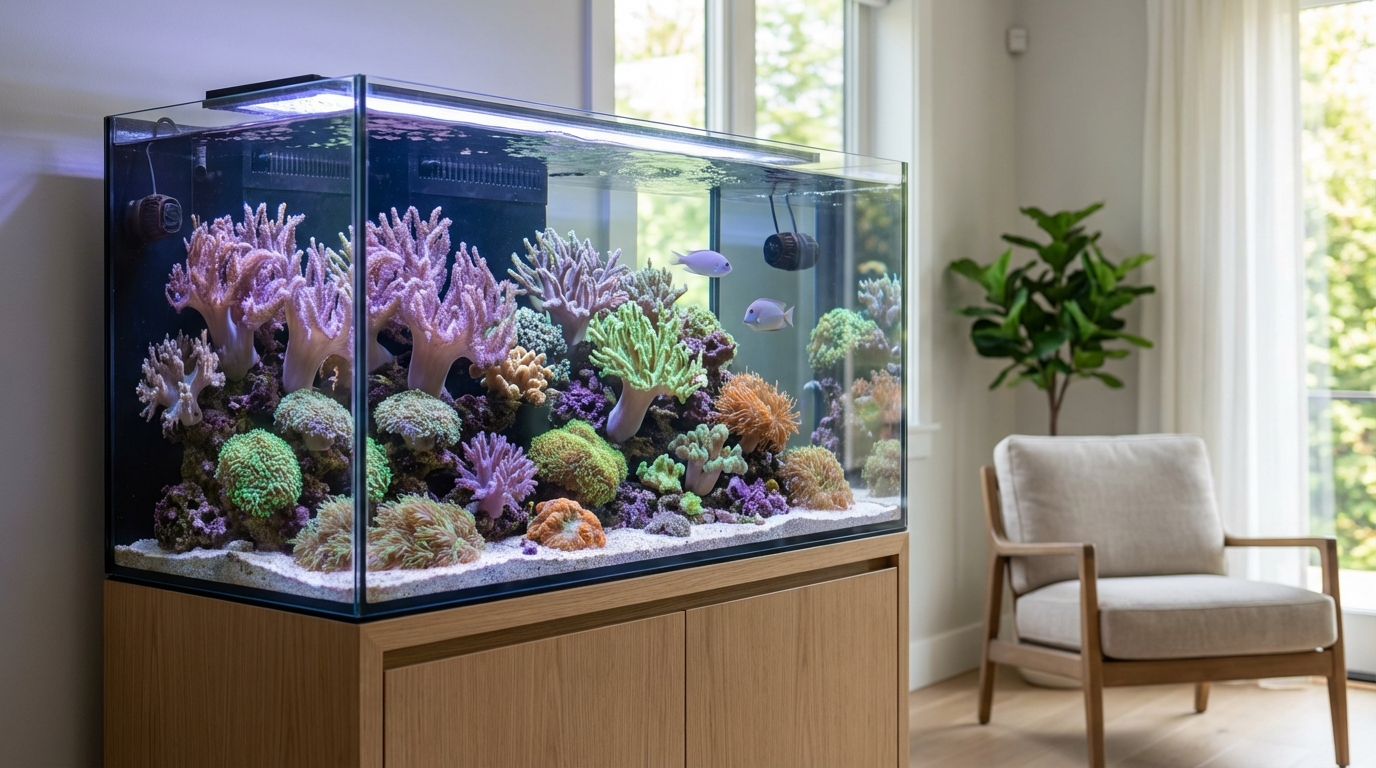
- Space: 300+ gallons with open swimming room
- Rockwork: stable rock with a few large caves
- Filtration: a strong protein skimmer; this fish makes a lot of waste
- Water: 72–78°F, salinity near 1.025
- Maintenance: regular water changes to keep nitrate down
Glue or stack rocks firmly. A large grouper can push loose rock over.

Photo: Arpingstone, Wikimedia Commons, public domain
Feeding
Panther Groupers are easy eaters. The bigger risk is overfeeding.
- Silversides and krill
- Squid, shrimp, and clam meat
- Large carnivore pellets
Feed juveniles once a day. Feed adults a few times a week, and add vitamins to frozen food now and then.
Health tips
This is a tough fish, but new arrivals can still bring in ich or flukes.
- Quarantine: follow our 30-day fish quarantine protocol
- Look for: clear eyes, clean fins, and a full belly
- Ask: to see it eat before you buy
Reef safety
It leaves corals alone, but it is not truly reef safe.
- Safe: soft corals, LPS, and SPS
- Not safe: shrimp, crabs, small fish, and most cleanup crew
Tankmates
- Good: large tangs, big angelfish, triggerfish, and puffers
- Risky: lionfish and eels; both compete for the same food
- Avoid: clownfish, gobies, chromis, and any fish small enough to swallow
Planning a predator tank? Read our Volitans Lionfish care guide or the Porcupine Puffer care guide.
FAQs
How big does a Panther Grouper get?
In the wild it can reach about 27 inches. In home tanks it often reaches 15 to 20 inches, which is still very big.
Is a Panther Grouper reef safe?
Mostly no. It ignores corals, but it will eat shrimp, crabs, and small fish.
Is it good for beginners?
Only for beginners with a very large tank. It is hardy, but its size makes it a long-term commitment.
Ready to add one?
Looking for a Panther Grouper or big tankmates? Browse fish from trusted sellers on the ReefBay shop.