Purple Firefish Care Guide: Tank Size, Diet, Pairing & Jump Risk
Learn Purple Firefish (Nemateleotris decora) care: 20+ gallon setup with bolt holes, mysis and copepod diet, reef safety, pairing and tankmate tips, jump-proof lids, and a ReefBay buying checklist.
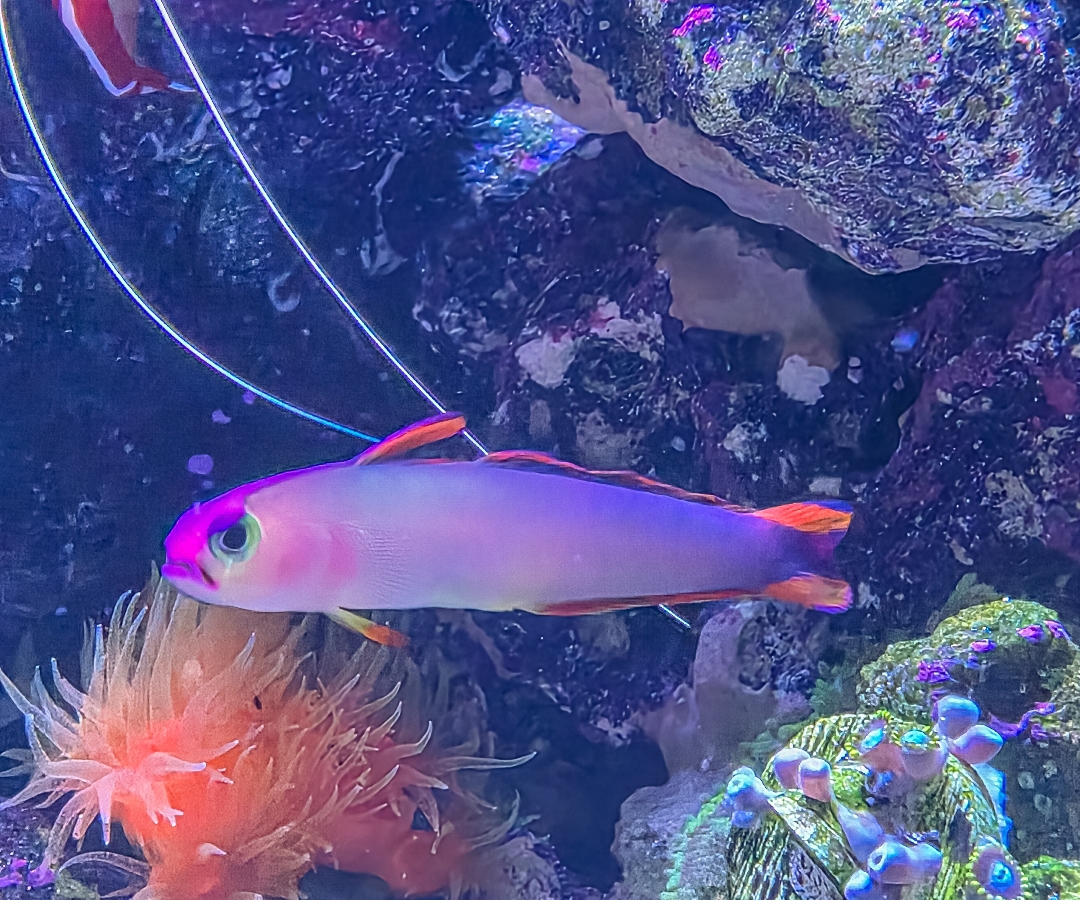
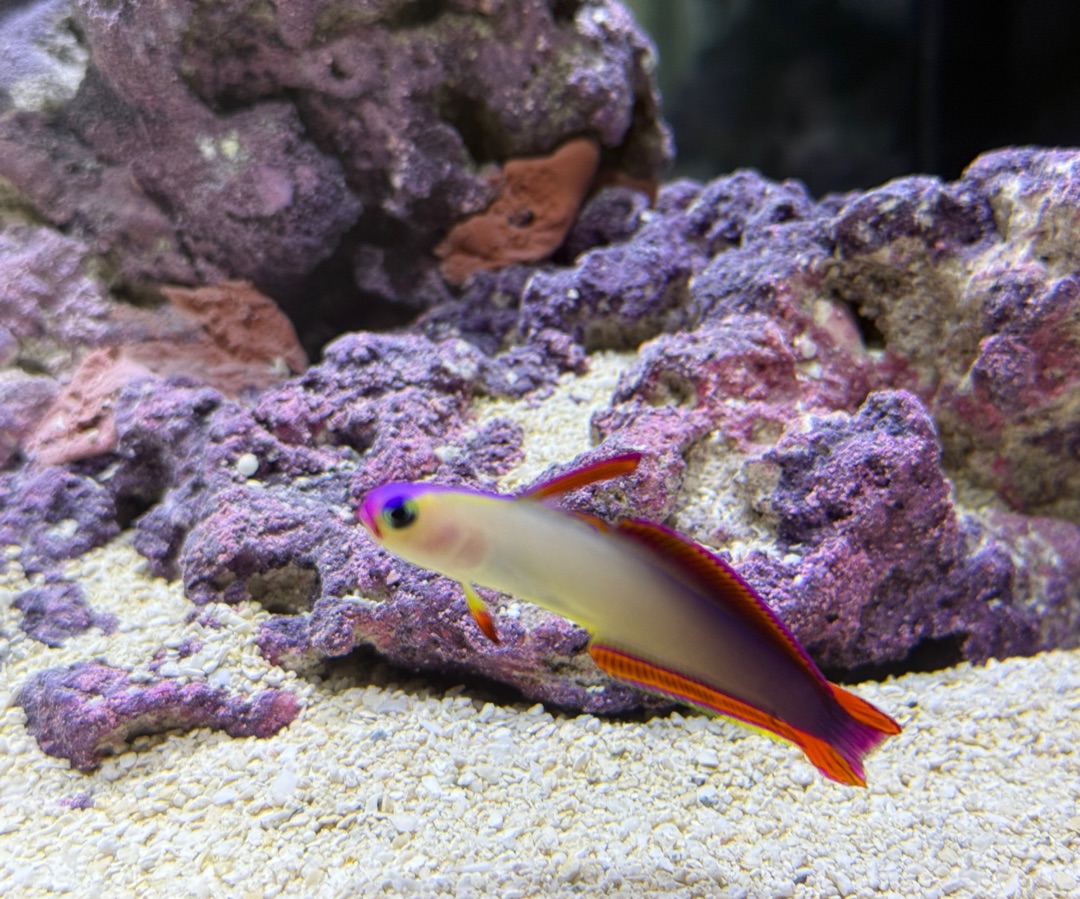
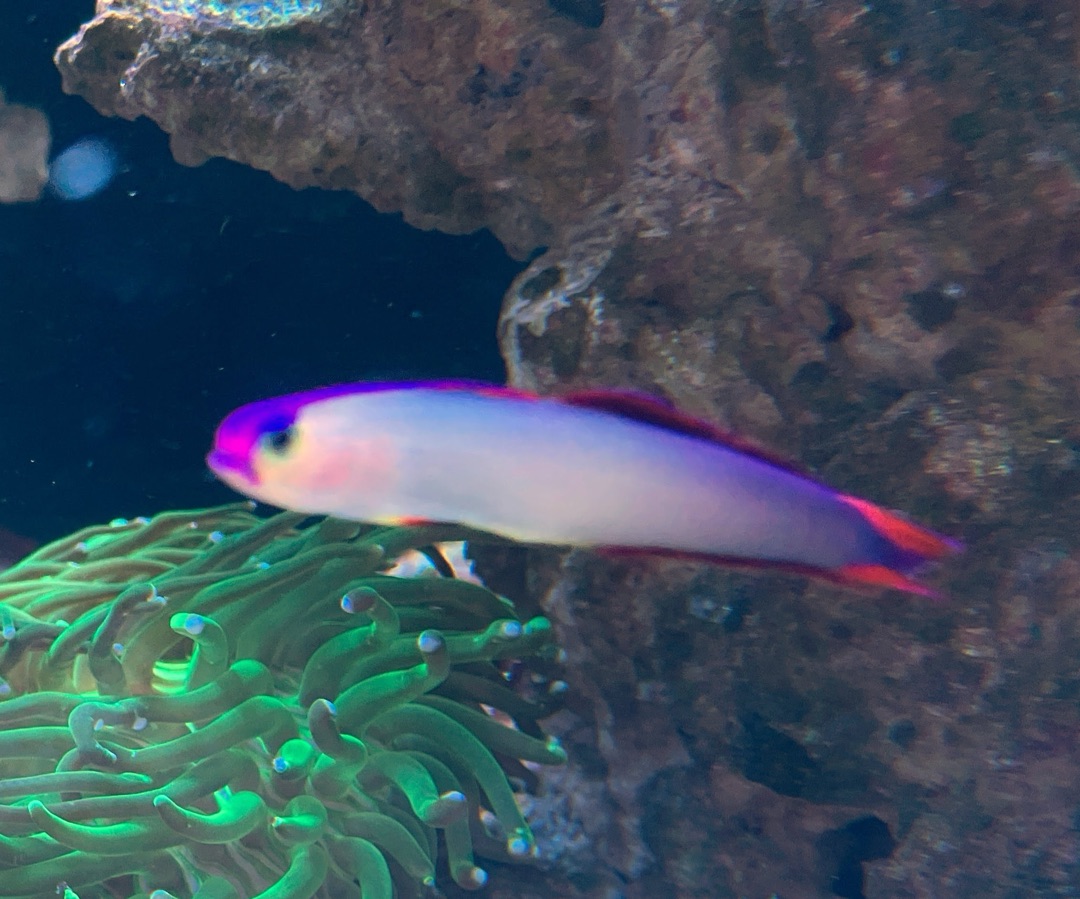
The Purple Firefish (Nemateleotris decora), also sold as the Decorated Firefish, Elegant Firefish, or Purple Dartfish, is one of the most elegant small fish you can put in a reef. It has a violet-purple face, a pale cream-to-lavender body, and dorsal, anal, and tail fins striped in magenta, red, and black. Its tall first dorsal fin works like a signal flag, flicking up and down as the fish hovers above the rockwork picking food out of the current.
It is a close cousin of the common Firefish Goby (Nemateleotris magnifica), and the care is similar: peaceful tankmates, plenty of bolt holes, frequent small meals, and a lid with no gaps. The Purple Firefish is a little larger, a little shyer, and usually a little more expensive. This guide covers tank size, water parameters, diet, reef safety, pairing, tankmates, health, and a buying checklist before you shop the ReefBay marketplace.
Quick care snapshot
- Scientific name: Nemateleotris decora
- Also called: Decorated Firefish, Elegant Firefish, Purple Dartfish, Purple Fire Goby
- Family: Microdesmidae (dartfishes and wormfishes). Sold as a goby, but not a true goby
- Origin: Indo-Pacific, from the Indian Ocean to the western Pacific. Usually found on outer reef slopes, often in deeper water than its orange-and-white cousin
- Max size: about 3.5 inches
- Care level: easy, as long as it has calm tankmates and is eating well
- Temperament: peaceful and shy. It may squabble with its own kind
- Reef-safe: yes. It ignores corals and is safe with clean-up crew and ornamental shrimp
- Minimum tank: 20 gallons for one fish, 30+ gallons for a bonded pair or a busier reef
- Diet: carnivore and planktivore. Mysis, enriched brine, copepods, and small marine pellets
- Jump risk: very high. A tight lid is not optional
Tank size and aquascape
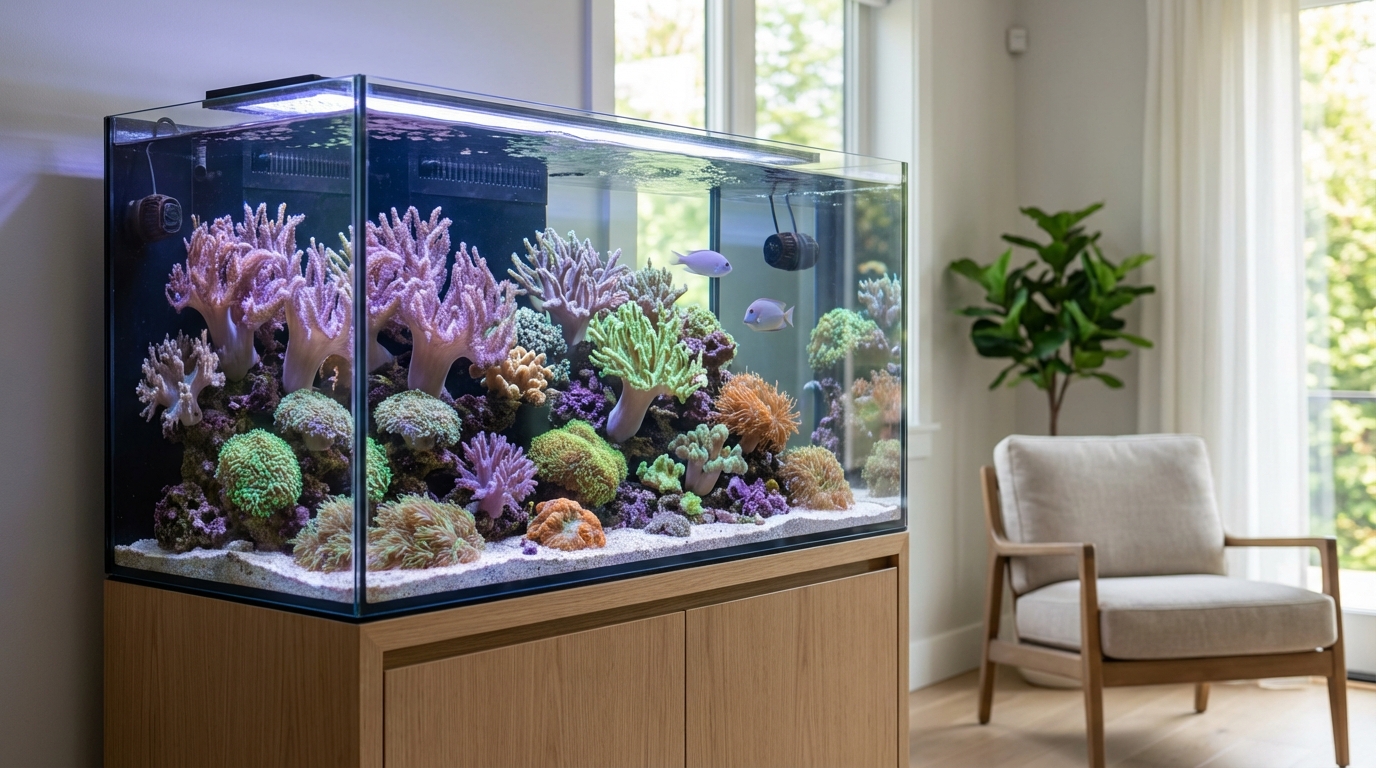
ReefBay's care data lists a 20-gallon minimum for a single Purple Firefish, and that is a sensible floor. This fish doesn't swim laps, but it hovers in the open water above its hole and needs room to retreat when something startles it. In a 30-gallon or larger tank you can keep a bonded pair, add more peaceful tankmates, and still give each fish its own space.
- Bolt holes: live rock with small caves, crevices, and gaps at the base. A firefish picks one hole and dives into it, tail first, at any sign of danger
- Sand and rubble: it will often dig or claim a burrow under rock or rubble, so leave some sand and loose rubble near the rockwork
- Open water in front: leave a clear zone just above the rocks where it can hover and pick food out of the current
- Low to moderate flow: enough movement to carry food past it, but not a blast that pushes it around
- Moderate lighting: it comes from deeper reef slopes and is happy under normal reef lighting, especially with shaded areas to retreat to
- Seal every gap: mesh lid, covered overflow, and closed cable cut-outs
Water parameters
The Purple Firefish is hardy once it settles, but like every reef fish it does best when conditions stay steady. Aim for normal reef numbers:
- Temperature: 74–79°F (23–26°C)
- Salinity: 1.024–1.026 specific gravity
- pH: 8.1–8.4
- Alkalinity: 7–11 dKH, held steady
- Ammonia and nitrite: 0 ppm
- Nitrate: low to moderate (about 2–20 ppm)
- Phosphate: low (about 0.03–0.1 ppm)
Stability matters more than chasing perfect numbers. If you're still learning your test kits, start with our reef tank water parameters guide for beginners, and log your results in the ReefBay app so you can catch drift before it stresses your fish.
Diet and feeding
In the wild, Purple Firefish hover a short distance above their burrows and pick zooplankton out of the passing current: copepods, tiny shrimp, and crustacean larvae. In the aquarium, that means small, meaty foods offered often. The biggest feeding risk is not that it refuses food, but that bolder fish grab everything before a shy firefish gets the nerve to come out.
- Frozen foods: mysis shrimp, enriched brine shrimp, and finely chopped marine blends
- Live and small foods: copepods and other tiny live foods are great for picky new arrivals
- Pellets and flakes: small marine pellets and quality flakes, once it has learned to recognize prepared food
- Frequency: two or three small feedings a day. Planktivores do better with little and often than with one big meal
- Feeding tip: turn the pumps down for a minute or two and let food drift past its hole so it doesn't have to compete in open water
A healthy Purple Firefish has a slightly rounded belly and bright fins, and it spends most of the day hovering in the open. A fish that stays hidden, looks pinched behind the head, or only darts out briefly at feeding time is usually being out-competed or bullied.
Reef safety: corals and inverts
This is one of the most reef-safe fish you can buy. Purple Firefish eat plankton out of the water column and don't pick at coral, clam mantles, or polyps. ReefBay's care data lists it as both reef-safe and invert-safe.
- Safe with: soft corals, LPS, SPS, zoanthids, clams, snails, hermit crabs, and cleaner and peppermint shrimp
- Watch: very large predatory inverts. Big crabs and some anemones can catch a small fish that rests near them at night
- Coral benefit: because it rarely bothers anything, it's an easy fish to add to a mature mixed reef without upsetting your corals
Behavior, pairing, and tankmates
The Purple Firefish is peaceful toward almost everything except other firefish. It hovers in the same small patch of water most of the day and retreats to its hole whenever something big swims past. Once it feels secure, it becomes a bold, constant presence near the front of the rockwork.
- Good tankmates: clownfish, cardinalfish, chromis, royal grammas, small peaceful gobies, fairy and flasher wrasses, and most peaceful nano fish
- Use caution: dottybacks, larger damsels, hawkfish, and pushy wrasses can bully a firefish into hiding. Add the firefish before semi-aggressive fish, not after
- Avoid: lionfish, groupers, larger triggers, eels, and any fish big enough to swallow a 3-inch fish
- Pairs: males and females look the same, so a true pair is hard to put together. Buy a pair that is already bonded and sharing a hole, or keep one fish per tank
- Mixing firefish species: Purple and orange-and-white firefish sometimes coexist in larger tanks when they are added together, but they can also fight. In smaller tanks, choose one
Health, jump risk, and acclimation
The number one cause of firefish losses isn't disease. It's jumping. A startled firefish shoots straight up, and an open top or a small gap at the back is all it takes. A screen lid, a covered overflow, and a few minutes of dim light after the main lights go off will prevent most losses.
- Install a tight mesh lid and seal every gap before the fish arrives
- Drip acclimate, then release it near rockwork with the lights dimmed for the first day
- Quarantine in a covered tank with a short length of PVC pipe or a rock cave it can hide in. Our 30-day saltwater fish quarantine protocol is a solid template
- Start with mysis and live or frozen copepods, then add pellets once it eats confidently
- Watch for rapid breathing, cloudy eyes, white spots, or a fish that suddenly stops leaving its hole
Most Purple Firefish in the trade are wild-collected, so a short quarantine and a careful look at how the fish is eating before you buy go a long way.

Photo: TANAKA Juuyoh, CC BY 2.0, via Wikimedia Commons
Common problems and quick fixes
- Hiding all the time: normal for the first few days. If it lasts past week two, look for a bully and feed near its hole
- Not eating: try live or frozen copepods and mysis with the pumps turned down, and make sure faster fish aren't grabbing everything
- Getting thin: add a third small feeding and target-feed with a pipette or feeding tube
- Two firefish fighting: they are not a pair. Separate them or rehome one
- Faded color: often stress, poor water quality, or a fish that isn't eating enough. Test your water and watch for bullying
- Missing fish: check the floor and the overflow box, then fix the gap before you add another
Buying checklist before you click purchase
- Confirm the tank is at least 20 gallons (30+ for a pair), cycled, and stable
- Check that the lid covers everything, including the back and the overflow
- Make sure there are no dottybacks, aggressive damsels, or other bullies already in the tank
- Look for bright violet color, intact fins, clear eyes, and a fish that hovers rather than hides
- Ask the seller what it's eating and pass on a fish with a pinched stomach
- If you want a pair, buy fish that are already bonded and sharing a hole
- Stock mysis, copepods, and small pellets before it arrives
Purple Firefish FAQ
Is the Purple Firefish reef-safe? Yes. It eats plankton out of the water column and ignores corals, clams, and clean-up crew.
What size tank does a Purple Firefish need? At least 20 gallons for one fish. A 30-gallon or larger tank is better for a pair or a busier community.
Can I keep a Purple Firefish with a Firefish Goby? Sometimes, in a larger tank with plenty of holes, if they're added at the same time. In small tanks they often fight, so pick one species.
Why did my Purple Firefish disappear? Most often it jumped or is hiding deep in the rockwork. A tight lid prevents most losses.
Ready to add one? Open the Purple Firefish fish page on ReefBay for more community photos and care details, and browse the ReefBay marketplace for healthy, eating fish from trusted sellers. Then track feedings and water tests in the ReefBay app, and share photos of your own firefish so the next reefer can see what a happy, settled Purple Firefish looks like.