Darwin Clownfish Care Guide: Tank Size, Diet & Black Ocellaris Tips
Darwin Clownfish (black ocellaris) care: 20+ gallon tanks, an omnivore diet, why juveniles start orange, reef-safe tankmates, pairing tips, and a ReefBay buying checklist.
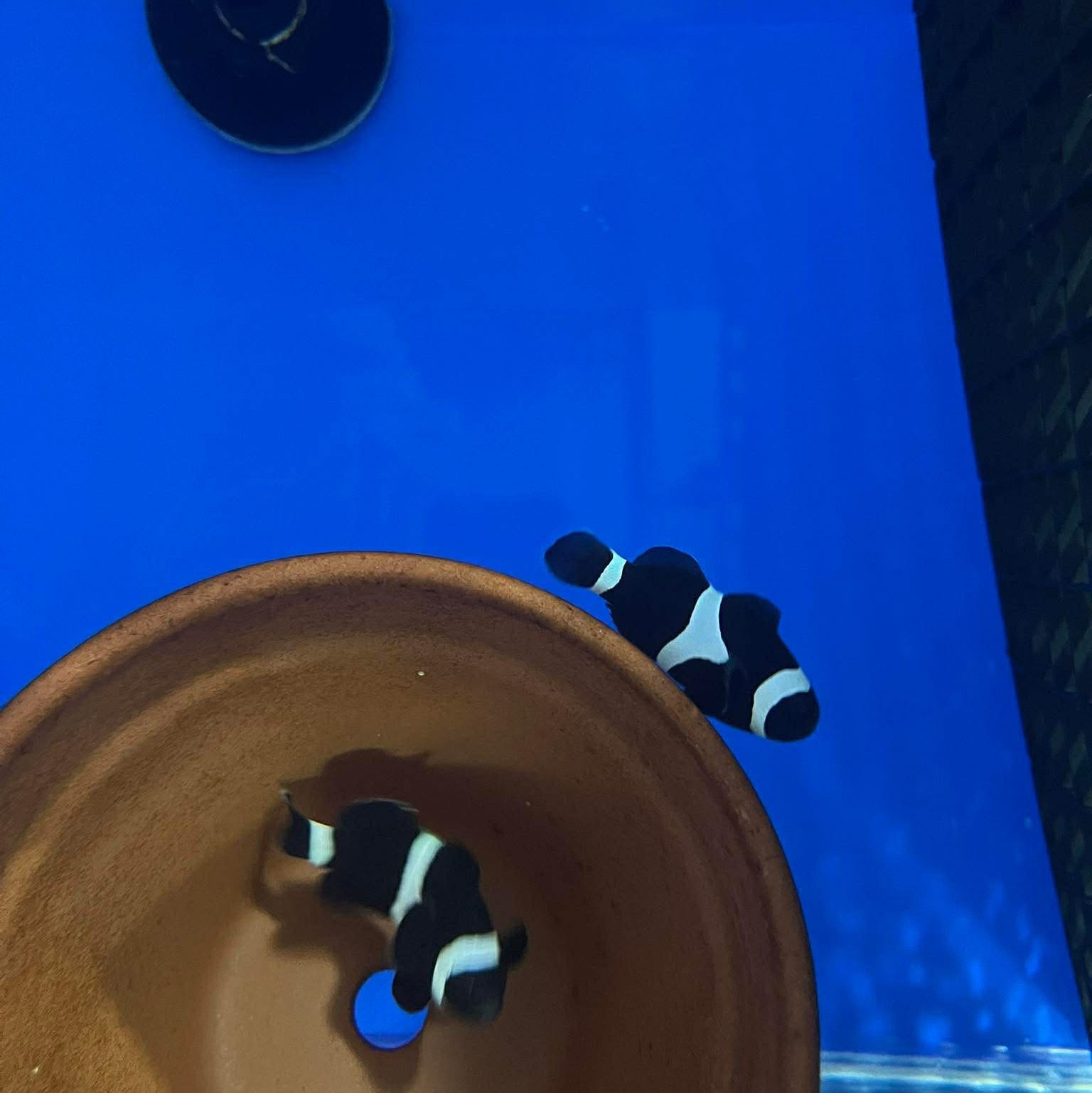
The Darwin Clownfish is the black-and-white form of the Ocellaris Clownfish (Amphiprion ocellaris). Instead of orange, adults wear a velvety jet-black body crossed by the same three crisp white bars, which makes them pop against green and purple corals. The name comes from the wild population around Darwin in Australia's Northern Territory, where this dark form occurs naturally. Today nearly every Darwin you see for sale is captive-bred.
That captive-bred background means easy care. Darwins are hardy, reef-safe, happy as a bonded pair, and fine with or without a host anemone. This guide covers tank size, diet, color development, how a Darwin differs from look-alike black clowns, tankmates, and a buying checklist to work through before you shop the ReefBay marketplace.
Quick care snapshot
- Scientific name: Amphiprion ocellaris (black form)
- Also called: Black Ocellaris, Black Clownfish, Darwin Ocellaris, Black and White Ocellaris, Black and White False Percula
- Family / category: Pomacentridae (clownfish, also called anemonefish)
- Origin: Indo-Pacific; the black form comes from the Darwin region of northern Australia. Aquarium fish are almost all captive-bred
- Max size: about 4.3 inches; most stay closer to 3 inches
- Care level: easy
- Temperament: semi-aggressive. Peaceful with most fish, but an established female will guard her territory
- Reef-safe: yes. Ignores corals and is safe with invertebrates
- Minimum tank: 20 gallons for a single fish or a pair
- Diet: omnivore: pellets, frozen meaty foods, and algae-based preparations
- Jump risk: yes. Use a lid
- Social: best kept as a pair
- Juveniles differ: yes. Young fish start brownish-orange and darken as they mature
What makes a Darwin Clownfish different
A Darwin is not a separate species and not a designer hybrid. It is a natural color form of the regular ocellaris, so its anatomy, behavior, and care match the orange fish you already know. The difference is pigment: black replaces orange across the body and fins, and the white bars sit on that dark base.
- Darwin vs. orange ocellaris: same species, same care. You only pick between them for color
- Darwin vs. Black Percula: black percula are Amphiprion percula, a different species that usually has thicker black outlines and costs more. A Darwin has the ocellaris build and the thin-outlined bars. Ask the seller for the scientific name if a listing is vague
- Designer black lines: breeders have crossed the black gene into morphs like Black Snowflake, Black Ice, and Black Storm. Some sellers use "Midnight" for nearly solid black fish with little or no white. Those morphs need the same care, but expect higher prices and more variation between individuals
- Color goes with the gene, not the light: a healthy Darwin stays black under normal reef lighting. You don't need special spectrum to "bring out" the color
Tank size and aquascape
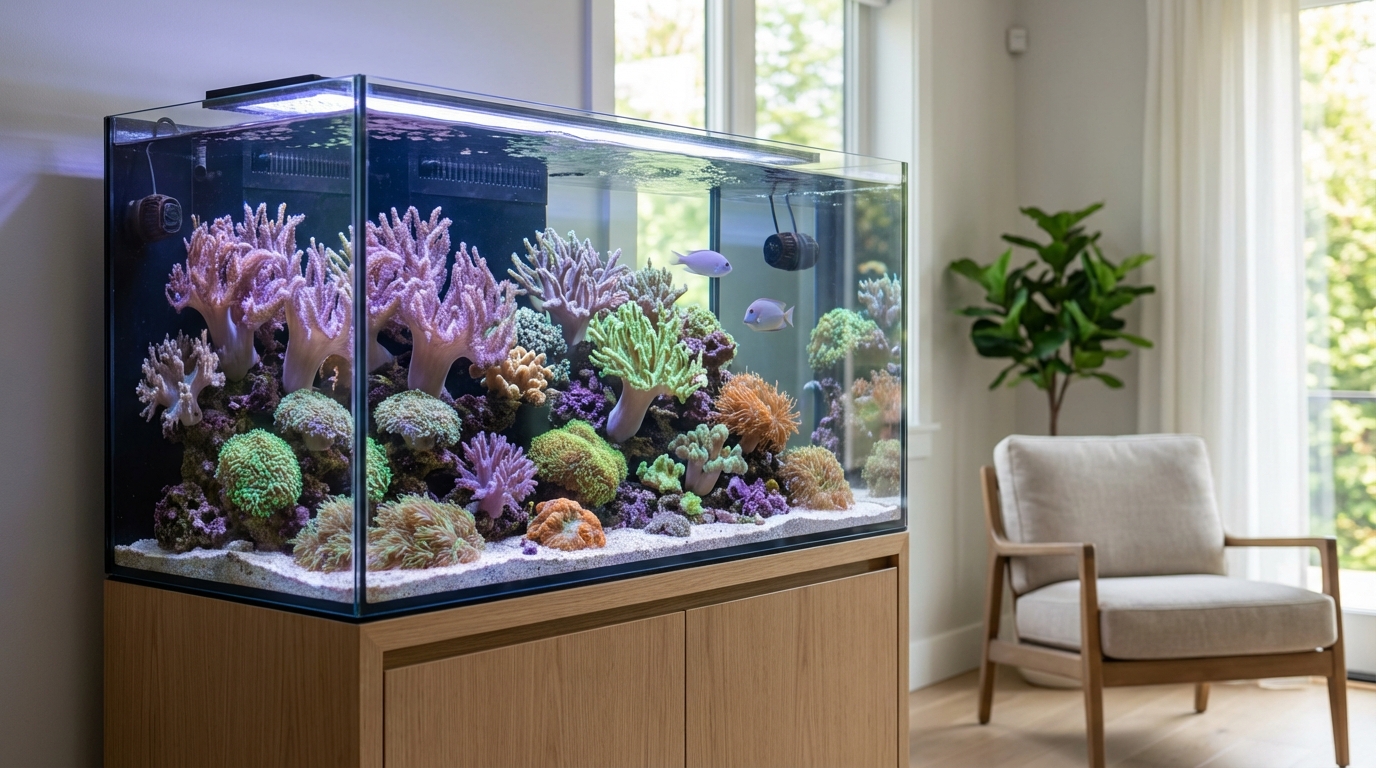
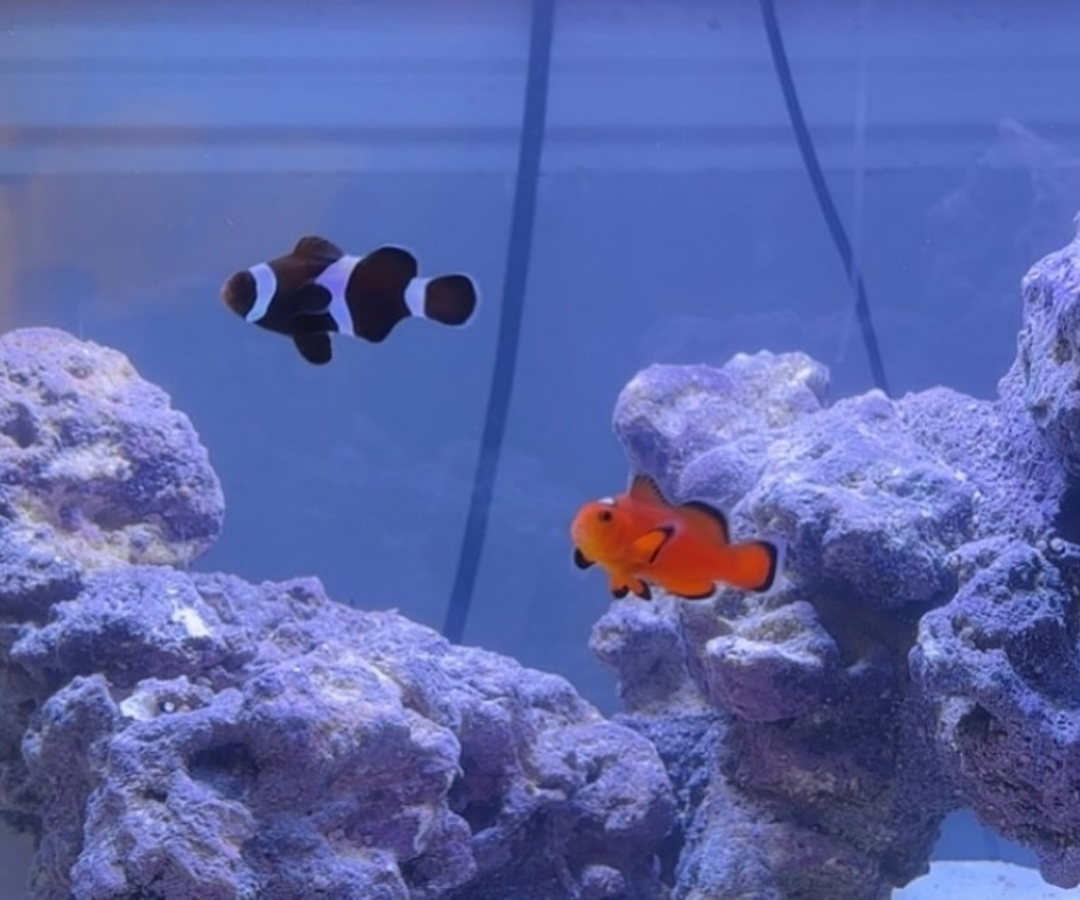
ReefBay's care data lists a 20-gallon minimum for the Darwin, the same as any ocellaris. A bonded pair does well in a 20-gallon reef if the rest of the stocking stays light. In a 40-gallon or larger tank they become the confident centerpiece that stays out front instead of hiding.
- Home base: give them a rock overhang, cave, or optional host anemone near the front glass. Black fish against light rock or a bright coral is the view you want
- Open water: leave swimming room in front of the rockwork. Clownfish hover and patrol rather than cruising laps like tangs
- Flow: moderate. Very strong, direct flow wears them out
- Lid: the jump risk is real, especially in the first week. Cover overflow gaps and cable cut-outs
- Stocking order: add the pair before other territorial fish, and after any very timid species you want settled first
Water parameters
Darwins are forgiving, but stable conditions keep the black deep and the white bars clean:
- Temperature: 74–79°F (23–26°C)
- Salinity: 1.024–1.026 specific gravity
- pH: 8.1–8.4
- Alkalinity: 7–11 dKH, held steady
- Ammonia and nitrite: 0 ppm
- Nitrate: about 2–20 ppm
- Phosphate: about 0.03–0.1 ppm
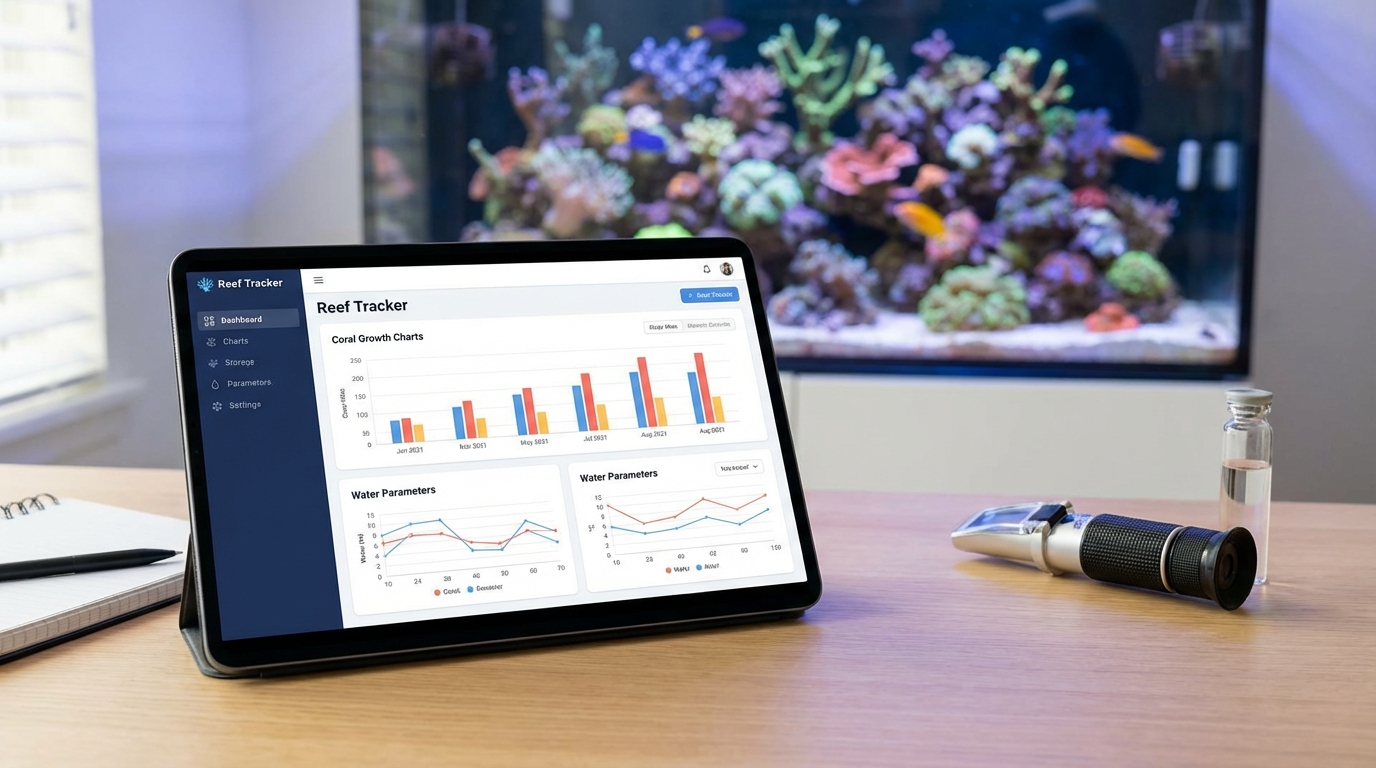
New to testing? Start with our reef tank water parameters guide for beginners, and log your results in the ReefBay app so you spot drift before it stresses your fish.
Color development: why young Darwins look orange
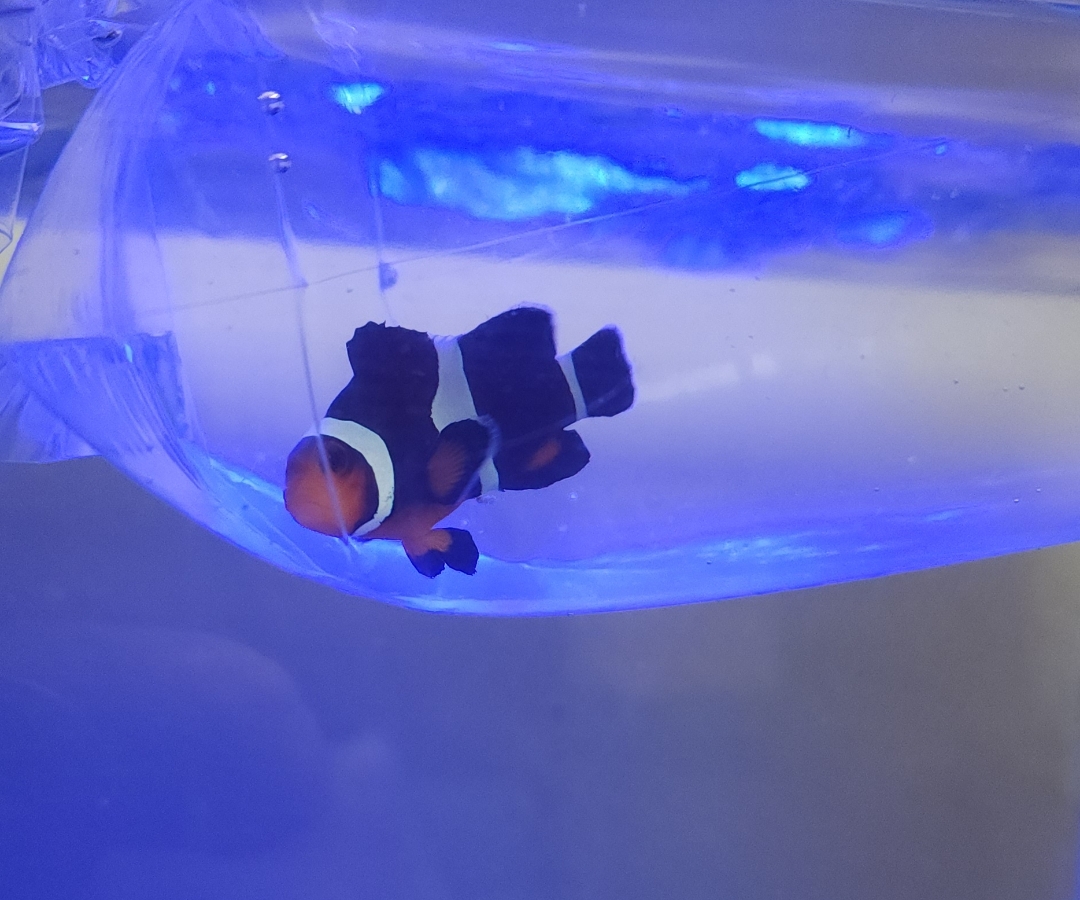
New owners often think they got the wrong fish. Juvenile Darwins usually start brownish-orange, sometimes with an orange face, snout, or fins, and darken over weeks to months as they grow. Captive-bred lines differ: some turn fully black early, while others keep a little orange on the face or belly into adulthood. Either way it is normal and not a sign of poor health.
- Healthy darkening: the body turns a deeper black over time, the bars stay bright white, and the fish eats and swims normally
- Stress coloring: washed-out, blotchy, or grayish color plus clamped fins or hiding points to water quality, bullying, or illness. It is not part of normal development
- Buying tip: if you want an all-black look right away, ask for an adult or sub-adult fish and request a current photo or video
Diet and feeding
Wild ocellaris pick zooplankton, small crustaceans, and algae near their anemone. Captive-bred Darwins usually already eat prepared foods when they arrive, which is a big reason to buy aquacultured stock.
- Staples: quality marine pellets (small size) and flake
- Frozen: mysis shrimp, enriched brine shrimp, and meaty marine blends
- Plant matter: algae-based pellets or frozen foods with spirulina, a few times a week
- Frequency: two small feedings a day for most pairs; young fish benefit from a third
- Tip: feed near their home base so they eat before faster fish like wrasses and chromis clean out the water column
A well-fed Darwin has a slightly rounded belly and spends time in the open. A thin fish that only darts out at feeding time usually points to food competition or a bully in the tank.
Reef safety, hosts, and tankmates
Darwins are reef-safe and safe with invertebrates. They leave coral polyps, clam mantles, snails, hermits, and ornamental shrimp alone. A host anemone is optional. Bubble tip anemones (Entacmaea quadricolor) are the most common aquarium host, and many pairs adopt a torch, frogspawn, or leather coral instead.
- Pairing: clownfish change sex in sequence. The larger fish becomes the female and the smaller stays male. Buy a known pair or two juveniles together. Don't drop a third adult into an established pair
- Good tankmates: firefish, cardinalfish, royal grammas, chromis, peaceful gobies, blennies, and fairy or flasher wrasses
- Use caution: mixing in other clownfish species or a second pair. An established female can be feisty toward newcomers
- Avoid: lionfish, groupers, large triggers, eels, and anything big enough to swallow a 3–4 inch fish
- Mixing colors: pairing a Darwin with an orange ocellaris works. They are the same species, and the young fish of a mixed pair are a fun experiment if you ever try breeding
Acclimation, quarantine, and health
Captive-bred Darwins are among the toughest fish in the hobby. A short quarantine and a calm introduction still pay off.
- Install a mesh lid and seal gaps before the fish arrives
- Drip acclimate slowly. If the shipping water is badly fouled, move faster toward tank water
- Quarantine when you can. Our 30-day saltwater fish quarantine protocol is a solid template
- Release them near their future home base with the lights dimmed for the first day
- Watch for rapid breathing, white spots, cloudy eyes, stringy feces, or a fish that suddenly stops eating
Clownfish can carry Brooklynella (often called clownfish disease), which shows up as heavy mucus, peeling patches, and fast breathing. Quarantine is the easiest way to catch it before it reaches your display.
Common problems and quick fixes
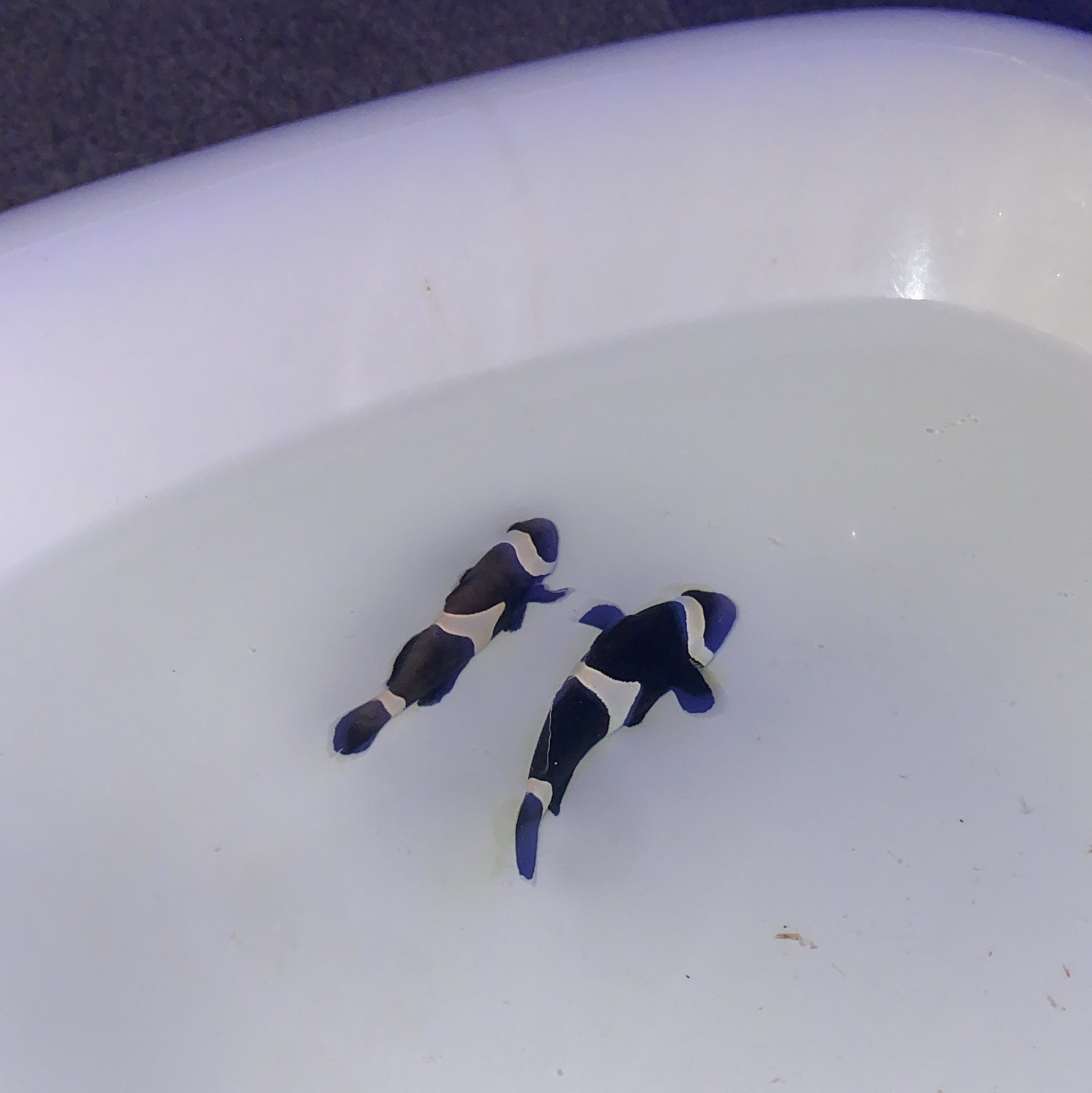
- "My Darwin is orange": normal juvenile color. Give it time and good food
- Pair fighting hard: they may not be a compatible pair. Separate them and re-pair, or keep one
- Chasing new tankmates: normal territory defense. Rearrange the rockwork before adding fish, or add timid species first next time
- Fading or gray patches: check salinity, nitrate, and stress sources, and look closely for parasites
- Missing fish: check the floor and overflow, then close the lid gap before you replace it
Buying checklist before you click purchase
- Confirm your tank is at least 20 gallons, fully cycled, and stable
- Decide on one fish or a pair, and don't plan to add a third adult later
- Confirm the species: Darwin / Black Ocellaris (A. ocellaris) vs. Black Percula (A. percula)
- Ask the age and current color. Juveniles may still show orange
- Look for clean white bars, intact fins, clear eyes, and active swimming
- Ask what it eats. Pellets and frozen food are the green flag
- Pass on pinched stomachs, heavy mucus, clamped fins, or fish that refuse food on video
- Have a lid, a quarantine plan, and an optional host ready before the fish ships
Darwin Clownfish FAQ
Is the Darwin Clownfish reef-safe? Yes. It ignores corals and is safe with cleanup crews and ornamental shrimp.
What size tank does a Darwin Clownfish need? At least 20 gallons for a single fish or a pair. Larger tanks give you more room for tankmates.
Is a Darwin the same as a Black Ocellaris? Yes. Darwin, Black Ocellaris, and Black and White Ocellaris are common names for the same black form of Amphiprion ocellaris.
Why is my Darwin Clownfish brown or orange? Juveniles start brownish-orange and darken as they mature. Some captive lines keep a little orange on the face.
Do Darwins need an anemone? No. A bubble tip anemone is a popular optional host, but many pairs live happily on rock or a soft coral.
Can I pair a Darwin with an orange ocellaris? Yes. They are the same species, so mixed-color pairs are common.
Ready to add a pair? Open the Darwin Clownfish fish page and the Black Ocellaris Clownfish page on ReefBay for more owner photos and care details, or compare with our Nearly Naked Clownfish guide if you're weighing designer morphs. When you're ready, browse the ReefBay marketplace for healthy, captive-bred fish that already eat, from trusted sellers. Then track feedings and water tests in the ReefBay app, and share photos as your Darwins darken so the next reefer can see how they develop.