Wyoming White Clownfish Care Guide: Tank Size, Diet, Pairing & Buying Tips
Wyoming White Clownfish care: what makes this white designer Ocellaris, 20+ gallon tanks, diet, pairing and anemones, tankmates, and a ReefBay buying checklist.
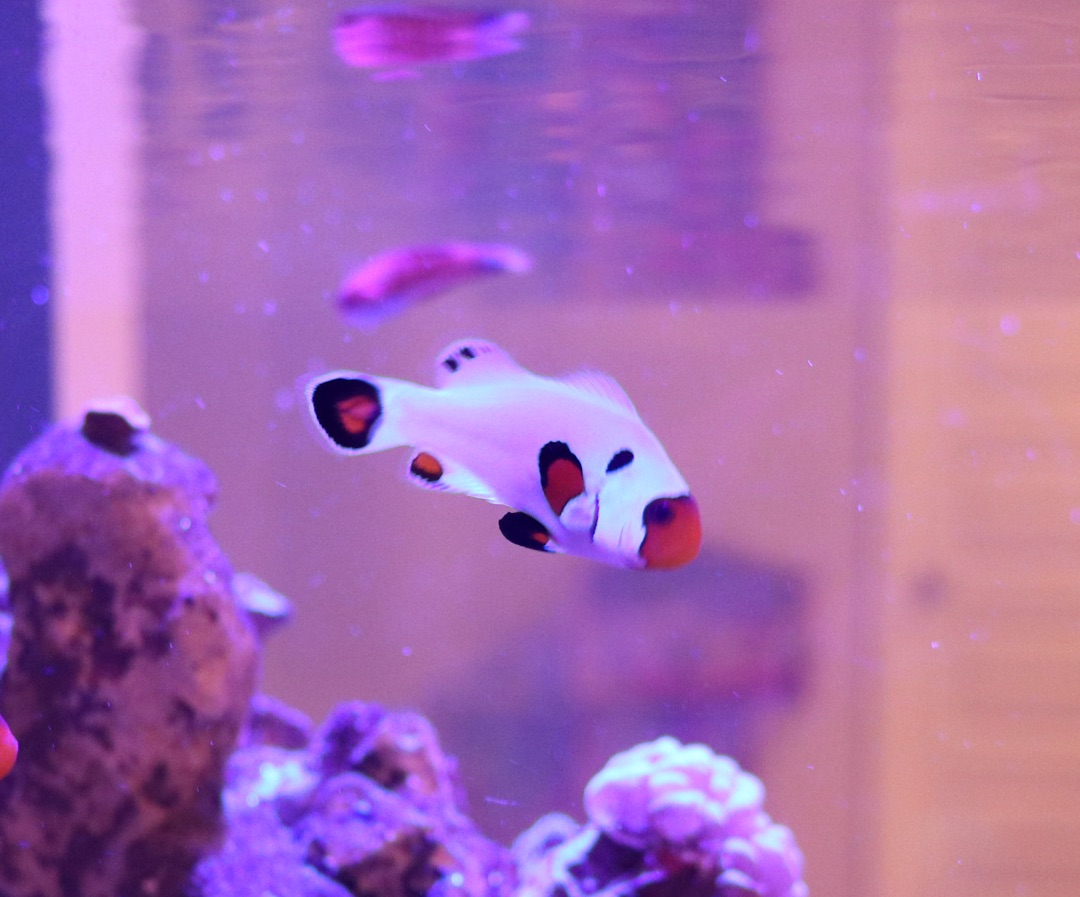
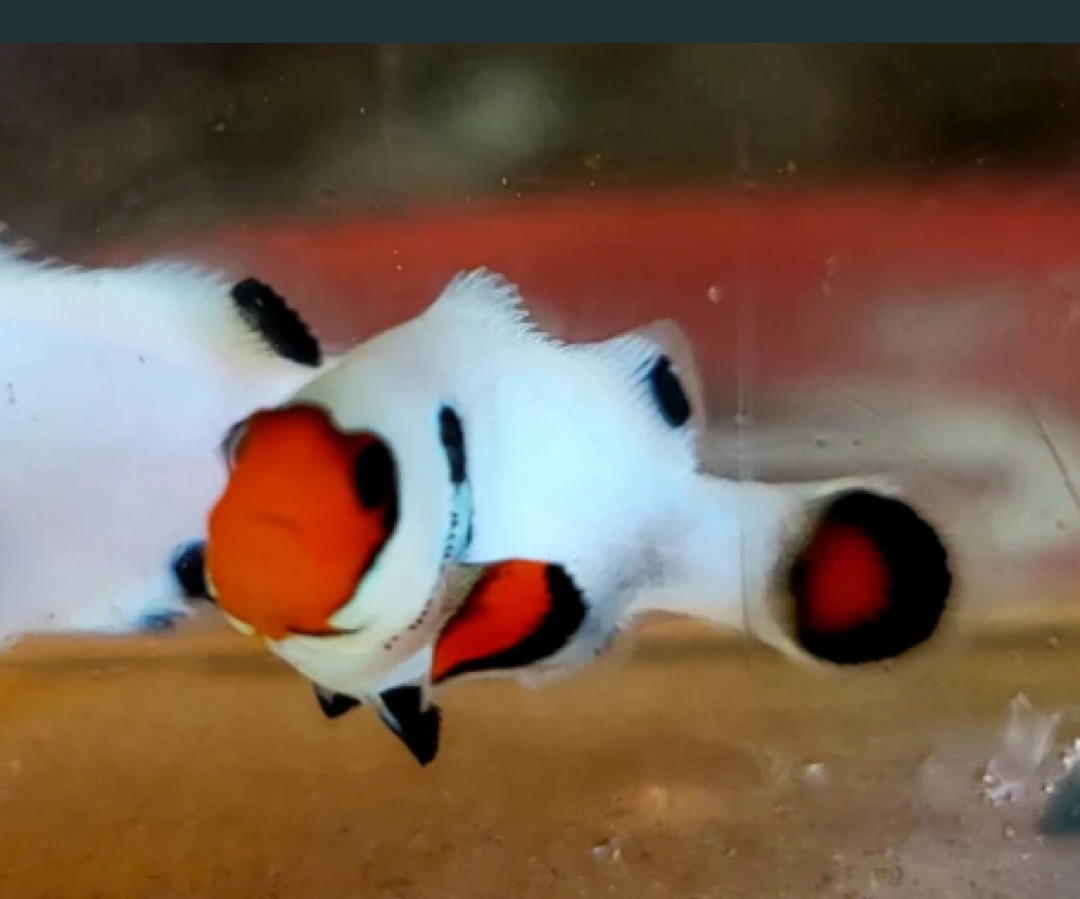
The Wyoming White Clownfish is one of the most striking designer clownfish you can put in a reef tank: a snowy, almost solid-white body, an orange face that develops a crisp black outline, and fins that darken toward jet black as the fish matures. Under blue reef lighting it practically glows, and it stands out from every orange-and-white fish in the room.
Underneath that unusual color, it is still an Ocellaris Clownfish (Amphiprion ocellaris) — hardy, captive-bred, and one of the easiest saltwater fish to keep. The main differences are price, how you judge quality before you buy, and what to expect as the color changes with age. This guide covers what makes a Wyoming White, tank size, water parameters, diet, pairing and anemones, tankmates, and a buying checklist before you shop the ReefBay marketplace.
Quick care snapshot
- Scientific name: Amphiprion ocellaris (designer color variety)
- Also called: Wyoming White Ocellaris, White Ocellaris Clownfish
- Family: Pomacentridae — damselfishes and clownfishes
- Origin: 100% captive-bred; wild Ocellaris come from the eastern Indian Ocean and western Pacific
- Max size: about 3–3.5 inches; the female of a pair is the larger fish
- Care level: easy — a great first designer clownfish
- Temperament: peaceful to mildly territorial, especially around its chosen host or cave
- Reef-safe: yes — safe with corals, shrimp, snails, and crabs
- Minimum tank: 20 gallons for a single fish or a bonded pair
- Diet: omnivore — quality pellets, frozen mysis and brine, flakes, and some algae-based foods
- Social: keep one or a bonded pair per tank
- Special note: a jumper when startled; a lid or mesh screen is worth it
What makes a Wyoming White?
The Wyoming White name was coined by Bill Addison of the C-Quest hatchery in Puerto Rico, which introduced the strain around 2009 after a few normal-looking Ocellaris pairs began throwing occasional all-white babies. C-Quest stopped production soon after, and the fish became rare for several years. Today several hatcheries produce their own lines: Sea & Reef Aquaculture revived the original C-Quest lineage, Sustainable Aquatics built a stable from a single fish, and ORA produces its Wyoming Whites by pairing two Gladiator Ocellaris together.
Because lines differ, individual fish vary in how pure the white is, how dark the fins get, and how much black outlines the face. That variation is a big part of the grading and the price.
- Wyoming White vs. Platinum or Maine Blizzard: the Platinum and Maine Blizzard are white Amphiprion percula varieties. The Wyoming White is an Ocellaris, so it usually shows a darker, pigmented iris, richer orange on the face and fins, and 11 dorsal spines instead of the Percula's typical 10
- Wyoming White vs. Snowflake: a Snowflake still shows large, irregular orange patches between white bands. A Wyoming White should be white from behind the face to the tail base
- Some normal quirks: a small black spot just behind the gill cover is common in some lines and is not a flaw
Tank size and aquascape
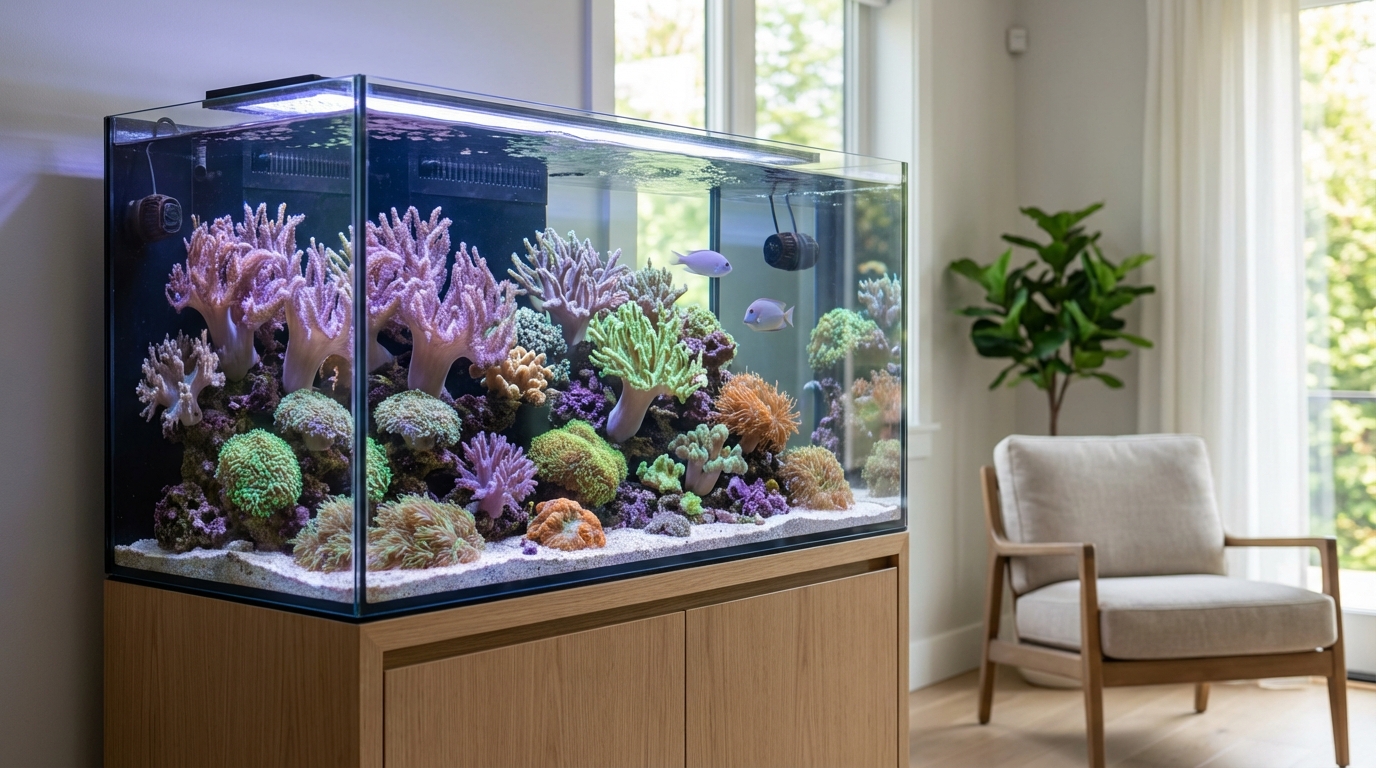
ReefBay's care data lists a 20-gallon minimum, which matches what owners report on the ReefBay fish page — one Wyoming White owner rates it easy and peaceful in a 20-gallon setup. A 20–30 gallon tank comfortably holds a bonded pair; give them more room if you plan a busy community tank.
- Home base: clownfish pick a "spot" and stay close to it — an anemone, a soft coral, a frag rack corner, or a cave in the rockwork
- Rockwork: mature live rock with a few overhangs and caves gives the pair a place to sleep and lay eggs
- Flow: moderate, varied flow. Clownfish are not strong open-water swimmers, so avoid blasting their chosen spot
- Lighting: any normal reef lighting is fine; the white body looks best under a blue-heavy spectrum
- Lid: clownfish do jump, especially in the first weeks or when chased
Water parameters
Captive-bred Wyoming Whites are forgiving, but stable conditions keep their color clean and their immune system strong. Aim for normal reef parameters:
- Temperature: 76–80°F (24–27°C)
- Salinity: 1.024–1.026 specific gravity
- pH: 8.1–8.4
- Alkalinity: 7–11 dKH, held steady
- Ammonia and nitrite: 0 ppm
- Nitrate: under about 20 ppm
- Phosphate: low (about 0.03–0.1 ppm) in a reef
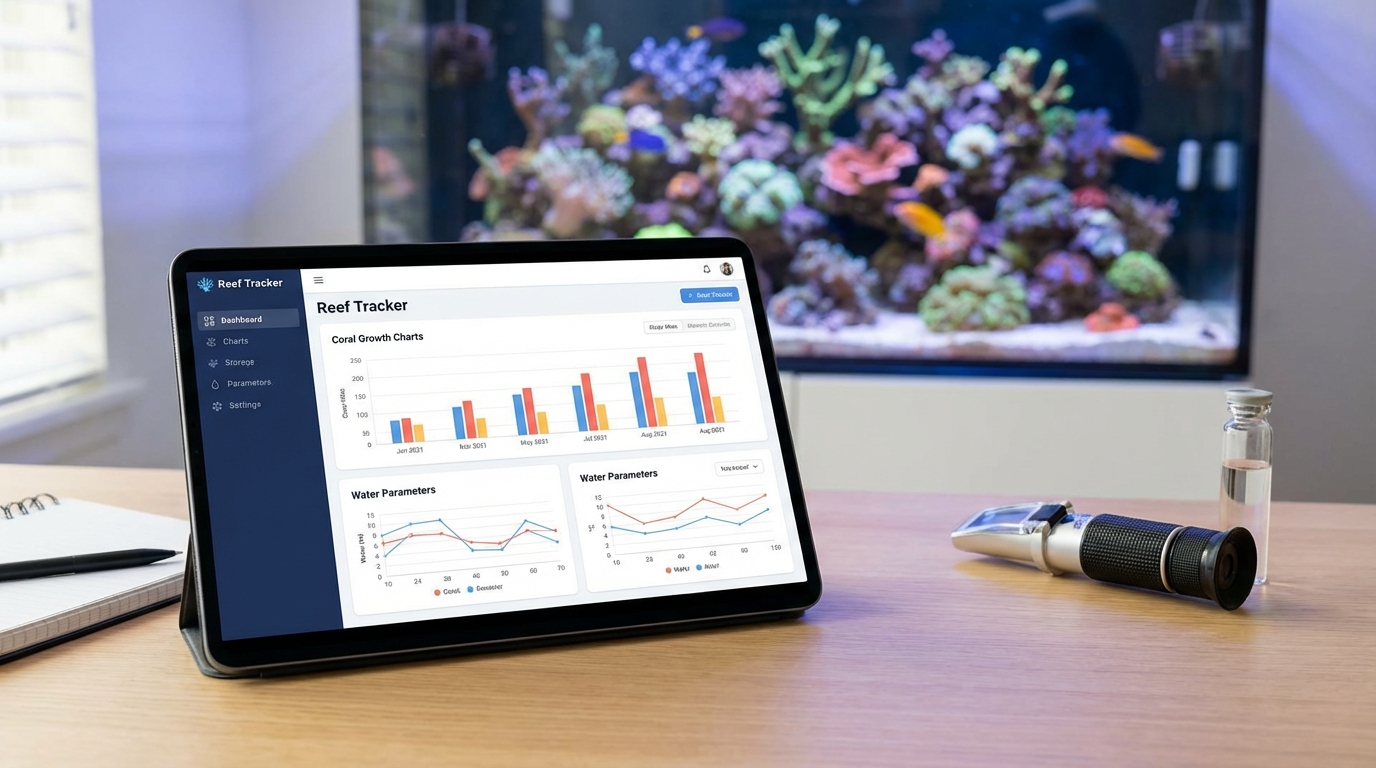
New to testing? Start with our reef tank water parameters guide for beginners, and log every test in the ReefBay app so you can spot drift before it shows up in your fish.
Diet and feeding
Wyoming Whites are enthusiastic eaters. Hatchery fish are raised on prepared foods, so most will take pellets from day one — the Wyoming White owner review on the ReefBay fish page lists pellets as the main food.
- Staple: a quality small marine pellet (about 0.5–1 mm) or flake
- Variety: frozen mysis shrimp, enriched brine shrimp, and finely chopped seafood blends a few times a week
- Plant matter: spirulina- or algae-based pellets help round out the diet
- Frequency: small portions once or twice a day; juveniles do best with two or more feedings
- Watch for: a pinched belly or a fish that hangs back at feeding time while tankmates eat everything
Avoid overfeeding to compensate — leftover food fuels nitrate and algae, which is never a good look behind a white fish.
Color changes as it grows
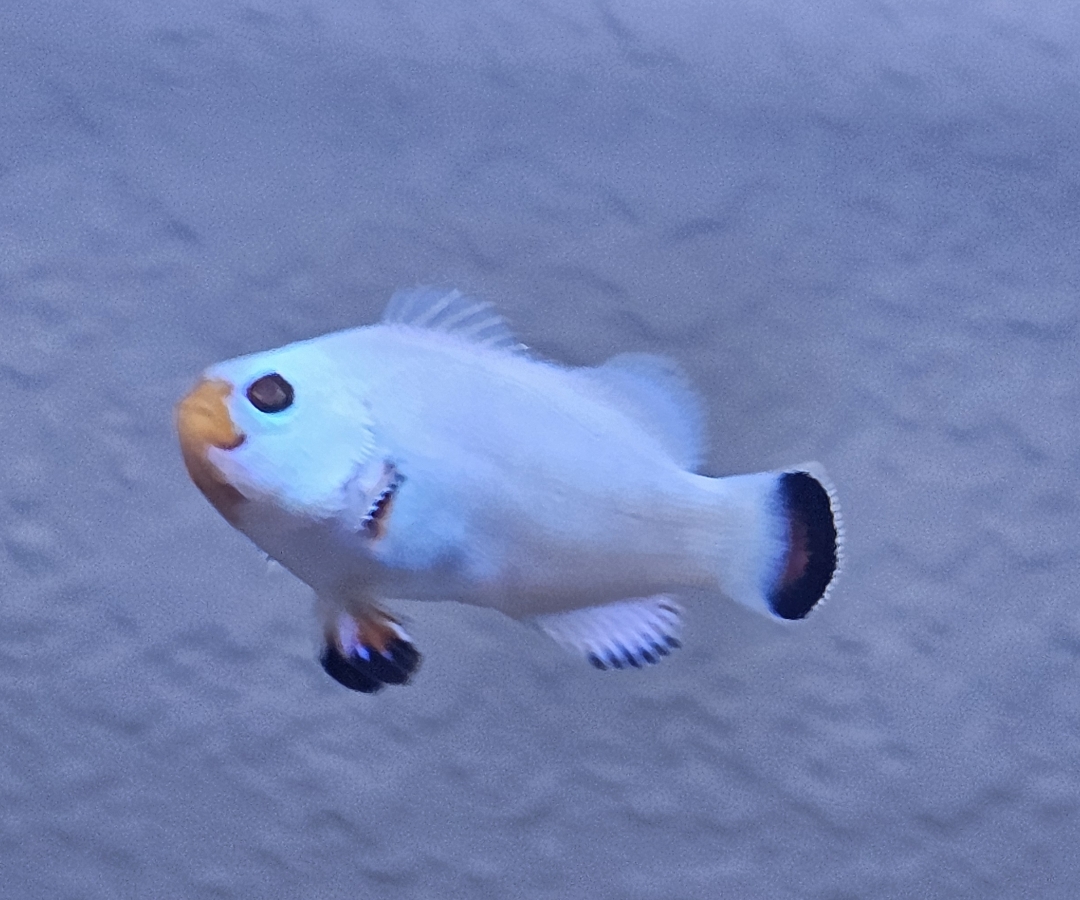
Do not expect a juvenile to look like the photos of adult show fish. Young Wyoming Whites often have lighter, smoky-gray fin edges and a softer orange face. As they grow, the fins darken toward black and a black line develops around the face and fin margins. How dark they get varies between lines and individuals, so buy the young fish you like — not the adult you hope it turns into.
Pairing and anemones
Like all clownfish, Wyoming Whites are protandrous hermaphrodites: every fish starts out male, and the dominant, largest fish in a pair becomes the female. That makes pairing easy if you start with two small juveniles, or one larger fish and one noticeably smaller fish.
- Best pairing partner: another Ocellaris — a second Wyoming White, a standard Ocellaris, or another designer Ocellaris. A popular combination is a Wyoming White paired with a Darwin (black) Ocellaris for contrast
- Do not mix species casually: adding Percula, Maroon, or Clarkii clownfish to a tank with Ocellaris often ends in fighting
- Introduce together: adding both fish at the same time, or the smaller fish second, keeps aggression low
- Normal pair behavior: some jaw-popping, shaking, and chasing in the first days is the pecking order being settled
An anemone is optional. Captive-bred clownfish do perfectly well without one, and many host corals such as torches, hammers, or leathers instead. Wild Ocellaris host Magnificent, Giant Carpet, and Mertens' carpet anemones, but in home tanks most reefers use a Bubble Tip Anemone because it is far easier to keep. If you go that route, read our Bubble Tip Anemone care guide first and add the anemone to a mature tank before the clowns. For the full process, see our clownfish pairing and hosting guide.
Tankmates and temperament
Wyoming Whites are among the most peaceful clownfish, but they will defend their host and get bolder once paired. Plan the rest of the stocking around a small, slow-swimming fish that needs to win its share of food.
- Good tankmates: gobies, blennies, firefish, cardinalfish, royal grammas, small wrasses, chromis, and other peaceful community fish
- Invertebrates: cleaner and peppermint shrimp, snails, hermit crabs, and corals are all safe
- Avoid: large predators such as groupers, lionfish, eels, and triggerfish, plus pushy dottybacks or damselfish in small tanks
- Add order: clowns are a great early addition, but in very small tanks add them after shy fish so they do not claim the whole rockwork
Need more ideas? Our list of the best tank mates for clownfish covers 15 proven options.
Wyoming White vs. standard Ocellaris care
Care is essentially identical to the classic orange Ocellaris shown below. Same tank size, same diet, same water parameters, same pairing rules. The differences are in buying: Wyoming Whites cost several times more, quality varies more between fish, so careful acclimation and quarantine are worth the effort on a fish this expensive. For the baseline species, see our Ocellaris Clownfish care guide.

Photo: Fernando Losada Rodríguez, Wikimedia Commons, CC BY-SA 4.0 — a standard Ocellaris Clownfish for comparison
Health and quarantine
Captive-bred clownfish are much tougher than wild fish, but they are not immune to disease. Brooklynella (clownfish disease), marine ich, and velvet can all show up after shipping stress.
- Quarantine new fish before they enter the display — our 30-day saltwater fish quarantine protocol is a solid template
- Get the fish eating in quarantine before you move it
- Watch for heavy mucus or peeling skin, rapid breathing, cloudy eyes, white spots, or a fish hanging at the surface
- Act fast: Brooklynella and velvet can kill clownfish within days, so treat at the first signs
- Keep water stable afterward; on a white fish, any skin issue is easy to spot early — use that to your advantage
Common problems and quick fixes
- Pair fighting constantly: some chasing is normal; torn fins or a fish hiding nonstop means they need to be separated and reintroduced
- Hiding in a corner of the glass: common in the first week; offer a cave or host and keep lights dimmer for a few days
- Not eating: try frozen mysis or enriched brine, then switch back to pellets once it is feeding
- Color looks dull or yellowed: improve diet variety and water quality; also check that your lighting is not washing out the white
- Clown "attacking" your hand: normal host-defense behavior from a settled pair — a sign it feels at home
- Jumping: cover the tank, especially during the first few weeks
Buying checklist before you click purchase
- Confirm you have at least 20 gallons, a cycled and stable tank, and a plan for a pair if you want one
- Ask which hatchery or line the fish comes from, and whether it is captive-bred (it should be)
- Look for an even, bright white body without stray orange patches — unless you are happy with a lower-grade fish at a lower price
- Check for a clean orange face, intact fins, clear eyes, and steady breathing
- Remember the fins and face outline usually darken with age; judge the body color first
- Ask what it is eating — pellets plus frozen food is the green flag
- Ask whether it has been quarantined or treated, and pass on scratching, spotted, or listless fish
- If you want a pair, buy two small fish together or choose a size-matched partner from the same seller
Wyoming White Clownfish FAQ
Is the Wyoming White an Ocellaris or a Percula? It is an Ocellaris (Amphiprion ocellaris). The similar-looking Platinum and Maine Blizzard are Percula varieties.
What size tank does a Wyoming White Clownfish need? At least 20 gallons for one fish or a bonded pair.
Is the Wyoming White reef-safe? Yes. It is safe with corals, shrimp, snails, and crabs.
Do Wyoming White Clownfish need an anemone? No. They thrive without one, though many will host a Bubble Tip Anemone or a soft or LPS coral.
Can I pair a Wyoming White with a regular Ocellaris? Yes. Any two Ocellaris can pair, including designer morphs, as long as you introduce them carefully.
Why are my Wyoming White's fins turning black? That is normal. The fins and face outline darken as the fish matures.
Ready to add one? Open the Wyoming White Clownfish fish page on ReefBay for owner reviews, member photos, and current listings, and browse the ReefBay marketplace for healthy, captive-bred clownfish from trusted sellers. Then track quarantine, feedings, and water tests in the ReefBay app, and share a photo of your own Wyoming White so the next reefer can see how this designer clown colors up with age.