Citron Goby Care Guide: Tank Size, Diet, Nano Reef & Pairing Tips
Citron Goby care made simple: 10+ gallon nano setups, small meaty foods, Acropora nipping risk, toxic mucus, pairing, tankmates, and a ReefBay buying checklist.
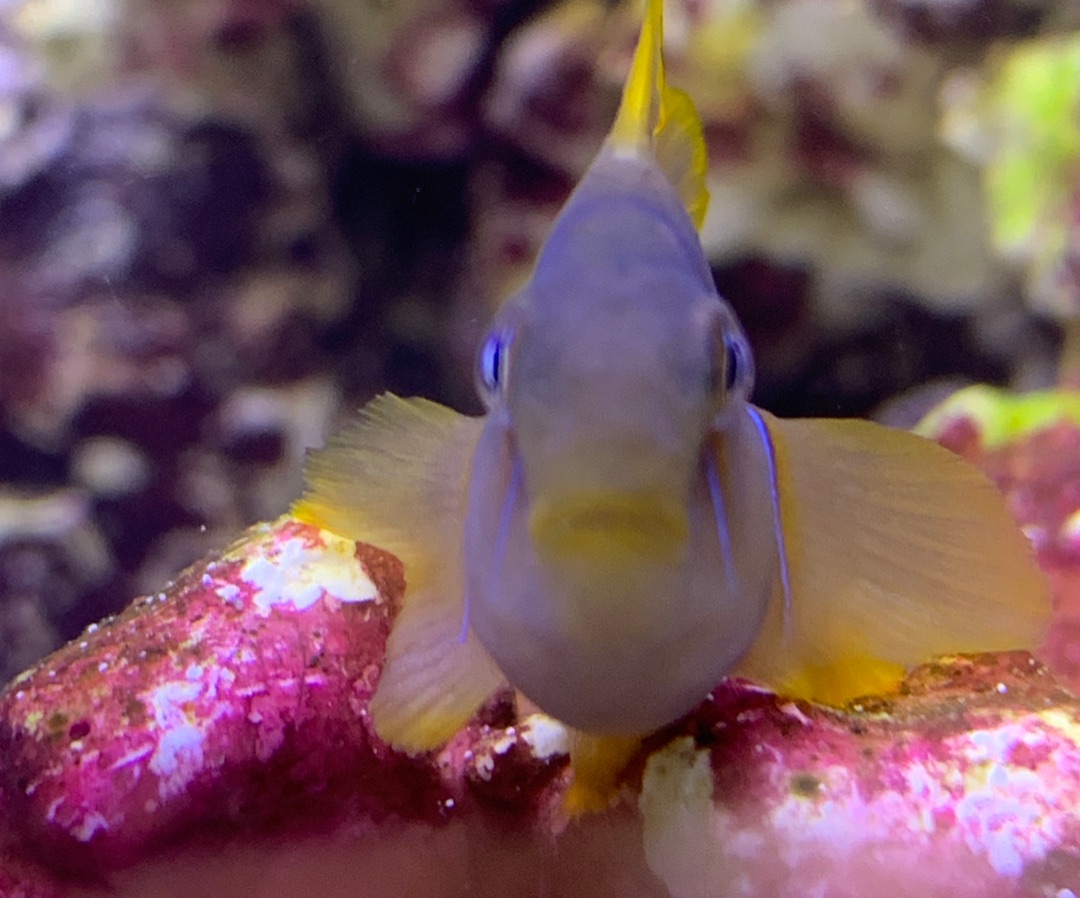
The Citron Goby (Gobiodon citrinus) is one of the best "small fish, big personality" picks for a nano reef. It is a stubby little coral goby, only about 2.5 inches when fully grown, with lemon-yellow to golden-orange color and thin electric-blue lines across its face. Instead of swimming laps, it perches on rock and coral branches with its big pectoral fins and watches everything going on in the tank — which makes it far more visible than its size suggests.
It is also hardy, peaceful, and easy to feed once settled. There are two things to know before you buy: it may nip Acropora and other branching SPS, and its skin produces a bitter, toxic mucus that gives the group its "poison goby" nickname. This guide covers identification, tank size, water parameters, diet, coral safety, pairing, tankmates, quarantine, and a buying checklist before you shop the ReefBay marketplace.
Quick care snapshot
- Scientific name: Gobiodon citrinus
- Also called: Citron Clown Goby, Lemon Coral Goby, Lemon Goby, Poison Goby
- Family: Gobiidae — the coral gobies (clown gobies)
- Origin: Indo-West Pacific, from the Red Sea and East Africa to Samoa
- Max size: about 2.5 inches (6–6.5 cm)
- Care level: easy
- Temperament: peaceful; may squabble with other clown gobies
- Reef-safe: with caution — safe with inverts, but may nip branching SPS
- Minimum tank: 10 gallons for one fish; 20 gallons or more for a pair or a busier community
- Diet: carnivore — mysis, enriched brine, copepods, and small frozen or pellet foods
- Social: keep one, or a bonded pair
- Special notes: toxic skin mucus, and a jumper — use a lid
How to identify a Citron Goby
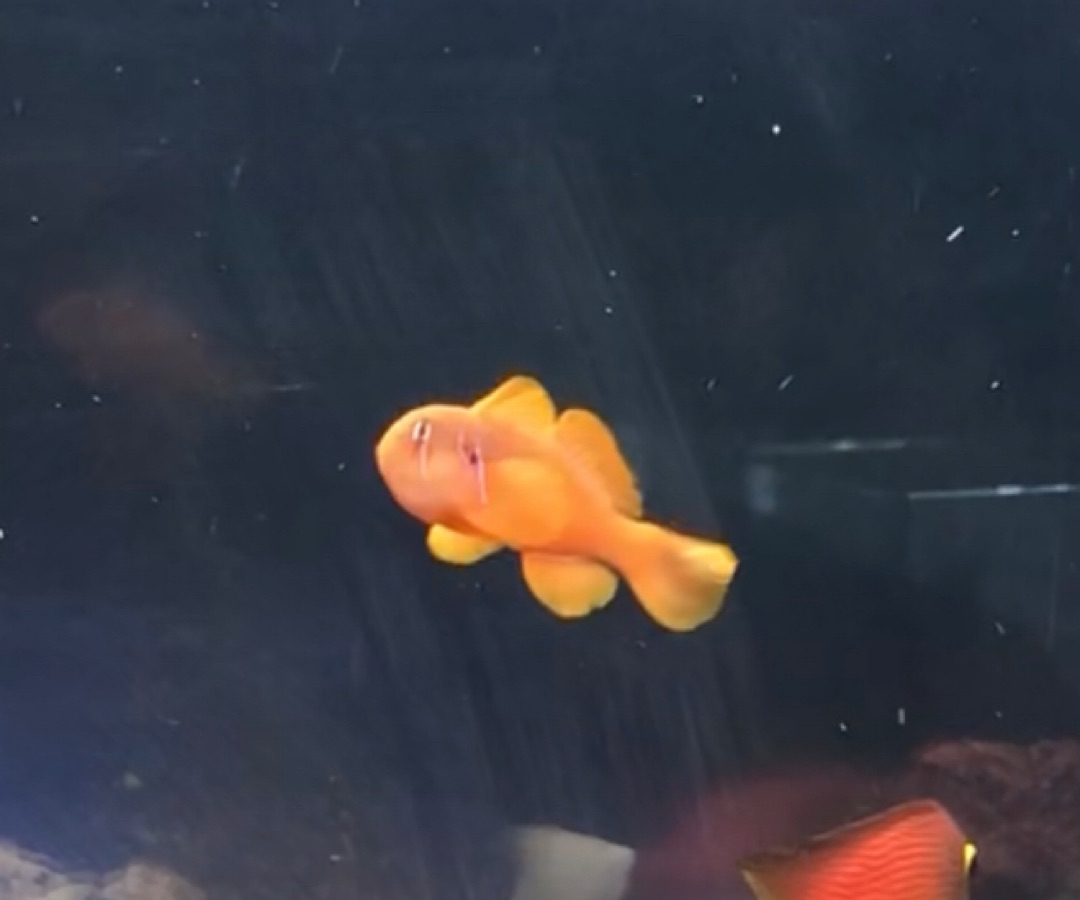
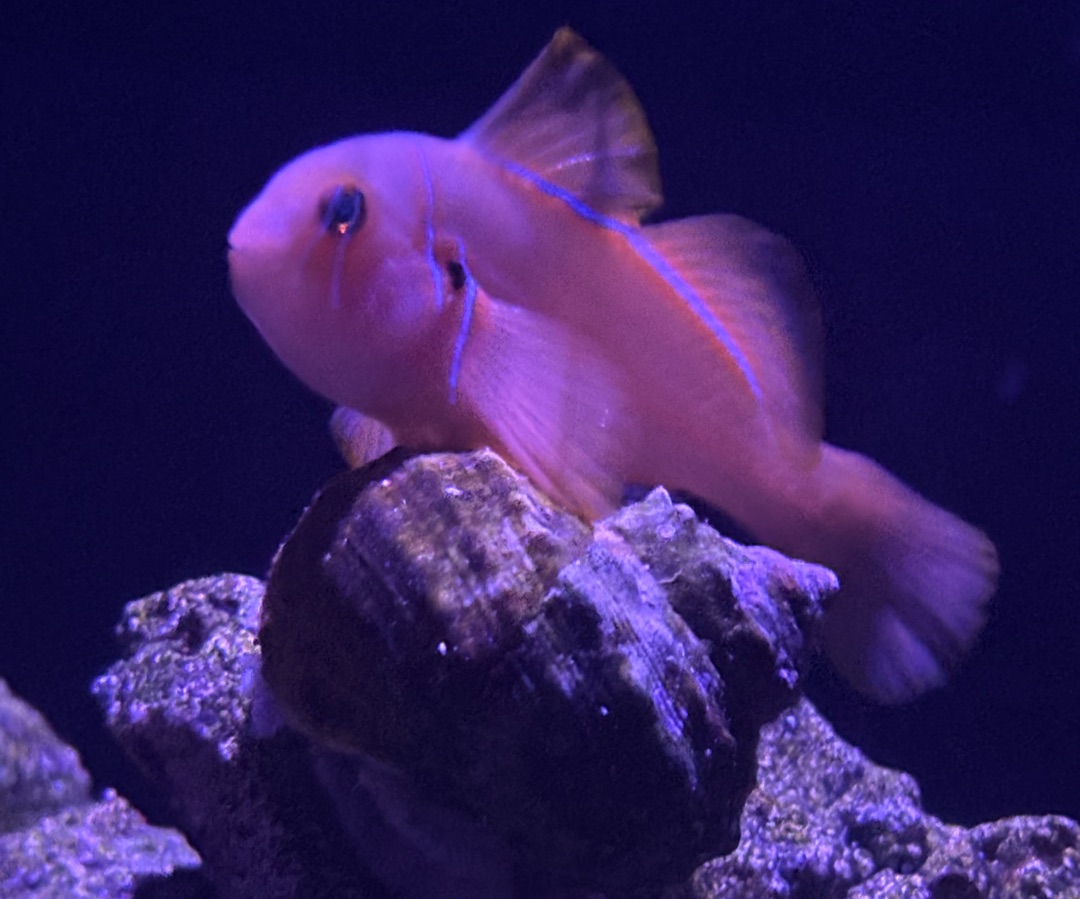
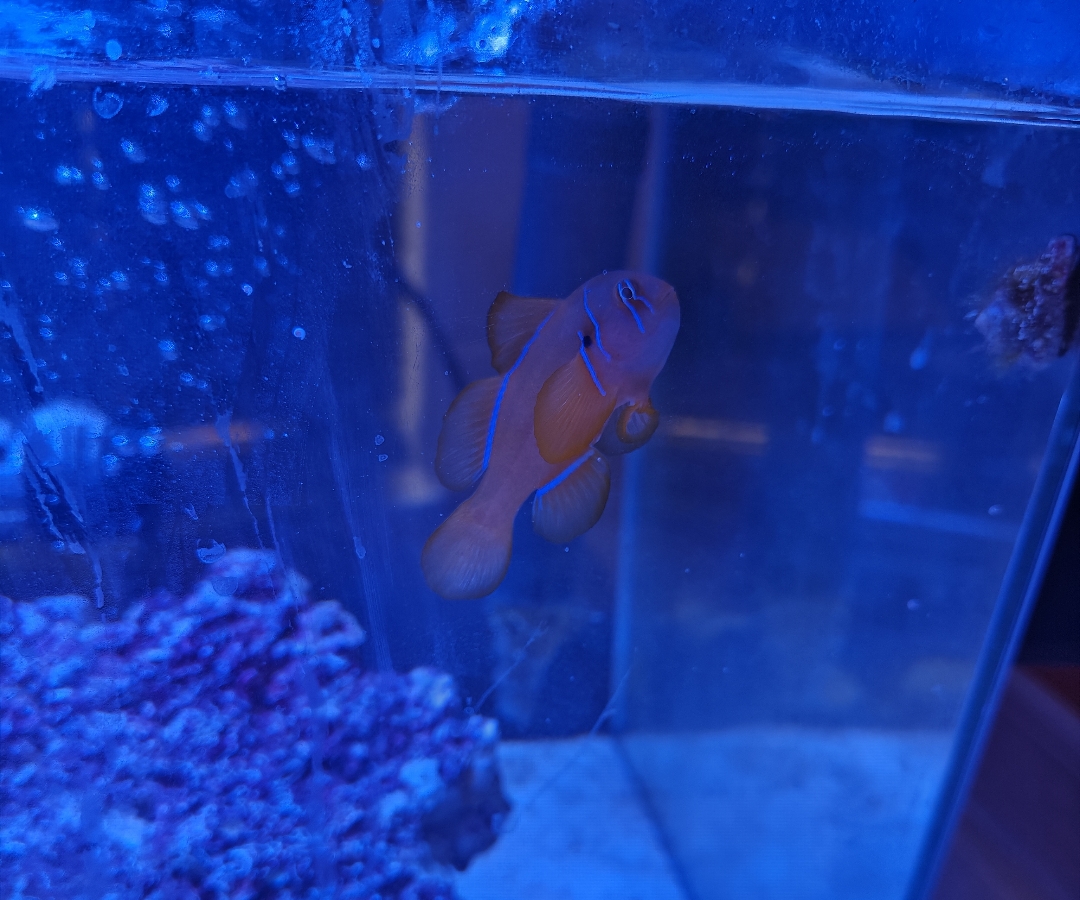
Citron Gobies have a short, compressed body, a blunt face, and a skin that feels almost scaleless. Most aquarium fish are bright yellow to golden orange, though some individuals show an olive or grayish body with yellow fins. Look for the key markings: a few narrow blue vertical lines on the head (through the eye and across the gill cover) and a thin blue line along the base of the dorsal fin. Lighting changes the look a lot — under blue actinics a yellow fish can read orange or even pink.
- Citron Goby vs. Yellow Clown Goby: the Yellow Clown Goby (Gobiodon okinawae) is smaller, plain canary yellow, and lacks the blue facial lines. Sellers sometimes mix up the two names, so check the photos
- Citron Goby vs. Green Clown Goby: the Green Clown Goby (Gobiodon histrio) is green with red-orange lines and spots on the face and body
- Care is nearly identical across these clown gobies, but size, color, and price differ
Tank size and aquascape
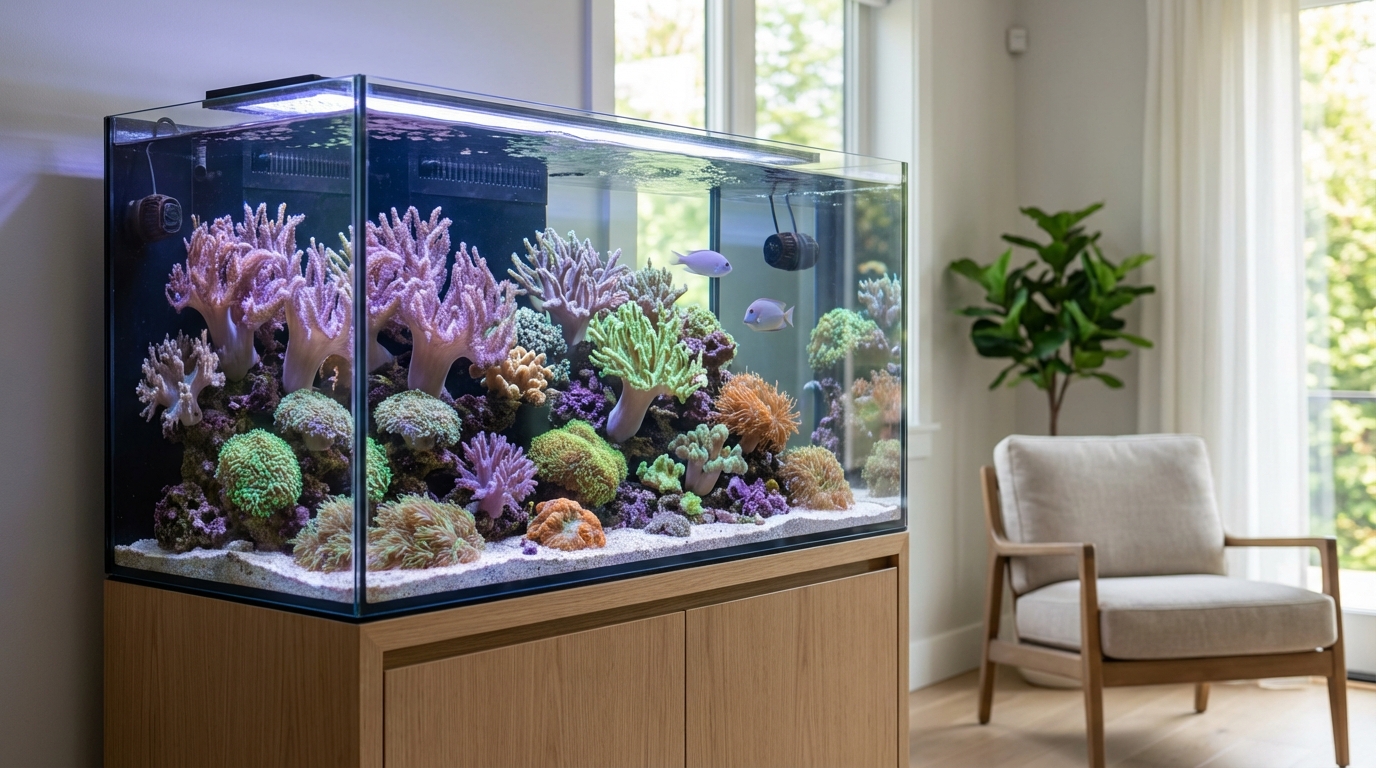
ReefBay's care data lists a 10-gallon minimum for a single Citron Goby, and both owner reviews on the ReefBay fish page rate it easy and peaceful in tanks of 10 gallons or more. Go to 20 gallons or more if you want a pair, a few other fish, or simply more stable water.
- Perches: this fish lives among coral branches in the wild. Give it branching coral, frag plugs, or rock ledges at a few different heights
- Caves and crevices: a tight crevice gives it somewhere to retreat at night and when it feels threatened
- Flow: moderate. It is a weak swimmer, so keep its favorite perch out of the strongest powerhead stream
- Lighting: any normal reef lighting works
- Lid: Citron Gobies are flagged as jumpers. Cover rim gaps, overflow notches, and cable cutouts, especially in a nano
- Maturity: add it to a cycled, stable tank — a few months old with some live copepods is ideal
Planning a small system? Our nano reef pros and cons guide and list of the best nano reef fish show where a Citron Goby fits.
Water parameters
Citron Gobies are tolerant, but in a 10-gallon tank small mistakes become big swings quickly. Keep normal reef parameters steady:
- Temperature: 76–80°F (24–27°C)
- Salinity: 1.024–1.026 specific gravity
- pH: 8.1–8.4
- Alkalinity: 7–11 dKH, held steady
- Ammonia and nitrite: 0 ppm
- Nitrate: under about 20 ppm
- Phosphate: low (about 0.03–0.1 ppm) in a coral tank
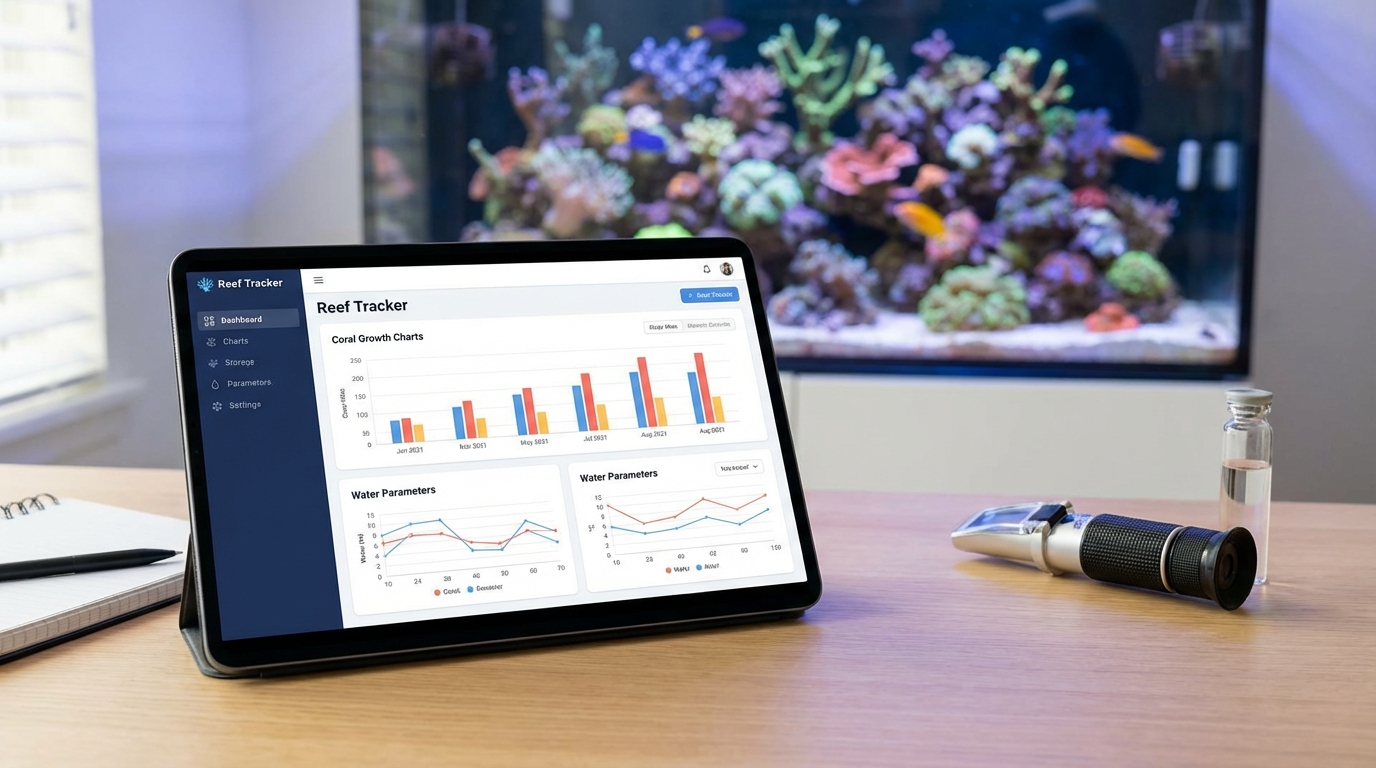
Salinity drift from evaporation is the most common nano problem, so an auto top-off is worth it. New to testing? Start with our reef tank water parameters guide for beginners, and log every result in the ReefBay app so you can spot trends before they show up in your fish.
Diet and feeding
In the wild, Citron Gobies pick tiny invertebrates and zooplankton off the coral they live in. In the aquarium they are easy carnivores with small mouths. Both owner reviews on the ReefBay fish page list frozen mysis and brine shrimp as their main foods.
- Staples: frozen mysis shrimp, enriched brine shrimp, and finely chopped frozen seafood blends
- Prepared foods: many will learn to take small pellets (around 0.5 mm) or flake once settled
- Live extras: a healthy copepod population gives them something to hunt between meals
- Frequency: small portions once or twice a day
- Target feeding: they wait on their perch for food to drift past. In a tank with fast eaters such as clownfish or wrasses, use a turkey baster or feeding tube to get food near them
A thin, pinched belly usually means the goby is losing out to faster tankmates, not that it is sick. Fix the feeding before you reach for medication.
Coral safety: the Acropora question
Citron Gobies are invert-safe and leave soft corals, LPS, shrimp, snails, and crabs alone. The "with caution" rating comes from their relationship with branching SPS. In the wild, clown gobies live inside Acropora colonies, and pairs are known to bite away a small patch of tissue near the base of a branch to clear a spot for their eggs. Some individuals also pick at polyps.
- Low risk: soft coral, LPS, and mixed reefs without delicate SPS
- Usually fine: large, well-established Acropora colonies, where a little nipping rarely does lasting harm
- Watch closely: small Acropora frags, which can lose tissue quickly if a goby or pair adopts them
- Warning signs: polyps that stay retracted at the base of one branch, or a growing white patch where the fish sleeps
Most keepers who keep Citron Gobies in SPS tanks report little or no damage, especially when the fish are well fed. Treat nipping as a real risk to watch for, not a guarantee.
That toxic mucus
Coral gobies protect themselves with a bitter, toxic skin mucus. Predators that try to eat one usually spit it out, which is a big reason a small, slow fish can survive in the open on a coral head. For you, it means three things:
- Handle Citron Gobies with a net or cup, not your bare hands, and keep their mucus away from your eyes and mouth
- Large predators that try to eat one may get sick, so keep them out of tanks with lionfish, groupers, and eels anyway
- Minimize stress during shipping and acclimation, and do not crowd several clown gobies into one small bag or container
Pairing and tankmates
Citron Gobies live in pairs in the wild, often sharing a single coral head. In the aquarium, one fish or a bonded pair is the safest setup. Related clown gobies can change sex in either direction, so two healthy adults will often pair up, but the safest bet is buying a pair the seller has already seen together.
- Pairs: add both fish at the same time, ideally in 20 gallons or more with several perches
- Other clown gobies: they can fight over the same coral. In bigger tanks, different species can work if each has its own territory
- Good tankmates: clownfish, firefish, small blennies, cardinalfish, royal grammas, small wrasses, and peaceful shrimp gobies such as the Yellow Watchman Goby
- Invertebrates: cleaner and peppermint shrimp, snails, and hermit crabs are all safe
- Avoid: predators that can swallow a 2-inch fish, aggressive dottybacks or damselfish in small tanks, and boisterous feeders that eat everything first
Acclimation and quarantine
Citron Gobies are tougher than many small fish, but shipping stress can still bring on ich, velvet, or bacterial infections, and a new arrival may hide or refuse food for a few days.
- Quarantine new fish before they enter the display — our 30-day saltwater fish quarantine protocol is a solid template
- If you add it straight to the display, an acclimation box lets it see the tank safely for a day while tankmates get used to it
- Get it eating mysis or brine before moving it from quarantine
- Small gobies can be more sensitive to medications such as copper, so test levels closely and dose carefully
- Watch for white spots, cloudy eyes, rapid breathing, or a fish lying on the sand instead of perching
Common problems and quick fixes
- Hiding after introduction: normal for the first few days; dim the lights and offer food close to its cave
- Not eating: try live or frozen enriched brine and mysis first, then move to pellets once it is eating well
- Getting thin: target-feed and reduce competition at feeding time
- Color fading: check water quality and diet variety; also compare under white light, since blue lighting shifts its color
- Coral tissue loss at branch bases: move small Acropora frags out of its territory or give it another perch
- Found on the floor: it jumped — close the gaps in your lid
Buying checklist before you click purchase
- Confirm your tank is at least 10 gallons (20+ for a pair), cycled and stable, with a tight lid
- Check the photos for the blue facial lines so you know it is a Citron and not a Yellow Clown Goby
- Look for a rounded belly, clear eyes, intact fins, and a fish that perches alert instead of lying flat
- Ask what it is eating — frozen mysis or brine is the green flag
- Ask about quarantine or treatment history, and pass on fish with spots, ragged fins, or labored breathing
- Decide on a single fish or pair before you buy, and buy pairs together
- Have a plan for small Acropora frags if you keep SPS
Citron Goby FAQ
What size tank does a Citron Goby need? At least 10 gallons for one fish, and 20 gallons or more for a pair or a community tank.
Is the Citron Goby reef-safe? Mostly. It is safe with inverts, soft corals, and LPS, but it may nip branching SPS such as small Acropora frags.
Is the Citron Goby poisonous? Its skin mucus is toxic and bitter to predators. It is not dangerous to touch briefly, but handle it with a net or cup and wash your hands afterward.
Can I keep two Citron Gobies together? Yes, as a bonded pair. Buy them together, add them at the same time, and give them plenty of perches.
What do Citron Gobies eat? Small meaty foods: frozen mysis, enriched brine shrimp, copepods, and small pellets once settled.
Is a Citron Goby the same as a Yellow Clown Goby? No. The Yellow Clown Goby is Gobiodon okinawae, a smaller, plain yellow species without the blue facial lines.
Ready to add one? Open the Citron Goby fish page on ReefBay for owner reviews, member photos, and current listings, and browse the ReefBay marketplace for healthy gobies from trusted sellers. Then track quarantine, feedings, and water tests in the ReefBay app, and share a photo of your own Citron Goby so the next reefer can see how this tiny coral goby looks in a real home reef.